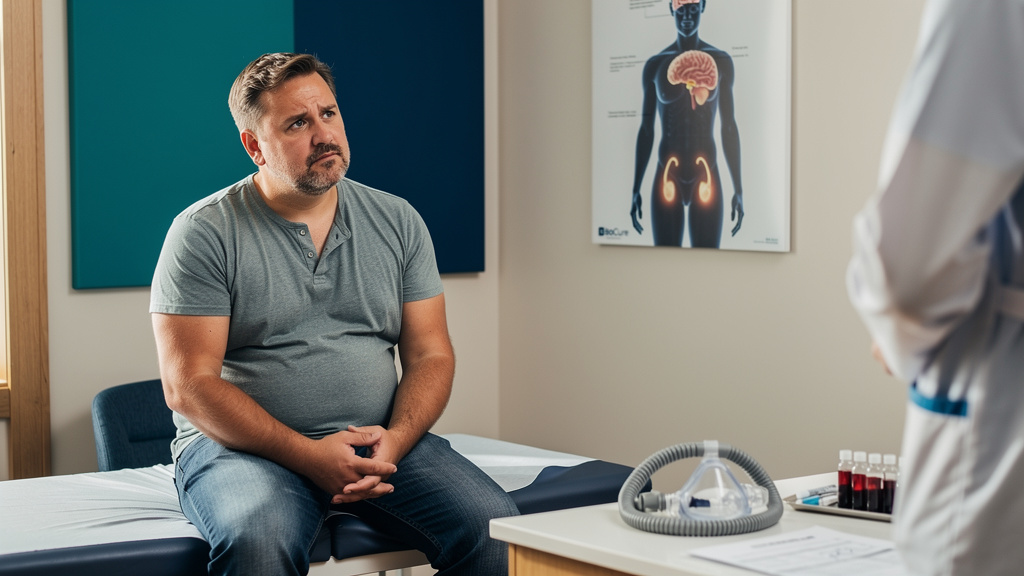
What causes low testosterone? Primary vs secondary hypogonadism explained
Low testosterone has three main groups of causes. Primary hypogonadism means the testes themselves cannot make enough testosterone; secondary hypogonadism means the pituitary gland or hypothalamus is not sending the signal that tells the testes to work; and functional causes such as obesity, type 2 diabetes, sleep apnea, heavy drinking, certain medications and serious illness suppress that signal in ways that are often reversible. Age lowers testosterone slowly, but it rarely explains a level that is truly low on its own.
You cannot sort out which group you are in from symptoms. The Endocrine Society and the American Urological Association both call for two early morning blood tests to confirm low testosterone, and LH and FSH levels then show whether the problem starts in the testes or the brain. That distinction decides which treatments make sense, especially if you want children in the future.
The causes of low testosterone at a glance
Your testosterone depends on a chain of command. The hypothalamus releases GnRH, which tells the pituitary to release luteinizing hormone (LH) and follicle stimulating hormone (FSH). LH tells the testes to make testosterone, and FSH supports sperm production. A break anywhere in that chain lowers testosterone, and where the break sits defines the type.
| Category | Where the problem is | Common examples | Typical LH and FSH | Often reversible? |
|---|---|---|---|---|
| Primary hypogonadism | Testes | Klinefelter syndrome, undescended testes, mumps orchitis, testicular injury, chemotherapy or radiation, hemochromatosis | High | Usually not |
| Secondary hypogonadism | Pituitary or hypothalamus | Pituitary tumors, high prolactin, head injury, opioids, glucocorticoids, past anabolic steroid use | Low or inappropriately normal | Sometimes, depending on the cause |
| Functional causes | Brain signaling suppressed by a whole body problem | Obesity, type 2 diabetes, sleep apnea, heavy alcohol use, severe illness | Low or normal | Often |
| Age related decline | Gradual change in both testes and signaling | Normal aging | Normal or mildly raised | No, but it is slow |
The Endocrine Society's 2018 guideline also separates "organic" hypogonadism, caused by permanent structural or genetic damage, from "functional" hypogonadism, where something like obesity or illness is suppressing an otherwise healthy system. Functional causes act mainly on the brain's signaling, so on labs they usually look like secondary hypogonadism.
Primary hypogonadism: when the testes are the problem
In primary hypogonadism the brain is signaling, often loudly, but the testes cannot respond. MedlinePlus and Mayo Clinic describe these as the main causes:
- Klinefelter syndrome. A genetic condition in which a male is born with an extra X chromosome (47,XXY). It often causes small, firm testes and reduced fertility, and many men are not diagnosed until a fertility workup or a hormone panel in adulthood.
- Undescended testes. Testes that do not move into the scrotum before birth, and are not corrected in early childhood, can work poorly later in life.
- Mumps orchitis. Mumps infection after puberty can inflame the testes and leave lasting damage.
- Testicular injury. Trauma that damages both testes can lower production. When only one is injured, the other usually compensates.
- Chemotherapy or radiation. Cancer treatment can damage the cells that make testosterone and sperm. The effect is sometimes temporary and sometimes permanent, which is why sperm banking is often discussed before treatment.
- Hemochromatosis. Excess iron can deposit in the testes and in the pituitary, so it can cause either primary or secondary hypogonadism.
Because the same tissue makes sperm, primary hypogonadism often affects fertility as well as testosterone.
Secondary hypogonadism: when the brain stops sending the signal
In secondary hypogonadism the testes are usually healthy, but they are not getting enough LH. Common causes include:
- Pituitary tumors. Most are benign adenomas, but they can crowd out hormone producing tissue and press on nearby nerves.
- High prolactin. A prolactin secreting tumor (prolactinoma) or certain medications can raise prolactin, which suppresses GnRH and therefore LH.
- Head injury. Traumatic brain injury can damage the pituitary or hypothalamus.
- Opioids. Long term opioid use suppresses the hypothalamus and is one of the more commonly missed causes of low testosterone in adult men.
- Glucocorticoids. Long courses of steroid medicines such as prednisone can lower testosterone.
- Past anabolic steroid use. Taking testosterone or other androgens shuts down your own LH and FSH. After stopping, natural production can take months or longer to recover, and in some men it does not fully return.
Rarer causes include genetic conditions such as Kallmann syndrome, which is usually found in adolescence when puberty does not start.
Functional causes: the ones you can often reverse
For many adult men this is the group that matters most, because the cause can often be treated.
- Obesity. Fat tissue converts testosterone into estradiol, and the inflammation and insulin resistance that come with excess weight suppress the hypothalamus. Obesity also lowers sex hormone binding globulin (SHBG), which can make total testosterone read lower than your free testosterone actually is.
- Type 2 diabetes. Low testosterone is common in men with type 2 diabetes, and the two tend to worsen each other.
- Sleep apnea. Much of your daily testosterone release is tied to sleep, so fragmented sleep blunts it.
- Heavy alcohol use. Alcohol is directly toxic to the testes and also disrupts signaling from the brain.
- Severe illness. During serious illness, surgery or major physical stress, the body deprioritizes reproduction. The Endocrine Society advises against testing testosterone during an acute illness for this reason.
The Endocrine Society guideline favors addressing these drivers rather than reaching straight for a prescription. Losing weight, treating sleep apnea, cutting back on alcohol and reviewing medications can raise testosterone in many men, although how much varies from person to person. Low testosterone is not only about your sex life; it touches energy, mood, body composition and bone, as we cover in how low testosterone affects a lot more than your sex life.
How much does age lower testosterone?
Testosterone declines gradually with age. Total testosterone tends to fall slowly from middle age onward, and free testosterone often falls faster, partly because SHBG tends to rise as men get older. Many healthy older men stay within the normal range.
That slow slope has two practical meanings. First, a man in his 40s or 50s with a clearly low level should not write it off as "just aging"; a specific cause is often present. Second, the Endocrine Society recommends against routinely prescribing testosterone to every man over 65 with a low level, and suggests the decision be made individually for men with symptoms and confirmed low levels.
How LH and FSH tell primary from secondary, and why it changes treatment
Step one is confirming the problem. The Endocrine Society guideline recommends diagnosing hypogonadism only in men who have symptoms and consistently low testosterone on at least two separate early morning fasting blood tests, and it uses a harmonized lower limit of 264 ng/dL. The AUA guideline uses a total testosterone below 300 ng/dL on two separate early morning tests as a reasonable cutoff. Free testosterone is checked when total testosterone is borderline or SHBG is likely to be abnormal. Morning testing matters because levels peak early in the day.
Step two is reading LH and FSH.
| Lab pattern | What it suggests | Typical next steps |
|---|---|---|
| Low testosterone, high LH and FSH | Primary hypogonadism (testes) | Testicular exam, karyotype if Klinefelter syndrome is suspected, semen analysis if fertility matters |
| Low testosterone, low or inappropriately normal LH and FSH | Secondary or functional hypogonadism | Prolactin, iron studies, other pituitary hormones, medication review, pituitary MRI in selected cases |
| Borderline total testosterone | Unclear until free testosterone is known | Free testosterone, SHBG, repeat morning test |
Why it changes treatment. Testosterone therapy suppresses LH and FSH, which lowers sperm production. The AUA guideline advises clinicians to tell men this, and men who are trying to conceive should not be prescribed testosterone. In secondary hypogonadism the testes still work, so therapies that stimulate your own production, such as hCG or selective estrogen receptor modulators like clomiphene citrate (used off label in men), can raise testosterone while preserving fertility. In primary hypogonadism the testes cannot respond to more stimulation, so if treatment is appropriate, replacement is usually the main option.
At BioCure Health, physicians review your full hormone panel with you before choosing between full testosterone replacement with ongoing hormone monitoring (the bioTest tier) and bioRestore, which uses medications to raise your body's own testosterone without direct hormone replacement. The process starts with a $199 video consultation, which can be credited back with a membership, followed by testing through an at-home kit with an in-home phlebotomist visit or at a lab. Results come back in 7 to 14 days and are reviewed with you one on one. You can read more about our testosterone therapy tiers and comprehensive blood panels.
When a cause needs specialist follow up
Some patterns point to a condition that needs an endocrinologist, imaging or both before anyone discusses testosterone. Watch for:
- Very low testosterone with low LH. The Endocrine Society suggests pituitary MRI for men with secondary hypogonadism and testosterone below 150 ng/dL, as well as for men with multiple pituitary hormone deficiencies, persistently high prolactin or symptoms of a pituitary mass.
- High prolactin, especially if it stays high on repeat testing.
- Vision changes or new persistent headaches, particularly loss of side vision, which can mean a pituitary mass is pressing on the optic nerves.
- Signs that other pituitary hormones are off, such as unexplained fatigue, low blood pressure or thyroid abnormalities.
- High iron saturation, which raises the question of hemochromatosis.
- Small or unusually firm testes, breast tissue growth or infertility, which can suggest Klinefelter syndrome or another primary cause.
If any of these apply to you, a clinician should evaluate the cause directly, because starting testosterone first can mask it.
Frequently asked questions
What is the most common cause of low testosterone in men?
In adult men, functional causes such as obesity, type 2 diabetes, sleep apnea and medications like opioids are among the most common contributors. Genetic causes such as Klinefelter syndrome are less common but often go undiagnosed until adulthood. Age adds a slow decline on top of everything else.
How do I know if my low testosterone is primary or secondary?
Your LH and FSH levels answer that question. High LH and FSH with low testosterone means the testes are not responding, which is primary hypogonadism. Low or normal LH and FSH with low testosterone means the brain is not sending enough signal, which is secondary or functional hypogonadism.
Do I need two blood tests to diagnose low testosterone?
Yes. The Endocrine Society and the AUA both call for two separate early morning tests showing low testosterone, along with symptoms, before a diagnosis is made. Testosterone varies from day to day and peaks in the morning, so a single test, or one taken in the afternoon, can be misleading.
Can low testosterone be reversed?
It depends on the cause. Functional causes such as excess weight, untreated sleep apnea, heavy drinking or certain medications can often be improved, and testosterone may rise as a result. Primary hypogonadism from genetic or permanent testicular damage usually cannot be reversed, though it can be treated.
Can past steroid use cause low testosterone?
Yes. Anabolic steroids shut down your own LH and FSH, and after you stop, natural production can take months or longer to recover. In some men it does not fully return, which shows up on labs as secondary hypogonadism.
Can I take testosterone if I want to have kids?
Testosterone therapy suppresses sperm production, so the AUA advises against prescribing it to men who are trying to conceive. If your low testosterone is secondary, options that stimulate your own production, such as hCG or clomiphene, may raise testosterone while preserving fertility. Discuss your family plans before starting any treatment.
Low testosterone is a lab finding, not a diagnosis. The cause is what decides your treatment, and finding it takes two morning tests, a look at LH and FSH, and a physician who reads the whole picture. Longevity is not accidental, it is intentional.
Let BioCure Health lead you in the right direction. Call or text us to schedule an introductory call at 754-206-0838. Your future self will thank you.