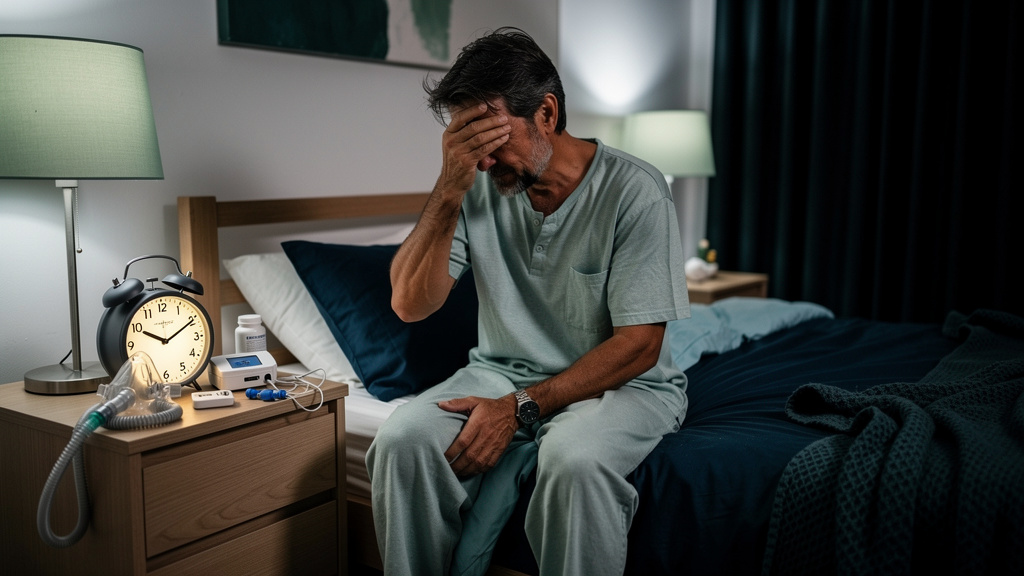
Still waking up tired after 8 hours? Signs it's sleep apnea, not your habits
If you get seven or more hours, keep a regular schedule and still wake up exhausted, obstructive sleep apnea (OSA) is one of the first things to rule out. The classic signs are loud snoring, breathing pauses someone else notices, gasping or choking awake, morning headaches, daytime sleepiness and getting up to urinate at night, especially if you carry extra weight, have a thick neck, are male, are older or are past menopause. Only a sleep study, either a home sleep apnea test or an in-lab polysomnogram, can confirm it.
That last point matters. You can do everything right on the sleep hygiene list and still feel wrecked, because the problem is not your bedtime routine. It is your airway closing, over and over, while you sleep. Below is the checklist to work through, followed by how testing and treatment actually work in 2026.
First, confirm it is not your habits
The generic sleep advice exists for a reason, so check it honestly before you blame your airway. According to the CDC, most adults need at least 7 hours of sleep a night, and the agency's tips center on consistency, light and what you consume before bed.
| Habit | What the evidence supports | Check |
|---|---|---|
| Duration | At least 7 hours a night for adults | Are you actually in bed long enough? |
| Schedule | Same bedtime and wake time, weekends included | Does your wake time drift on Saturdays? |
| Light | Natural light early in the day, less artificial light near bedtime | Are screens the last thing you see? |
| Caffeine | Avoid it in the hours before bed | Is there an afternoon coffee habit? |
| Alcohol | Avoid it close to bedtime | Is a nightcap part of your routine? |
| Bedroom | Quiet, dark and cool | Is your room any of those? |
If you can check every box and still wake up unrefreshed, keep reading. Good sleep habits improve sleep quality. They do not fix a blocked airway.
The symptom checklist
The NHLBI describes obstructive sleep apnea as repeated narrowing or collapse of the upper airway during sleep, which briefly reduces or stops breathing. Your brain wakes you just enough to reopen the airway, usually without you remembering it. The result is a night that looks long on paper and feels short in your body.
| Sign | What it looks like | Who usually notices |
|---|---|---|
| Loud snoring | Snoring that can be heard through a door, most nights | Your partner |
| Witnessed pauses | Breathing stops, then restarts with a snort | Your partner |
| Gasping or choking | Waking suddenly, short of breath | You |
| Morning headaches | Dull headache on waking that fades during the day | You |
| Daytime sleepiness | Dozing while reading, in meetings or at red lights | You and coworkers |
| Nighttime urination | Getting up to pee more than you would expect | You |
| Other clues | Dry mouth on waking, poor focus, irritability | You |
Two honest caveats. Not everyone with sleep apnea snores loudly, and plenty of people who snore do not have apnea. The pattern matters more than any single item. If you check several boxes, especially witnessed pauses or dozing off while driving, that is worth a medical evaluation soon.
Risk factors and the STOP-BANG questionnaire
Symptoms tell you what is happening. Risk factors tell you how likely apnea is to be the reason. The NHLBI lists these among the main ones:
- Excess weight. Higher body mass index is one of the strongest risk factors, because extra tissue around the neck and airway makes collapse easier.
- Large neck size. A thicker neck often means a narrower airway.
- Older age. Risk rises as you get older.
- Male sex. Men are affected more often than women before midlife.
- Menopause. A woman's risk rises after menopause, which is why apnea is often missed in women who assume their poor sleep is purely hormonal.
- Alcohol and sedatives. They relax the throat muscles that keep the airway open.
- Family history and airway shape, including a small jaw or large tonsils.
Clinicians often screen with the STOP-BANG questionnaire. Each letter is a yes or no question, and more yes answers mean higher risk:
| Letter | Question |
|---|---|
| S | Do you snore loudly? |
| T | Are you often tired or sleepy during the day? |
| O | Has anyone observed you stop breathing during sleep? |
| P | Do you have high blood pressure? |
| B | Is your body mass index elevated? |
| A | Are you older? |
| N | Is your neck circumference large? |
| G | Are you male? |
Use it as a prompt, not a verdict. The American Academy of Sleep Medicine's 2017 clinical practice guideline for diagnosing adult OSA is clear that questionnaires and prediction tools should not be used to diagnose sleep apnea without a sleep test.
Testing: home sleep test or sleep lab?
The same AASM guideline recommends that adults with signs and symptoms suggesting moderate to severe OSA be diagnosed with either an in-lab polysomnogram or a technically adequate home sleep apnea test, as long as their case is uncomplicated.
| Home sleep apnea test | In-lab polysomnography | |
|---|---|---|
| Where | Your own bed | A sleep center, overnight |
| What it records | Breathing, airflow, oxygen levels, heart rate | Brain waves, eye and muscle activity, breathing, oxygen, heart rhythm |
| Best for | Uncomplicated adults with a high likelihood of moderate to severe OSA | Complex cases, or when a home test is negative or unclear |
| Main limitation | Can miss milder apnea and does not measure actual sleep | Less convenient, one night in an unfamiliar room |
The guideline adds two important rules. If a single home test is negative, inconclusive or technically inadequate, an in-lab study should follow. And people with significant heart or lung disease, neuromuscular weakness, suspected hypoventilation, chronic opioid use, a history of stroke or severe insomnia should go straight to an in-lab study.
For diagnosis, start with a sleep medicine specialist or ask your primary care physician for a referral. Consumer wearables that flag possible breathing problems can be a useful nudge, but they do not replace a sleep study.
Treatment options that actually work
Treatment depends on severity, anatomy and what you will realistically use every night.
| Treatment | How it works | Who it tends to suit |
|---|---|---|
| CPAP | A mask delivers pressurized air that holds the airway open | Moderate to severe OSA; the standard first option |
| Oral appliance | A custom mouthpiece moves the lower jaw forward | Mild to moderate OSA, or people who cannot tolerate CPAP |
| Positional therapy | Devices or techniques that keep you off your back | Apnea that occurs mainly when sleeping on your back |
| Weight loss | Less tissue pressing on the airway | People with overweight or obesity |
| Surgery or implants | Remove tissue or stimulate the nerve that controls the tongue | Selected cases after other options fail |
Weight loss deserves more attention than it usually gets in sleep tip lists. It can reduce apnea severity, though results vary, and many people still need CPAP or another device afterward. A repeat sleep study is how you find out where you stand.
Tirzepatide (Zepbound): the first drug approved for sleep apnea
In December 2024 the FDA approved Zepbound (tirzepatide) for moderate to severe obstructive sleep apnea in adults with obesity, to be used together with a reduced-calorie diet and increased physical activity. It was the first prescription medicine approved specifically for OSA. The approval was based on clinical trials in adults with obesity and moderate to severe OSA, where tirzepatide reduced breathing disruptions during sleep compared with placebo.
Who the approval covers, based on the FDA announcement and label:
- Adults, not children.
- A diagnosis of moderate to severe OSA, which means you need a sleep study first.
- Obesity. The OSA indication does not cover people with apnea who do not have obesity.
- Use alongside diet and exercise changes, not instead of them.
Zepbound carries a boxed warning about thyroid C-cell tumors seen in rodent studies, and it is not for people with a personal or family history of medullary thyroid carcinoma or multiple endocrine neoplasia type 2. It also does not automatically replace CPAP; that decision belongs to you and your sleep physician.
Where BioCure fits: once you have a diagnosis, BioCure's medical weight-loss program offers tirzepatide as weekly injections with escalating doses, then maintenance. Every patient starts with a physician consultation and a blood panel, and the program includes regular check-ins and support after you reach your goal. Note that the FDA's OSA approval applies to the branded product, Zepbound; your physician will explain which product your protocol uses. If you are deciding between GLP-1 options, our guide to semaglutide vs tirzepatide walks through the differences.
Why untreated apnea matters before testosterone therapy
Low testosterone and sleep apnea overlap more than most men realize. Both cause fatigue, low drive and poor focus, and the two can feed each other. That is why the Endocrine Society's clinical practice guideline on testosterone therapy in men recommends against starting testosterone therapy in men with untreated severe obstructive sleep apnea, since testosterone replacement can worsen apnea in some men.
In practice, this means two things. If you are tired and wondering whether it is your hormones, the checklist above belongs in the conversation, because treating the wrong problem wastes months. And if you already have a diagnosis, getting it treated comes first.
At BioCure, hormone optimization starts with a physician consultation and a comprehensive male panel covering hormones, thyroid, lipids and metabolic markers, so fatigue is investigated rather than assumed. Options range from bioRestore, which uses medications to raise your body's own testosterone without direct replacement, to bioTest, full testosterone replacement with ongoing hormone monitoring. If your symptoms point toward apnea, tell your physician at the consultation so a sleep evaluation can be part of the plan.
Frequently asked questions
Can you have sleep apnea without snoring?
Yes. Loud snoring is common in obstructive sleep apnea, but not everyone with apnea snores loudly, and many snorers do not have apnea. Witnessed pauses, gasping awake and daytime sleepiness are just as important. A sleep study is the only way to know.
Is a home sleep apnea test accurate enough?
For uncomplicated adults with a high likelihood of moderate to severe OSA, the AASM's 2017 guideline accepts a technically adequate home test for diagnosis. Home tests can miss milder apnea, so a negative or unclear result should be followed by an in-lab polysomnogram. People with significant heart, lung or neuromuscular conditions should go straight to the sleep lab.
Can losing weight cure sleep apnea?
Weight loss can reduce apnea severity, especially in people with obesity, but it does not guarantee the apnea goes away. Some people improve enough to need less treatment, while others still need CPAP or an oral appliance. A repeat sleep study after significant weight loss tells you where you stand.
Does Zepbound replace a CPAP machine?
Not automatically. The FDA approved Zepbound for moderate to severe OSA in adults with obesity, used with diet and exercise, but whether you can reduce or stop CPAP is a decision for your sleep physician, ideally guided by follow-up testing.
Can I start testosterone therapy if I have sleep apnea?
The Endocrine Society recommends against starting testosterone therapy in men with untreated severe obstructive sleep apnea. If your apnea is diagnosed and treated, a physician can evaluate whether testosterone therapy makes sense for you, with ongoing monitoring.
Longevity is not accidental, it is intentional, and that includes the eight hours you spend asleep. If you have already fixed your habits and still wake up tired, stop blaming your willpower and get your airway checked. Then build a plan around real data.
Let BioCure Health lead you in the right direction. Call or text us to schedule an introductory call at 754-206-0838. Your future self will thank you.