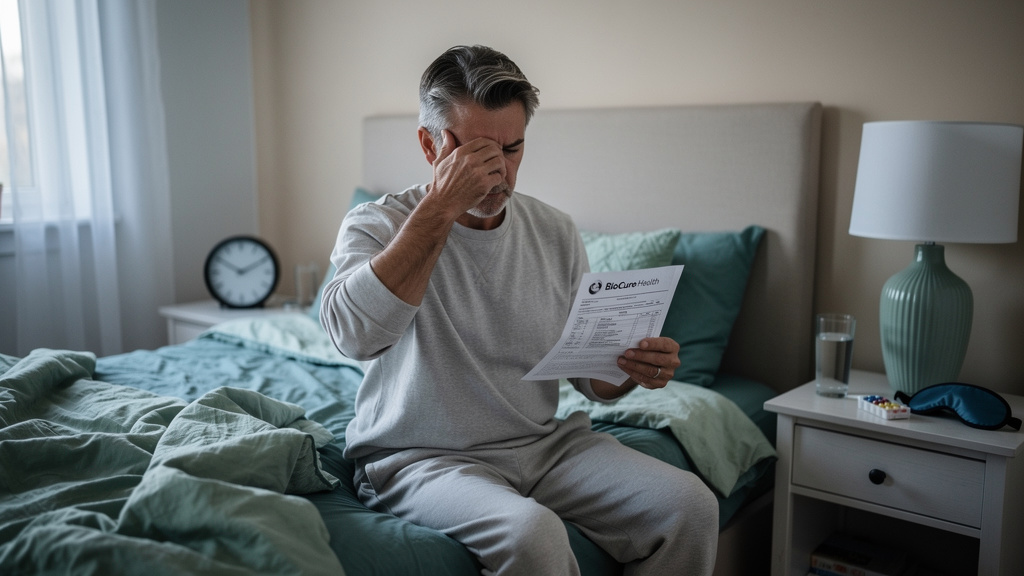
Tired all the time even after 8 hours of sleep? 9 causes and how to check
If you sleep eight hours and still wake up tired, either the quality of that sleep is poor or something in your body is draining energy that sleep cannot restore. The most common causes are fragmented sleep, obstructive sleep apnea, iron deficiency, thyroid or blood sugar problems, low vitamin B12, medication side effects, low testosterone in men, and depression or chronic stress. Each one leaves a clue, and most can be confirmed with a specific test: a blood panel, a home sleep apnea test or a short screening questionnaire.
That last part is what most lists skip. Knowing the nine causes is useful. Knowing which test settles each one is what gets you an answer. Here is the checklist.
| # | Possible cause | Clue that points to it | Test that confirms it |
|---|---|---|---|
| 1 | Poor sleep quality | Waking often, evening alcohol, screens in bed, feeling better on vacation | Two week sleep diary |
| 2 | Obstructive sleep apnea | Loud snoring, gasping, morning headaches, dry mouth | STOP-BANG questionnaire, then home sleep apnea test or in-lab sleep study |
| 3 | Iron deficiency or anemia | Heavy periods, breathless on stairs, pale skin, restless legs, craving ice | CBC plus ferritin |
| 4 | Underactive thyroid | Feeling cold, weight gain, constipation, dry skin | TSH, with free T4 if TSH is abnormal |
| 5 | High blood sugar or diabetes | Thirst, frequent urination, energy crash after meals | Fasting glucose and HbA1c |
| 6 | Low vitamin B12 or vitamin D | Tingling or numbness, sore tongue, vegan diet, little sun | Serum B12 (sometimes methylmalonic acid), 25-hydroxy vitamin D |
| 7 | Medication side effects | Tiredness started after a new drug or dose change | Medication review with your prescriber |
| 8 | Low testosterone (men) | Low libido, fewer morning erections, muscle loss, low mood | Two early morning total testosterone tests |
| 9 | Depression, anxiety or chronic stress | Low mood, loss of interest, feeling wired but tired | PHQ-9 or similar screening with a clinician |
1. Sleep quantity vs sleep quality: why 8 hours in bed can still leave you drained
Eight hours in bed is not the same as eight hours of restorative sleep. If your sleep is broken up by brief awakenings, you can log the hours and miss the deep and REM stages that make you feel restored.
The usual culprits are simple:
- Alcohol. It helps you fall asleep, then fragments sleep in the second half of the night as it wears off.
- Late screens and late caffeine. Bright light and stimulation push your body clock later, so you fall asleep later and sleep more lightly.
- An irregular schedule. Sleeping in on weekends shifts your internal clock and makes Monday feel like jet lag.
- Time in bed vs time asleep. Lying awake for an hour still counts as "in bed" on your mental tally.
How to check: keep a sleep diary for two weeks. Note bedtime, wake time, alcohol, caffeine, screen use and how rested you feel. Wearables can show patterns, but they are rough estimates, not a diagnosis. If cleaning up these habits does not help, move down the list. Our post on why rest is the reset button for your body explains how sleep and hormones feed each other.
2. Obstructive sleep apnea: the cause you sleep through
In obstructive sleep apnea, your airway narrows or closes repeatedly during sleep. Each time, your brain briefly wakes you to breathe again. You rarely remember these awakenings, so you believe you slept through the night. MedlinePlus lists sleep apnea among the medical causes of fatigue.
Clues: loud snoring, a partner noticing pauses or gasping, waking with a headache or dry mouth, dozing off while reading or driving, and high blood pressure.
How to check: clinicians often start with the STOP-BANG questionnaire. It asks about Snoring, Tiredness, Observed pauses in breathing, high blood Pressure, BMI, Age, Neck size and Gender. More "yes" answers mean higher risk. If your score suggests apnea, the next step is a home sleep apnea test, a small device you wear for a night or two, or an overnight in-lab sleep study when the picture is more complicated. These are ordered by a primary care or sleep medicine physician. Treating apnea matters beyond energy, because untreated apnea is associated with high blood pressure and cardiovascular strain.
3. Iron deficiency and anemia: why ferritin tells you more than hemoglobin
Iron carries oxygen in your red blood cells. When iron runs low, your tissues get less oxygen, and fatigue is often the first symptom.
Clues: heavy periods, shortness of breath on stairs, pale skin, brittle nails, restless legs at night and unusual cravings for ice.
How to check: ask for two tests together.
- CBC (complete blood count): measures hemoglobin and red cell size. This shows anemia.
- Ferritin: reflects your stored iron.
The order matters. Your body drains its iron stores first and only later lets hemoglobin fall. That means ferritin can be low while your CBC still looks normal, and some people already feel tired at that stage. A CBC alone can miss it. One caveat: ferritin rises with inflammation or infection, so it can look normal even when iron is low. In that case, clinicians may add serum iron and transferrin saturation. Reference ranges differ between labs, so have a clinician interpret the result in context. Do not start high dose iron on your own; too much is harmful, and low iron always has a cause, such as blood loss or poor absorption, that should be found.
4. Thyroid and blood sugar: two quiet energy drains
Both an underactive thyroid and diabetes appear on MedlinePlus's list of fatigue causes, and both can develop slowly enough that you blame age or a busy schedule.
Thyroid. An underactive thyroid slows your metabolism. Clues include feeling cold when others are comfortable, weight gain, constipation, dry skin and thinning hair. An overactive thyroid can also cause exhaustion, usually with a racing heart, anxiety and weight loss.
How to check: TSH is the screening test. If TSH is abnormal, free T4 is added to confirm the diagnosis and gauge severity.
Blood sugar. High blood sugar leaves cells short of usable fuel. Clues include thirst, frequent urination, blurred vision and an energy crash after carbohydrate heavy meals. Prediabetes often has no symptoms at all.
How to check: fasting glucose shows your blood sugar at one moment. HbA1c reflects your average over roughly the past two to three months. Together they give a clearer picture than either alone.
5. Low vitamin B12 or vitamin D, and medications that cause fatigue
Vitamin B12. B12 is needed to make red blood cells and keep nerves healthy. Low levels are more likely if you eat a vegan diet, are older, take metformin or long term acid reducers, or have had stomach surgery. Clues include tingling in the hands or feet, a sore tongue, memory problems and fatigue.
How to check: a serum B12 level. If the result is borderline, methylmalonic acid can confirm whether your tissues are actually short of B12.
Vitamin D. Low vitamin D is common, especially with little sun exposure or darker skin. To be candid, the evidence that correcting low vitamin D fixes fatigue is mixed. It is worth testing, but it is rarely the whole answer.
How to check: a 25-hydroxy vitamin D blood test.
Medications. Many common drugs cause tiredness as a side effect. MedlinePlus lists medicines among the causes of fatigue. Frequent offenders include:
- Antihistamines, especially older sedating ones used for allergies or sleep
- Some antidepressants
- Beta blockers for blood pressure or heart rhythm
- Opioid pain medicines, muscle relaxants and sleep aids
How to check: list every prescription, supplement and over the counter product you take, and note when your fatigue began. Review it with your prescriber. Do not stop a medication on your own.
6. Low testosterone in men: symptoms plus two morning tests
Testosterone supports energy, muscle, mood and libido. When it is low, fatigue often arrives with other signs: lower sex drive, fewer morning erections, loss of muscle, more belly fat, low mood and poor concentration. Our guide to the major symptoms of low testosterone covers them in detail.
How to check: the Endocrine Society's 2018 guideline on testosterone therapy in men with hypogonadism recommends diagnosing low testosterone only when a man has consistent symptoms and unequivocally low testosterone on at least two separate tests, drawn in the early morning while fasting. Testosterone peaks in the morning and varies day to day, so a single afternoon reading can mislead. The guideline also recommends checking LH and FSH to find out whether the problem starts in the testes or the pituitary.
There is overlap worth knowing: poor sleep and untreated sleep apnea can lower testosterone. That is one reason to test broadly rather than treat one number. At BioCure, testosterone care runs in three tiers: bioOptimize (foundational), bioRestore (medications that raise your own production without direct hormone replacement) and bioTest (full testosterone replacement with ongoing hormone monitoring). Which one fits, if any, depends on your labs and goals.
7. Depression, stress and when to see a doctor now
Fatigue is one of the core symptoms of depression, and it can show up before low mood does. Chronic stress and anxiety produce a "wired but tired" state: exhausted all day, alert at night. Clues include loss of interest in things you used to enjoy, changes in appetite, trouble concentrating and sleeping too much or too little.
How to check: a clinician can screen you in minutes with a validated questionnaire such as the PHQ-9.
When to see a doctor. The NHS advises seeing a GP if you feel tired all the time and do not know why, if it is affecting your daily life, if it is not improving, or if it comes with other symptoms such as weight loss or getting breathless easily. MedlinePlus gives similar advice for fatigue that persists despite enough rest. Book an appointment promptly if your tiredness comes with unexplained weight loss, night sweats, fever, shortness of breath or swollen glands. Seek emergency care if fatigue comes with chest pain, severe breathlessness, fainting, confusion or thoughts of harming yourself. In the US, you can call or text 988 at any time.
Getting tested. If there are no red flags and you want answers rather than guesses, a broad blood panel is a sensible first step. BioCure's Comprehensive Male and Female Panels cover hormones, thyroid function, lipids, metabolic and organ markers, and the practice offers a 90+ biomarker panel. Blood can be drawn at home by a visiting phlebotomist or at a lab, with results in 7 to 14 days, and every result is reviewed with you one on one. The process starts with an online intake of about 5 minutes and a $199 video consultation with a physician, which is credited back if you start a membership. BioCure treats patients in 47 states by telehealth and sees patients in person at its Fort Lauderdale area clinic. It does not bill insurance, but many patients use HSA or FSA funds, and BioCure provides the documentation. See our diagnostics page for details.
BioCure is a good fit if you want a wide panel, physician interpretation and a plan in one place. It is not the route for an urgent symptom, and a sleep study for suspected apnea is ordered through a sleep medicine provider. Your primary care doctor is also a reasonable place to start, especially if you want testing billed to insurance.
Frequently asked questions
What blood tests should I get if I'm tired all the time?
A useful starting set is a CBC, ferritin, TSH (with free T4 if abnormal), fasting glucose, HbA1c, vitamin B12 and vitamin D. Men with other symptoms of low testosterone should add early morning total testosterone, repeated on a second morning if low. A clinician may add other tests based on your symptoms and history.
Why am I still tired after 8 hours of sleep?
Usually because the sleep is fragmented or something in your body is draining energy. Alcohol, late screens and sleep apnea break up sleep without you noticing. If your sleep habits are solid, low iron, thyroid problems, blood sugar issues, medications or depression are the next things to check.
How do I know if my fatigue is from sleep apnea?
Loud snoring, pauses or gasping noticed by a partner, morning headaches and a dry mouth are the classic clues. The STOP-BANG questionnaire estimates your risk in a few minutes. A home sleep apnea test or an overnight sleep study is what confirms it.
Can low testosterone make men tired all the time?
Yes, fatigue is a common symptom of low testosterone, usually alongside low libido, muscle loss or low mood. The Endocrine Society 2018 guideline says a diagnosis needs both symptoms and consistently low levels on at least two early morning tests. One low reading is not enough to diagnose it.
Can low vitamin D cause constant tiredness?
Low vitamin D is common and is worth testing with a 25-hydroxy vitamin D blood test. The evidence that correcting it relieves fatigue is mixed, though. If you are deficient, treat it, but keep looking for other causes if the tiredness persists.
When should I see a doctor about always feeling tired?
The NHS advises seeing a doctor if tiredness has no clear reason, affects daily life, does not improve, or comes with symptoms like weight loss or breathlessness. Night sweats, fever and swollen glands also warrant a prompt visit. Chest pain, fainting, confusion or thoughts of self harm need emergency care.
Feeling tired all the time is not something to accept as normal, and it is rarely solved by guessing. Match your clues to the checklist, get the tests that settle each cause, and act on what the numbers show.
Let BioCure Health lead you in the right direction. Call or text us to schedule an introductory call at 754-206-0838. Your future self will thank you.