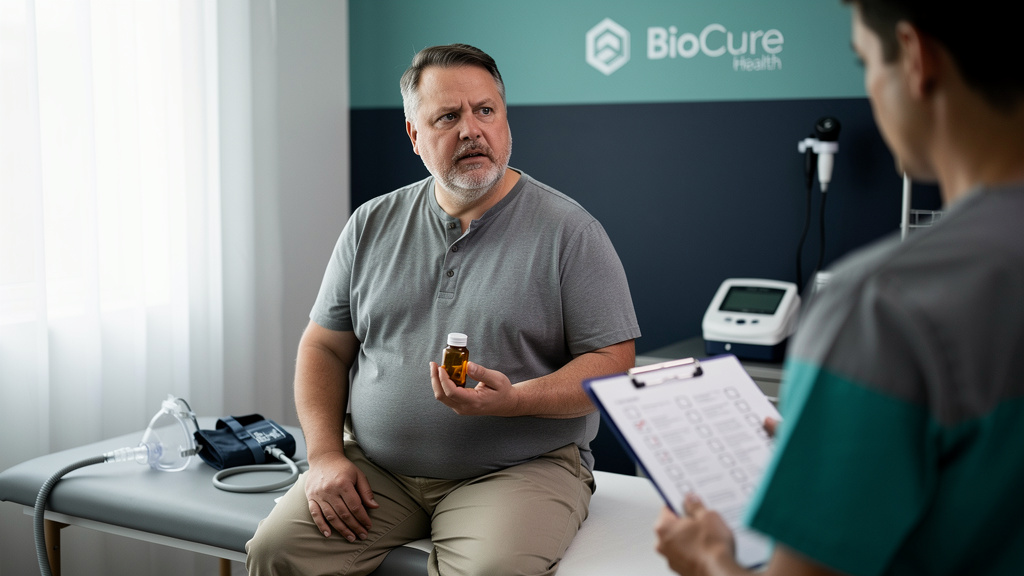
Medications and conditions that lower testosterone: a checklist
Yes. Opioid pain medicines, glucocorticoids such as prednisone, and anabolic steroids (including the months after you stop them) are well known to lower testosterone, and so are conditions like obesity, type 2 diabetes, sleep apnea, HIV and chronic kidney or liver disease. Symptoms alone cannot confirm it: the Endocrine Society guideline recommends diagnosing low testosterone only when symptoms are paired with consistently low levels on morning blood tests repeated on separate days. If a drug you take is on this list, do not stop it on your own. Ask your prescriber about alternatives and a retest.
That last point matters more than any item on the checklist below. Many of these causes are reversible, which is exactly why you want to identify them before anyone writes a prescription for testosterone.
The quick checklist
Use this table to scan your own medication list and health history. Then read the sections below for the detail behind each line.
| Medication or condition | How it can affect testosterone | What to ask your doctor |
|---|---|---|
| Opioids (oxycodone, hydrocodone, morphine, methadone and others) | Suppress the brain signals that tell the testes to make testosterone | Is my dose or duration likely affecting my hormones? Are there non-opioid options for my pain? |
| Glucocorticoids (prednisone and similar) | Suppress testosterone production, especially with ongoing use | Is a lower dose, shorter course or different route possible? |
| Anabolic steroids or SARMs, now or in the past | Shut down natural production; recovery after stopping can be slow | How long might recovery take, and what should we test while I wait? |
| Spironolactone | Blocks androgen action and can cause low T type symptoms | Could my symptoms come from this drug rather than low testosterone? |
| Oral ketoconazole | Can interfere with the body's production of steroid hormones | Is this affecting my levels, and is there an alternative antifungal? |
| Finasteride or dutasteride | Lower conversion of testosterone to DHT; blood testosterone usually does not fall | Are my symptoms a side effect, even if my testosterone is normal? |
| Some antipsychotics | Can raise prolactin, which suppresses testosterone | Should we check my prolactin level? |
| GnRH agonists (such as leuprolide) | Intentionally lower testosterone, usually for prostate cancer | Which side effects should I watch for, and how are they managed? |
| Obesity, type 2 diabetes, sleep apnea, HIV, chronic kidney or liver disease | Linked to lower testosterone through several pathways | Should my condition be treated first, and when should we retest? |
Opioids, including long term pain management
Opioids are one of the most common medication causes of low testosterone, and MedlinePlus lists them among the causes of hypogonadism. The mechanism sits in your brain, not your testes. Opioids dampen the hypothalamus's release of gonadotropin releasing hormone (GnRH). Less GnRH means the pituitary releases less LH and FSH, and without that signal the testes make less testosterone. This pattern is often called opioid induced androgen deficiency.
The risk is greatest with daily, long term use for chronic pain or with methadone and other maintenance therapies, rather than a few days of pills after surgery. If you are on a long term opioid and notice low libido, fatigue or erectile changes, raise it with the doctor who manages your pain. Ask whether your hormones should be checked and whether any non-opioid approaches could reduce your dose. Do not taper on your own; stopping opioids abruptly can cause withdrawal and uncontrolled pain.
Glucocorticoids such as prednisone
Glucocorticoids are anti-inflammatory steroids, not the same as anabolic steroids. They include prednisone, prednisolone, methylprednisolone and dexamethasone, used for asthma flares, autoimmune disease, arthritis and many other conditions. MedlinePlus names glucocorticoid medicines as a cause of hypogonadism, and the Endocrine Society guideline recognizes them among the medications that can suppress testosterone.
The effect generally scales with how much you take and for how long. A short burst for a flare is a different situation from months of daily therapy. Because the dose, the duration and the way the drug is delivered all matter, ask your prescriber directly whether your particular steroid regimen is likely to affect your hormones. Never stop a glucocorticoid suddenly. After prolonged use your body may need a gradual taper to restart its own cortisol production, and stopping abruptly can be dangerous.
Past anabolic steroid or SARM use
Taking testosterone or other anabolic steroids from outside a medical setting tells your brain there is plenty of hormone in circulation. The hypothalamus and pituitary respond by shutting down their signals, and natural production drops. The problem often shows up after the cycle ends, when the outside hormone is gone and your own system has not restarted. MedlinePlus specifically lists stopping anabolic steroids as a cause of hypogonadism.
Recovery can take months, and for some men it is incomplete. SARMs (selective androgen receptor modulators) are marketed online as a gentler option, but they can also suppress natural testosterone, and the human evidence on their safety is limited. These products are not approved for bodybuilding use, and what is in the bottle does not always match the label. If social media pushed you toward these compounds, our post on TikTok wellness trends that could be ruining your hormones covers the pattern in more detail.
Be completely honest with your doctor about past use, including dates and products. It changes how your labs are interpreted and which treatment makes sense.
Other medications worth reviewing
Several other drugs can lower testosterone or produce symptoms that look like low testosterone. The distinction matters, because the fix is different.
- Spironolactone. Used for blood pressure, heart failure and fluid retention, it blocks androgen receptors. It can cause breast tenderness and lower libido even when your testosterone level looks normal.
- Oral ketoconazole. This antifungal, taken by mouth, can interfere with the body's production of steroid hormones, including testosterone. Topical creams and shampoos are a different matter from oral tablets.
- 5-alpha reductase inhibitors (finasteride, dutasteride). Prescribed for prostate enlargement and hair loss, they block the conversion of testosterone to DHT. Blood testosterone usually does not drop and may rise slightly, yet some men report sexual side effects. That is a reason to discuss side effects, not necessarily a sign of low testosterone.
- Some antipsychotics. Certain antipsychotic medicines can raise prolactin, a pituitary hormone that suppresses the testosterone signal. A prolactin blood test can help sort this out.
- GnRH agonists (such as leuprolide). These are used to deliberately lower testosterone, most often in prostate cancer treatment. Low testosterone here is the goal of therapy, so the conversation is about managing side effects with your oncology team, not reversing it.
Health conditions linked to low testosterone
Medical conditions are an equally important part of the checklist, and several of them are common.
- Obesity. Excess body fat is strongly associated with lower testosterone, and weight loss can improve levels in many men. The Endocrine Society guideline discusses functional causes like this, where treating the underlying problem is part of the plan.
- Type 2 diabetes. Low testosterone is more common in men with type 2 diabetes, and the guideline counts it among the conditions where checking testosterone is reasonable.
- Sleep apnea. Poor, fragmented sleep is linked to lower testosterone. The Endocrine Society guideline also advises against starting testosterone therapy in men with untreated severe obstructive sleep apnea, so screening for it matters either way.
- HIV. HIV, particularly when accompanied by weight loss, is among the conditions the guideline flags for testosterone evaluation.
- Chronic kidney or liver disease. MedlinePlus lists liver and kidney disease among causes of hypogonadism.
Acute illness can temporarily lower testosterone too, which is why the guideline recommends against diagnosing low testosterone during an acute illness. Your result is most meaningful when you are well.
What to do if something on this list applies to you
First, do not stop or change a prescribed medication on your own. Every drug in this checklist was prescribed for a reason, and several are dangerous to stop abruptly. Bring the list to your prescriber and ask three questions: could this drug be affecting my hormones, is there a reasonable alternative or lower dose, and when should we retest?
Second, get tested properly. Testosterone is generally highest in the morning, so Mayo Clinic notes the blood test is usually done early in the day and often repeated on more than one day. The Endocrine Society recommends confirming a low result with a repeat fasting morning test. A good workup also looks for the cause, often including LH, FSH and prolactin, because those results help separate a testicular problem from a brain signaling problem such as opioid or steroid suppression.
| Step | Why it matters |
|---|---|
| Review your full medication and supplement list | Identifies reversible causes before treatment |
| Morning blood test, repeated on a separate day | Confirms the level is consistently low, not a one-off |
| Check LH, FSH and prolactin as indicated | Points to where the problem starts |
| Treat contributing conditions | Sleep apnea, weight and diabetes all affect results |
| Retest after any change | Shows whether the cause was addressed |
This is where BioCure Health fits for many men. Every patient starts with an online health history intake that takes about 5 minutes, and a physician reviews it, including your medications and past steroid or SARM use, before any labs are ordered. Testing is done with an at-home kit and an in-home phlebotomist visit or at a lab, and results come back in 7 to 14 days. You then review them one on one with a clinician. If a medication or condition looks like the cause, the conversation starts there. If treatment is appropriate, our testosterone therapy program includes options that support your body's own production as well as full replacement with ongoing monitoring. You can learn more about our lab panels on the diagnostics page.
Frequently asked questions
Can prednisone lower my testosterone?
Yes, glucocorticoids such as prednisone are a recognized cause of low testosterone, and the effect is generally more likely with higher doses and longer use. A short course for a flare is a different situation from months of daily therapy. Never stop prednisone suddenly after prolonged use; ask your prescriber about tapering and retesting.
Do opioids cause low testosterone?
They can, especially with long term daily use. Opioids suppress the GnRH signal from the hypothalamus, which lowers LH and testosterone production. If you are on chronic opioid therapy and have symptoms, ask the doctor managing your pain to check your hormones and discuss alternatives.
How long does it take testosterone to recover after a steroid or SARM cycle?
Recovery often takes months, and for some men it is incomplete. The timeline depends on what you took, how much and for how long. A physician can track recovery with repeat morning blood tests and hormone markers like LH and FSH.
Does finasteride lower testosterone?
Usually not. Finasteride lowers DHT by blocking the conversion of testosterone, and blood testosterone often stays the same or rises slightly. Some men still report sexual side effects, which are worth discussing with your prescriber.
How do I know if I actually have low testosterone?
Symptoms alone cannot confirm it. The Endocrine Society recommends diagnosis only when symptoms are paired with consistently low testosterone on fasting morning blood tests repeated on separate days. A full workup also looks for causes such as medications, sleep apnea or obesity.
Should I stop a medication if I think it is lowering my testosterone?
No. Stopping some drugs abruptly, including opioids and glucocorticoids, can be dangerous. Talk to your prescriber about whether the drug is the likely cause, whether an alternative exists, and when to retest.
Low testosterone is a result, not a diagnosis. The men who get the best outcomes find out why their level is low before deciding how to treat it, and that starts with an honest medication review and properly timed labs.
Let BioCure Health lead you in the right direction. Call or text us to schedule an introductory call at 754-206-0838, your future self will thank you.