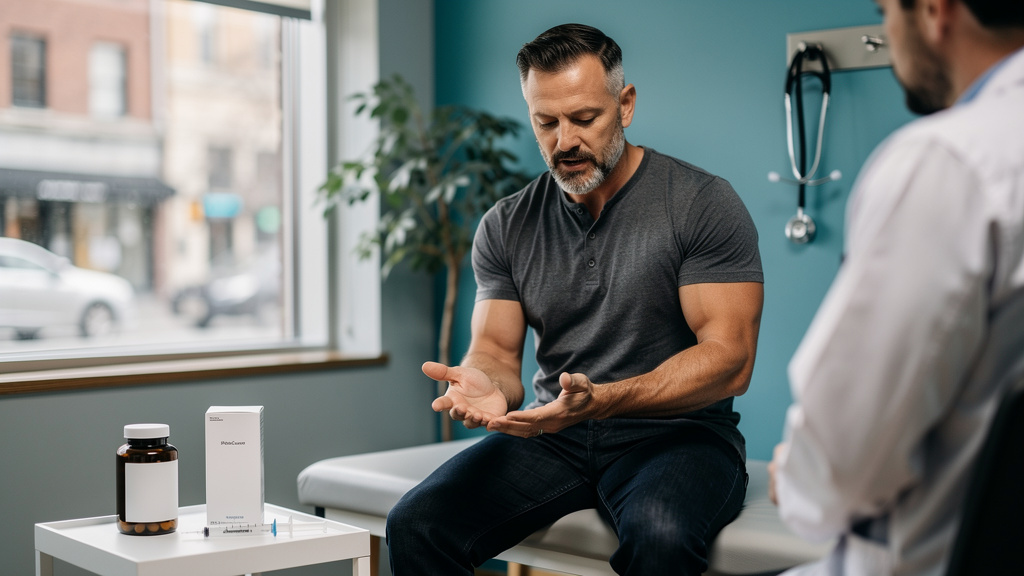
7 testosterone myths, from 'TRT causes heart attacks' to 'zinc fixes low T'
TRT (testosterone replacement therapy) is prescription testosterone that replaces what your body no longer makes, and it is meant for men with symptoms and confirmed low levels on repeat morning blood tests. Natural boosting means improving sleep, losing excess weight, exercising and sometimes taking supplements to support your own production; lifestyle changes can help, but most over the counter boosters have weak evidence. Two of the most repeated myths are also out of date: in 2025 the FDA updated testosterone labels after the TRAVERSE trial found no increase in major heart events, and zinc is only likely to help if you are actually low in zinc.
Here is the short version before we go myth by myth.
| Myth | What the evidence says |
|---|---|
| TRT causes heart attacks | TRAVERSE found no increase in major cardiac events; blood pressure and other risks still need watching |
| TRT causes prostate cancer | Not shown in men without cancer, but it can fuel existing prostate cancer, so screening and PSA monitoring matter |
| You can never stop TRT | You can stop; your own production may take months to restart and symptoms can return |
| Supplements work as well as TRT | Most do not; correcting a real deficiency and lifestyle changes help some men modestly |
| Everyone over 40 needs testosterone | Only men with symptoms and confirmed low levels are candidates |
| Higher is always better | Levels above the normal range raise hematocrit and other risks without added benefit |
| TRT is only about sex | Testosterone affects muscle, fat, red blood cells, mood and energy too |
Myth 1: TRT causes heart attacks
For years, testosterone labels carried cautionary language about cardiovascular risk, based largely on mixed observational studies. The TRAVERSE trial (Lincoff et al., New England Journal of Medicine, 2023) was built to settle the question. It randomized middle-aged and older men who had low testosterone and either existing cardiovascular disease or a high risk of it to testosterone gel or placebo. Testosterone was noninferior to placebo for major adverse cardiac events, meaning heart attack, stroke and cardiovascular death.
In 2025 the FDA required labeling changes across all testosterone products to add the TRAVERSE results and remove the boxed warning language about an increased risk of adverse cardiovascular outcomes. That is a real shift, and it is why "TRT causes heart attacks" no longer holds up as a blanket statement.
What still applies:
- Blood pressure. The FDA kept warnings about increased blood pressure in place. If you are on testosterone, your blood pressure should be checked regularly.
- Other signals from TRAVERSE. The trial saw higher rates of atrial fibrillation, acute kidney injury and pulmonary embolism in the testosterone group.
- The trial's limits. TRAVERSE studied men with diagnosed low testosterone treated to normal levels. It says nothing reassuring about men with normal testosterone, or about high doses used for bodybuilding.
Myth 2: TRT causes prostate cancer
Current evidence does not show that bringing testosterone back into the normal range causes prostate cancer in men who do not already have it. The concern has a real basis, though: testosterone can stimulate prostate cancer that already exists, which is why lowering testosterone is used to treat advanced prostate cancer.
That is the reason responsible prescribing includes a prostate check. The Endocrine Society's clinical practice guideline on testosterone therapy calls for assessing prostate cancer risk before treatment and monitoring PSA (prostate specific antigen) during treatment in appropriate men. A rising PSA or new urinary symptoms is a reason for evaluation, not something to ignore. The myth is false; the monitoring is not optional.
Myth 3: Once you start TRT, you can never stop
You can stop TRT. What is true is that stopping is not like stopping a supplement.
When you take testosterone from outside, your brain senses it and turns down the signals (LH and FSH) that tell your testicles to make testosterone and sperm. When you stop, those signals usually come back, but the timing varies from man to man and can take months. During that gap you may feel worse than before. And if your own production was low to begin with, it will likely return to that same low level, so your original symptoms come back.
This also matters for fertility. Because TRT suppresses sperm production, the Endocrine Society guideline advises against it for men who are trying to conceive. If fertility is on your horizon, tell your clinician before you start. There are medications that raise the body's own testosterone without direct hormone replacement, and that is exactly what BioCure's bioRestore tier is built around.
Myth 4: Supplements and natural boosters work as well as TRT
This is where TRT vs natural testosterone gets confused most often. They are not two versions of the same thing.
Zinc and vitamin D are the classic examples. If you are genuinely deficient, correcting it is reasonable and may help. If your levels are already normal, there is little good evidence that taking more will raise testosterone in a meaningful way. Most herbal "T booster" blends rest on small, short studies. Dietary supplements are also not reviewed by the FDA for effectiveness before they are sold, so the label is a marketing claim, not a verified result.
Lifestyle is a different story. Obesity is strongly linked with lower testosterone, and losing excess weight tends to raise it. Short or poor sleep lowers testosterone, and untreated sleep apnea is a common hidden factor. Regular strength training, moderate alcohol intake and managing chronic illness all support your own production. These changes are worth making whether or not you ever need TRT. For a man with true hypogonadism, though, they usually will not close the gap on their own.
| Approach | Best suited for | Strength of evidence | Effect on fertility | Monitoring needed |
|---|---|---|---|---|
| TRT | Men with symptoms and confirmed low levels | Strong for raising testosterone to normal | Suppresses sperm production | Yes: testosterone, hematocrit, PSA, blood pressure |
| Medications that raise your own production | Men with low levels who want to protect fertility | Moderate; depends on the cause | Generally preserves it | Yes: hormone levels |
| Weight loss, sleep, exercise | Everyone, especially men with obesity or poor sleep | Good for modest improvement | No negative effect | Routine health checks |
| Correcting zinc or vitamin D deficiency | Men with a documented deficiency | Limited to the deficient | No negative effect | A baseline lab to confirm deficiency |
| Herbal T booster blends | Unclear | Weak and inconsistent | Unknown | None, which is part of the problem |
Myth 5: Every man over 40 needs testosterone
Testosterone drifts down gradually with age, but many older men stay in the normal range. Tiredness, low libido and weight gain are also caused by sleep apnea, depression, thyroid disease, medications and obesity. Treating the number without finding the cause can miss the real problem.
The Endocrine Society guideline sets a clear standard: consistent symptoms plus low testosterone confirmed on at least two separate morning blood tests, because levels swing through the day and from day to day. FDA labeling has long noted that safety and efficacy have not been established for low testosterone caused by aging alone, and TRAVERSE was a safety trial, not a test of whether treating normal aging helps. For broader professional context, the Endocrine Society has also published a 2026 statement on testosterone replacement therapy.
The practical takeaway: test before you treat. BioCure's comprehensive diagnostics include Male and Female panels covering hormones, thyroid, lipids, metabolic and organ markers, described as a 90+ biomarker panel. You can use an at home kit with an in home phlebotomist visit or test in a lab, with results in 7 to 14 days, and every result is reviewed with a specialist.
Myth 6: Higher testosterone is always better
The goal of TRT is to relieve symptoms with levels in a normal physiologic range, not to chase the highest number on the report. Pushing testosterone above that range, often called supraphysiologic levels, adds risk without adding proportional benefit.
The most common lab problem is a rise in hematocrit, the share of your blood made of red blood cells. Too high, and your blood becomes thicker. The Endocrine Society guideline calls for checking hematocrit before and during treatment and adjusting or pausing therapy if it climbs too high. Other issues that tend to worsen at higher doses include blood pressure, acne, fluid retention, breast tenderness from conversion to estradiol, and worsening of untreated sleep apnea.
This is why monitoring is not a formality. Ongoing hormone monitoring with regular testing is part of BioCure's full hormone therapy tier, bioTest, so your dose is guided by your labs and how you feel rather than by guesswork.
Myth 7: TRT is only about sex
Libido and erectile function get the headlines, but testosterone also plays roles in muscle mass, fat distribution, red blood cell production, mood and energy. Many men who seek help describe flat motivation and poor recovery before they mention their sex life.
Keep expectations realistic. Response to TRT varies, and benefits outside sexual function are not guaranteed for every man. Erectile dysfunction is often driven by blood vessel health rather than hormones, so it may need its own treatment; BioCure offers sexual health care, including ED treatment, alongside hormone optimization. TRT also does not replace sleep, training and nutrition. It works best as one part of a plan, not the whole plan.
Frequently asked questions
Is TRT safe for your heart now that the FDA changed the label?
The 2025 FDA labeling change added TRAVERSE results, which showed no increase in major cardiac events for men with low testosterone treated to normal levels. It did not make TRT risk free. Blood pressure warnings remain, and TRAVERSE saw higher rates of atrial fibrillation, acute kidney injury and pulmonary embolism, so ongoing monitoring still matters.
Does zinc or vitamin D actually boost testosterone?
Only reliably if you are deficient to begin with. If your levels are already normal, there is little good evidence that extra zinc or vitamin D meaningfully raises testosterone. A blood test is the simplest way to know whether supplementing makes sense for you.
Can you get off TRT once you start?
Yes. Your own production usually restarts after stopping, but it can take months, and if your levels were low before treatment, they will likely return to that baseline. Plan any stop with your clinician so symptoms and labs can be tracked.
Will TRT make me infertile?
TRT suppresses sperm production, which is why the Endocrine Society guideline advises against it for men trying to conceive. The effect is often reversible after stopping, but recovery time varies. If fertility matters to you, ask about medications that raise your own testosterone instead.
How do doctors diagnose low testosterone?
The Endocrine Society guideline calls for consistent symptoms plus low testosterone confirmed on at least two separate morning blood tests. A good workup also looks for other causes such as thyroid problems, sleep apnea and medications. One random test is not enough to start treatment.
How much does it cost to start TRT with BioCure?
The physician video consultation is $199 and can be credited back with a membership. Membership pricing depends on your protocol and is set at your consultation. BioCure does not bill insurance directly, but many patients use HSA or FSA funds, and BioCure provides invoices and documentation for reimbursement.
TRT and natural testosterone boosting answer different problems. Lifestyle changes support every man; TRT replaces what a diagnosed body cannot make. The right choice starts with accurate testing and continues with monitoring. BioCure is a physician led telehealth clinic licensed in 47 states, with appointments in person in the Fort Lauderdale area or by video. Learn more about the three tiers of testosterone therapy and decide by design, not by default.
Let BioCure Health lead you in the right direction. Call or text us to schedule an introductory call at 754-206-0838. Your future self will thank you.