What tests do longevity clinics offer? 2026 comparison by category
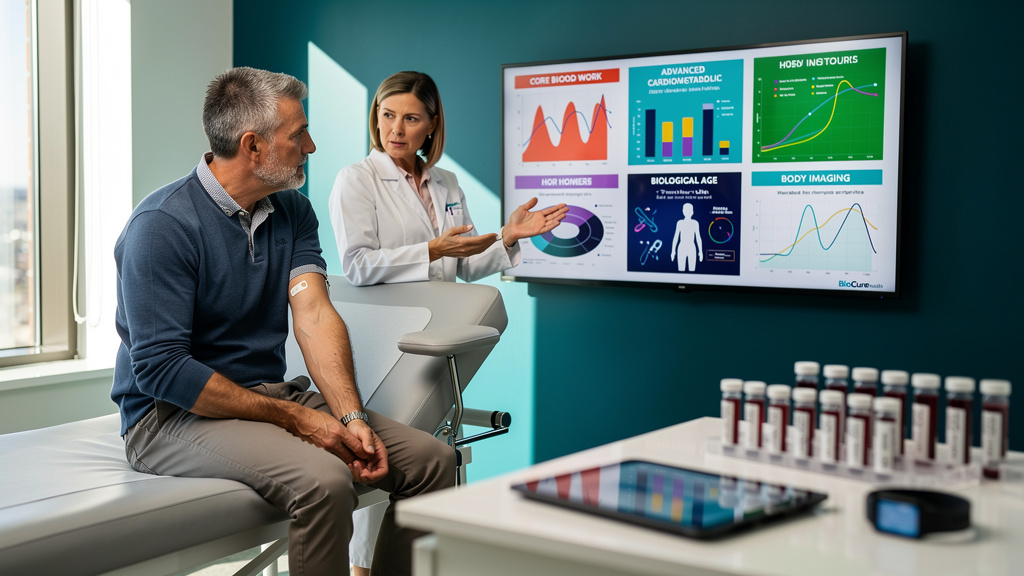
Longevity clinics typically offer six categories of tests: a core blood panel, advanced cardiometabolic markers such as ApoB, Lp(a), hs-CRP and fasting insulin, comprehensive hormone panels, epigenetic or biological age tests, imaging and cancer screening add-ons, and data from wearables or continuous glucose monitors. Blood-based panels carry the strongest evidence and the most actionable results, while biological age tests, full-body imaging and glucose monitoring in people without diabetes are useful for some people but less proven. The best clinic is not the one with the longest test list. It is the one that chooses the right tests for you and has a physician explain what to do with the results.
A decade ago, most people only did blood work when something felt wrong. In 2026, the mindset is completely different. Here is what each testing category actually tells you, where the evidence is solid, and how to compare clinic testing services before you pay.
| Category | What it tells you | Strength of evidence | How it is done |
|---|---|---|---|
| Core blood panel | Organ function, blood counts, blood sugar, cholesterol | Strong, standard medical practice | Blood draw |
| Advanced cardiometabolic markers | A finer view of heart and metabolic risk | Strong for several markers; interpretation matters | Blood draw |
| Comprehensive hormone panel | Sex hormones, thyroid and adrenal function | Strong when timed and interpreted correctly | Blood draw |
| Epigenetic and biological age tests | An estimate of how fast you are aging | Emerging; best for tracking trends | Blood or saliva |
| Imaging and cancer screening add-ons | Structural findings such as plaque or masses | Varies widely by test | Scan or specialized blood test |
| Wearables and CGMs | Daily sleep, heart rate, activity and glucose patterns | Good for habits; limited outcome data in people without diabetes | Device |
Core blood panel vs advanced cardiometabolic markers
The core blood panel is the foundation, and every credible longevity clinic starts here. It usually includes a complete blood count, a comprehensive metabolic panel covering kidney function, liver enzymes, electrolytes and glucose, a standard lipid panel, and HbA1c as a longer view of blood sugar. Many clinics add thyroid stimulating hormone and vitamin D. These are the same tests your primary care doctor orders, and they catch common, treatable problems early.
Advanced cardiometabolic markers go a layer deeper. They answer questions a standard panel cannot:
- ApoB counts the cholesterol-carrying particles that drive plaque buildup, which can reveal risk that a normal LDL number hides.
- Lp(a) is a largely inherited cholesterol particle. Because it is mostly genetic, many people only need it measured once.
- hs-CRP is a sensitive marker of low-grade inflammation.
- Fasting insulin can flag insulin resistance years before glucose or HbA1c rise.
We break down each of these in our guide to ApoB, Lp(a), hs-CRP and fasting insulin. The key point: more markers are only useful when someone connects them to a decision. A panel of 100 results with no plan attached is just data. Our post on the myths about 100-biomarker panels covers why breadth alone is a poor way to judge a clinic.
At BioCure Health, the Comprehensive Male and Female panels cover hormones, thyroid, lipids, metabolic and organ markers, described on our diagnostics page as a 90+ biomarker panel. Every result is interpreted with a specialist rather than handed back as a PDF.
Comprehensive hormone panels
Hormones shape energy, body composition, sleep, mood, libido and recovery, so most longevity clinics test them in detail. A comprehensive panel typically looks like this:
| Panel focus | Common markers | What it helps answer |
|---|---|---|
| Men | Total and free testosterone, SHBG, estradiol, LH, FSH | Is testosterone low, and is the cause in the testes or the brain's signaling? |
| Women | Estradiol, progesterone, FSH, LH, testosterone, DHEA-S | Where am I in perimenopause or menopause, and which hormones are out of balance? |
| Thyroid | TSH, free T4, free T3, sometimes thyroid antibodies | Is my metabolism being slowed by an underactive thyroid? |
| Adrenal and stress | Cortisol and related markers | Is chronic stress affecting my sleep, weight or energy? |
Timing matters more than most people realize. Testosterone is usually drawn in the morning, when levels are highest, and female hormones need to be read against where you are in your cycle or in menopause. A single number rarely tells the full story, so a good clinic reads results alongside your symptoms and repeats key tests before starting treatment.
BioCure's men's hormone program uses three tiers: bioOptimize (foundational), bioRestore (medications that raise your own testosterone without direct hormone replacement) and bioTest (full testosterone replacement with ongoing hormone monitoring). The adrenal/stress test is available as a specialty add-on.
Epigenetic and biological age tests
Epigenetic tests estimate your biological age by analyzing DNA methylation, chemical tags on your DNA that shift as you age. The result is usually reported as a biological age compared with your calendar age, sometimes with a pace-of-aging score.
These tests are genuinely interesting, but be clear about their limits. Different epigenetic clocks are built on different methods, so two tests can give you two different numbers. They do not diagnose disease, and the research linking a change in your score to a change in your health outcomes is still developing. Their real value is tracking a trend over time, using the same test, after you change sleep, training, nutrition or a treatment protocol.
Do not confuse epigenetic testing with genetic testing. Your genes are fixed from birth and show inherited tendencies. Your epigenetic pattern changes with how you live. BioCure offers both as specialty tests: TrueAge epigenetic testing and genetic testing.
Imaging and cancer screening add-ons
Some longevity clinics, particularly high-end concierge practices, bundle imaging into their programs. Common options include:
- Coronary artery calcium scoring, a CT scan that looks for calcified plaque in the heart's arteries.
- DEXA scans for body composition and bone density.
- Carotid ultrasound to look at plaque in the neck arteries.
- Full-body MRI, which scans for masses and structural abnormalities.
- Multi-cancer early detection blood tests, which look for tumor signals in the blood.
Targeted tests such as calcium scoring can sharpen a heart risk picture when the decision about treatment is unclear. Full-body MRI and multi-cancer blood tests are a different story. They can find incidental findings that turn out to be harmless but still lead to more scans, biopsies and worry, and their ability to reduce deaths is still being studied. They do not replace the established cancer screenings, such as colonoscopy, mammography and cervical screening, that your primary care doctor follows based on your age and risk.
BioCure's diagnostics center on blood-based panels and specialty lab tests. If your results point toward a question that imaging could answer, that is a conversation to have with your physician rather than a scan to order by default.
Wearables and continuous glucose monitors
Wearables track sleep, resting heart rate, heart rate variability, activity and estimated fitness. Continuous glucose monitors (CGMs), once used mostly by people with diabetes, show how your blood sugar responds to meals, exercise, stress and sleep in real time.
This data is excellent for building habits. Seeing your glucose climb after a late dessert, or your heart rate variability drop after poor sleep, changes behavior faster than a lab report does. The limit is that evidence showing CGM use improves long-term outcomes in people without diabetes is thin, and normal post-meal rises can be misread as a problem. The smartest approach pairs device data with lab markers like HbA1c and fasting insulin, so you are reacting to meaningful patterns, not single spikes.
How to compare testing services and where to get them done
Not every person who walks through our doors is sick. Most of them just want more. Whatever your reason for testing, judge a service by these criteria rather than by the size of its biomarker list:
- Relevance: does the panel match your age, sex, goals and symptoms?
- Interpretation: does a physician review results with you one on one?
- Collection: can you test at home, in a lab, or both?
- Turnaround: how long until results, and how soon is the review?
- Follow-through: can the same team build and monitor a treatment plan?
- Pricing model: membership, bundle or a la carte, and whether insurance or HSA/FSA funds apply.
| Provider type | Typical tests | Interpretation | How pricing works |
|---|---|---|---|
| Primary care doctor | Core panel, guideline screenings | Your doctor, often brief | Usually billed to insurance |
| Subscription lab platforms | Large blood panels on a set schedule | Varies; often digital reports | Annual membership covering a set of tests |
| Direct-to-consumer test kits | Single-topic kits | Usually a written report | A la carte, per kit |
| Concierge longevity clinics | Labs plus imaging and in-person exams | Physician-led | Often an annual retainer, cash pay |
| Imaging centers | CT, MRI, DEXA | Radiologist report | Per scan, usually cash pay |
| Physician-led telehealth (BioCure Health) | Comprehensive panels plus specialty tests | Specialist review of every result | Consultation fee, lab testing, membership for ongoing care |
If you are weighing specific subscription and kit brands, see our comparison of Function Health vs InsideTracker vs Everlywell vs a physician-led panel, and check each company's own pricing page for current numbers.
BioCure is a fit if you want testing and treatment under one physician-led team. The process: a five-minute online intake, a $199 video consultation with a physician (credited back with a membership), then diagnostics with either an at-home kit and in-home phlebotomist visit or in-lab testing. Results arrive in 7 to 14 days and are explained in a 1:1 review that leads to a custom protocol. Appointments can be in person at our Fort Lauderdale area clinic or by video, and we are licensed in 47 states, with availability confirmed at intake.
Our specialty tests have published prices:
| Specialty test | Price |
|---|---|
| Micronutrient | $585 |
| Food sensitivity | $600 |
| Gut health | $600 |
| TrueAge epigenetic | $625 |
| Genetic testing | $530 |
| Adrenal/stress | $329 |
The evidence behind some specialty tests, food sensitivity panels in particular, is more debated than for standard blood markers, so treat those results as a starting point for discussion, not a diagnosis. BioCure does not bill insurance directly, but many patients use HSA or FSA funds, and we provide invoices and documentation for reimbursement.
Frequently asked questions
What is the most important blood test for longevity?
There is no single best test. A core panel with a lipid panel, metabolic panel, HbA1c and blood count is the foundation, and advanced markers like ApoB, Lp(a), hs-CRP and fasting insulin add the most useful extra detail for heart and metabolic risk. Hormone testing matters most when you have symptoms such as low energy, poor sleep or changes in libido.
Are biological age tests accurate?
Epigenetic age tests measure real biological signals, but different tests use different methods and can give different results. They do not diagnose disease. They are most useful for tracking your own trend over time with the same test.
Do I need a full body MRI as part of longevity testing?
For most people, no. Full-body MRI can find harmless incidental findings that lead to extra tests and anxiety, and its benefit for reducing deaths is still being studied. Targeted tests chosen with a physician are usually a better use of your money.
Can I do longevity blood testing at home?
Yes. Many clinics, including BioCure Health, offer an at-home kit with an in-home phlebotomist visit, or you can test in a lab. BioCure results arrive in 7 to 14 days and are reviewed with you one on one.
Does insurance cover longevity clinic tests?
Insurance often covers standard screening through your primary care doctor, but many longevity clinics are cash pay. BioCure does not accept insurance directly, though many patients pay with HSA or FSA funds using the documentation we provide.
Is a continuous glucose monitor worth it if I don't have diabetes?
A CGM can be a helpful short-term tool to learn how food, sleep and exercise affect your glucose. Evidence that it improves long-term outcomes in people without diabetes is limited, so pair it with lab markers like HbA1c and fasting insulin and avoid overreacting to normal spikes.
Longevity is not accidental, it is intentional. The right tests, read by the right physician, turn guesswork into a plan you can follow and measure. That is what modern longevity looks like: a body that is monitored, supported and optimized all year long.
Let BioCure Health lead you in the right direction. Call or text us to schedule an introductory call at 754-206-0838. Your future self will thank you.