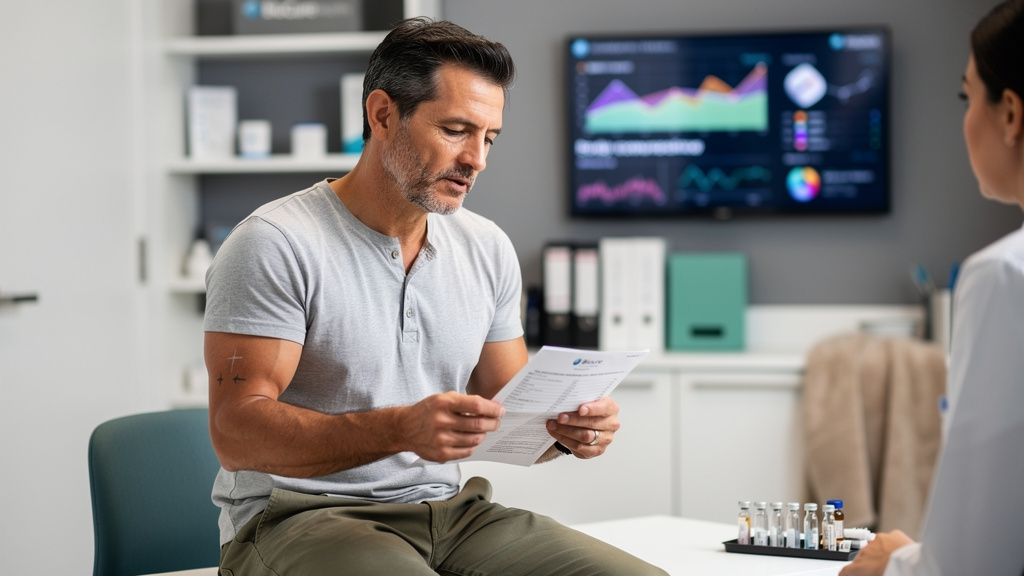
What results can you expect from peptide therapy? Timelines by goal
Peptide therapy results depend on which peptide you use and the goal you are treating. Recovery peptides such as BPC-157 and TB-500 are usually judged over weeks, growth hormone peptides such as sermorelin and ipamorelin over a few months, and longevity peptides over many months, where changes are subtle and best confirmed with lab work. Human evidence for most peptides is still limited, so no result is guaranteed; the honest way to judge progress is to set a baseline, define what success looks like, and retest.
That last point matters more than any timeline. Longevity is not accidental, it is intentional, and intentional means measured. Below is what a realistic expectation looks like for each goal, and how to tell whether your protocol is actually doing something.
Why results depend on the peptide and the goal
"Peptide therapy" is not one treatment. Peptides are short chains of amino acids, and each one signals a different system in the body. A recovery peptide, a growth hormone peptide and a mitochondrial peptide have almost nothing in common except their chemistry, so asking "how long does peptide therapy take to work" is a bit like asking how long medication takes to work. It depends on which one.
Three things shape your results:
- The mechanism. Some peptides act on tissue repair, some prompt your pituitary to release more growth hormone, and some are studied for effects on cellular energy and aging. Each works on a different clock.
- The quality of the evidence. Much of the research behind popular peptides, especially BPC-157 and TB-500, comes from animal and laboratory studies. Controlled human trials are limited. That does not mean they do nothing, but it does mean expectations should be modest and personal tracking matters.
- Your starting point. Someone with low baseline markers, poor sleep or a fresh injury has more room to change than someone already in excellent shape. The same protocol can feel dramatic for one person and subtle for another.
Here is a realistic overview by goal.
| Goal | Example peptides | What people often notice first | Reasonable time to evaluate | How to measure it |
|---|---|---|---|---|
| Recovery and injury | BPC-157, TB-500 | Less soreness, easier training sessions | Several weeks | Pain scores, range of motion, training log, clinical exam |
| Body composition | Sermorelin, ipamorelin | Better sleep and energy before visible change | A few months | IGF-1, body composition scans, waist, strength |
| Sleep | Growth hormone peptides | Deeper or more restful sleep | A few weeks | Sleep diary, wearable data, morning energy |
| Skin and tissue | GHK-Cu "Glow" stack | Skin texture and recovery | A few months | Photos in consistent light, clinician review |
| Longevity | MOTS-c, NAD+ support | Often nothing obvious day to day | Many months | Metabolic labs, inflammation markers, epigenetic testing |
These windows are evaluation points, not promises. Your physician should agree on them with you before you start.
Recovery and injury: what to expect, when
BPC-157 and TB-500 are the peptides most people ask about for recovery, and they are often paired. BioCure offers them as a recovery stack. In animal research, both have been studied for effects on tendon, ligament, muscle and gut tissue healing. The human data is thin, so treat any timeline as a working hypothesis you test on yourself.
A realistic pattern looks like this:
- First couple of weeks: some people report less soreness after training or a nagging joint that feels a little calmer. Others notice nothing yet. Both are normal.
- Several weeks in: this is a sensible checkpoint. Is your pain lower on a consistent scale? Can you load the area more? Has range of motion improved?
- Longer term: structural healing of tendons and ligaments is slow in anyone, with or without peptides. A peptide is not a substitute for rehab, sleep, protein and smart loading.
How to measure: rate pain the same way at the same time each week, keep a training log with weights and reps, and track range of motion if your injury affects it. If an injury involves significant swelling, instability, numbness or pain that is getting worse, a clinician should examine it before you rely on any peptide.
For a deeper look at what human studies do and do not show, read our breakdown of whether peptides speed up muscle recovery.
Body composition and GH peptides
Sermorelin and ipamorelin are growth hormone secretagogues. Instead of giving you growth hormone directly, they prompt your own pituitary to release more of it, which in turn raises IGF-1, the main downstream marker. Because the effect runs through your body's own signaling, it is gentler and slower than direct hormone replacement.
What to expect in practice:
- Early weeks: the first thing many people notice is sleep. Growth hormone is naturally released during deep sleep, and better sleep often shows up before anything in the mirror.
- First couple of months: improved recovery between workouts and steadier energy are commonly reported.
- A few months in: this is where any change in body composition, such as a little less fat around the waist or easier muscle retention, becomes measurable. It will be modest, and it depends heavily on training, protein intake and calories.
Be skeptical of anyone promising dramatic fat loss from growth hormone peptides alone. If significant weight loss is your main goal, GLP-1 medications such as semaglutide and tirzepatide are a different category, handled within BioCure's medical weight loss program with physician supervision and a blood panel before you start.
How to measure: check IGF-1 at baseline and on follow up to confirm the peptide is having a biological effect. Pair it with a body composition measurement, waist circumference and strength numbers. A rising IGF-1 with no change in how you train or eat will not change your physique on its own.
Sleep and cognitive peptides
Sleep is often the fastest place to see a difference, and it is also the easiest place to fool yourself. A few good nights can happen for many reasons, so track it properly.
Growth hormone peptides are the most common reason people report deeper sleep, because of the link between growth hormone release and slow wave sleep. BioCure also offers cognitive and sleep protocols, built after your evaluation rather than picked off a menu.
What to expect:
- First few weeks: if a sleep effect is going to show up, this is usually when people notice it: falling asleep more easily, waking less, or feeling more rested in the morning.
- Focus and mental clarity: these are harder to pin down. Better sleep alone improves focus, so it is hard to separate a direct cognitive effect from a downstream one. Human evidence for cognitive peptides is limited.
How to measure: keep a simple sleep diary or use a wearable for a couple of weeks before you start, so you have a real baseline. Note bedtime, wake time, night wakings and a morning energy score from one to ten. Compare like with like: same caffeine, alcohol and training habits.
Longevity peptides: subtle, long term changes
This is where expectations need the most honesty. Longevity peptides such as MOTS-c, a mitochondrial peptide, are studied for effects on metabolism and cellular energy. GHK-Cu, part of BioCure's "Glow" stack with BPC-157 and TB-500, has been studied mostly for skin and tissue, with much of that research involving topical use. NAD+ support is aimed at cellular energy pathways. For most of these, the strongest data is preclinical, and long term human outcome data does not exist yet.
So what should you expect? Usually, not much you can feel from one day to the next. Longevity work is about direction over months and years: steadier metabolic markers, better recovery and energy, and a body that holds its ground as you age. Not every person who walks through our doors is sick. Most of them just want more, and "more" in longevity is measured, not felt.
How to measure: this is the goal where labs do almost all the work. Track fasting metabolic markers, lipids, inflammation markers and, if you want a direct read on biological aging, epigenetic testing. BioCure's TrueAge epigenetic test has a published price of $625. Retesting on a schedule tells you whether your overall protocol, including sleep, training and nutrition, is moving the right way.
We cover baseline panels and retest timing in detail in our guide to longevity peptide program labs, goals and retests.
Labs and retests to confirm results
A decade ago, most people only did blood work when something felt wrong. Today, the smarter approach is to test before you start, so you can tell the difference between a real result and a good week.
| What you are tracking | Useful markers | Why it matters |
|---|---|---|
| GH peptide effect | IGF-1 | Confirms the peptide is changing your hormone signaling |
| Metabolic health | Fasting glucose, HbA1c, lipids | Shows whether body composition changes are improving metabolism |
| Safety and organ function | Metabolic panel, liver and kidney markers, blood count | Confirms your body is tolerating the protocol |
| Hormonal context | Thyroid and sex hormones | Rules out other causes of fatigue, poor sleep or weight gain |
| Biological aging | Epigenetic testing | Tracks long term longevity direction |
At BioCure, every peptide protocol starts with an evaluation and labs. Our comprehensive Male and Female panels cover hormones, thyroid, lipids, metabolic and organ markers across 90+ biomarkers. You can test with an at home kit and an in home phlebotomist visit, or in a lab, and results come back in 7 to 14 days. Every result is interpreted with a specialist, and your custom protocol is explained in a one on one review.
The process is straightforward: a five minute online intake, a $199 video consultation with a physician that can be credited back with a membership, testing, then your protocol shipped to your door, typically 5 to 10 business days after your consultation and testing. Ongoing follow up is included, which is where retests and adjustments happen. BioCure is licensed in 47 states, and availability in your state is confirmed at intake. We do not bill insurance directly, but many patients use HSA or FSA funds, and we provide documentation for reimbursement. You can see all 15+ protocols on our peptide therapy page.
Frequently asked questions
How long does it take for peptides to start working?
It depends on the peptide. Sleep and recovery effects, when they happen, are often noticed within the first few weeks, while body composition changes from growth hormone peptides usually take a few months to measure. Longevity peptides may never produce an obvious day to day feeling and are judged with labs over many months.
Is BPC-157 proven to work in humans?
Not conclusively. Most BPC-157 research comes from animal and laboratory studies, and controlled human trials are limited. That is why it makes sense to track pain, function and training data from a baseline so you can judge your own response.
Will sermorelin or ipamorelin help me lose fat?
They may help modestly by improving sleep, recovery and growth hormone signaling, but they are not weight loss drugs. Any change in body fat depends on training, protein and calories, and is usually measurable only after a few months. For significant weight loss, GLP-1 medications are a separate, physician supervised option.
What blood tests should I get before starting peptide therapy?
A baseline panel typically covers IGF-1 for growth hormone peptides, plus metabolic markers, lipids, organ function, a blood count, thyroid and sex hormones. These confirm the protocol is safe for you and give you numbers to compare against at retest. BioCure's comprehensive panels cover 90+ biomarkers.
What if I don't notice any results from peptides?
First check your labs and tracking data, because some effects show up in numbers before you feel them. If nothing has changed at your agreed checkpoint, your physician can adjust the dose, switch peptides or stop the protocol. Not every person responds the same way, and stopping something that is not working is a good outcome too.
Peptides can be a useful part of a longevity plan, but only when the expectations are honest and the progress is measured. Set a baseline, agree on what success looks like, and let the data tell you whether it is working. Are you living by default or by design?
Let BioCure Health lead you in the right direction. Call or text us to schedule an introductory call at 754-206-0838, your future self will thank you.