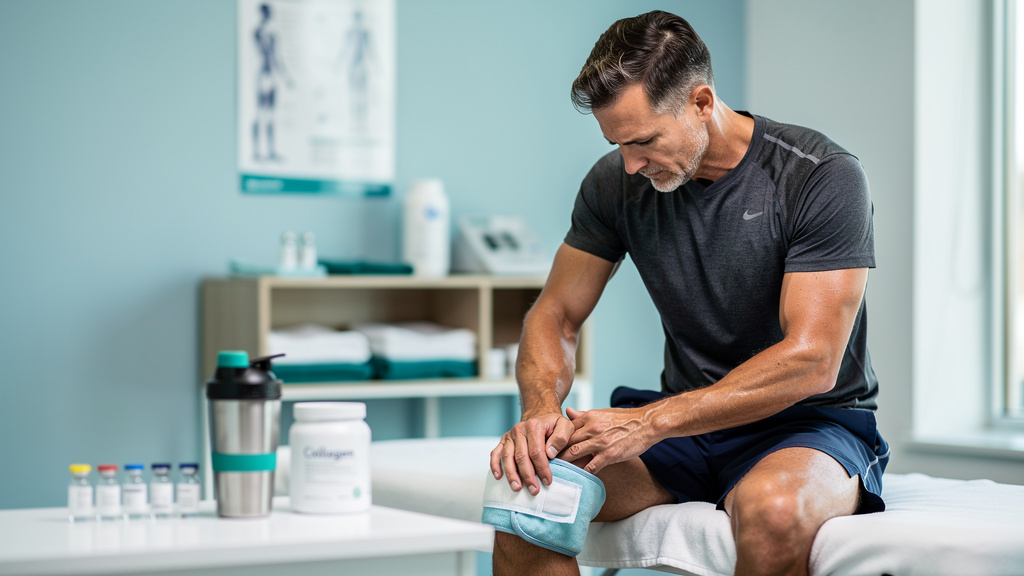
Do peptides speed up muscle recovery? What human studies show in 2026
Peptide therapy has not been proven to make muscles recover faster in people. BPC-157 and TB-500 look promising in animal and cell studies, but the human evidence is limited to a small case series and a tiny safety pilot, with no randomized controlled trials measuring muscle recovery. Oral collagen peptides are the only recovery peptide category tested in randomized human trials, and their results are modest and mixed.
That is the honest summary. The rest of this post walks through what has actually been studied in humans, what the newest reviews conclude, and what it would take to change the answer.
The short answer: strong animal data, thin human evidence
Most of the excitement around recovery peptides comes from rodents. In animal models of muscle, tendon and ligament injury, BPC-157 has repeatedly been reported to speed healing, improve blood vessel growth and reduce inflammation. TB-500, a synthetic fragment of the natural protein thymosin beta 4, has a similar preclinical story built on cell migration and tissue repair.
Animal results are a starting point, not a conclusion. Many compounds that heal rats beautifully do nothing measurable in people, or carry side effects that only show up in human trials. Until a peptide is tested in randomized, placebo controlled studies in humans, nobody can tell you how much faster you will recover, or whether you will at all.
Here is how the main recovery peptides compare on human evidence today.
| Peptide | What it is | Best human evidence so far | Muscle recovery measured in a controlled human trial? | WADA status |
|---|---|---|---|---|
| BPC-157 | Synthetic peptide derived from a gastric protein | Small retrospective case series; very small IV safety pilot | No | Prohibited |
| TB-500 | Synthetic fragment of thymosin beta 4 | No published human muscle recovery trials | No | Prohibited |
| CJC-1295 and ipamorelin | Growth hormone secretagogues | Small pharmacology studies showing rises in GH and IGF-1 | No | Prohibited |
| Sermorelin | Growth hormone releasing hormone analog | Older clinical use in growth hormone deficiency | No | Prohibited |
| Oral collagen peptides | Dietary supplement from hydrolyzed collagen | Small randomized controlled trials | Yes, on soreness and connective tissue markers, with mixed results | Not on the Prohibited List |
Every human BPC-157 study published so far
The published human record for BPC-157 is short enough to list in two lines.
- A retrospective case series of knee injections. Patients with chronic knee pain who received BPC-157 injections into the joint were later asked about their pain. Most reported improvement. There was no control group, no blinding and no objective measure of tissue healing, so placebo effects, natural recovery and other treatments cannot be ruled out.
- A small intravenous safety pilot. A handful of healthy adults received BPC-157 by IV, and researchers tracked vital signs and blood markers for short term problems. None were reported. A study this size can only catch common, immediate reactions. It cannot detect rare or long term risks, and it measured nothing about recovery.
A systematic review of BPC-157 in orthopedic sports medicine, available on PMC, reflects this imbalance: the literature is overwhelmingly preclinical, with clinical data that are sparse and low quality.
TB-500 is even thinner. There are no published human trials of TB-500 for muscle recovery. Products sold online under that name are not the same as the pharmaceutical thymosin beta 4 studied in other settings, and their purity is often unknown.
What the 2026 reviews in AJSM and PubMed conclude
The most recent reviews reach the same broad conclusion. A 2026 review in the American Journal of Sports Medicine, along with reviews indexed on PubMed (41476424 and 42578445), point to the same gaps:
- The mechanism is plausible. Animal work consistently shows effects on blood vessel formation, inflammation and tissue repair.
- Human proof is missing. There are no adequately sized randomized controlled trials showing faster muscle or tendon recovery in people.
- Safety is not established. Short term human data are minimal, and long term effects are unknown.
- Product quality is a real concern. Much of what people inject comes from gray market sources with no guarantee of identity, purity or sterility.
Regulators have taken notice too. BPC-157 is not FDA approved for any use, and the FDA has flagged it among bulk substances with potential safety concerns for compounding. Its regulatory status has been under active review, which is one more reason to work with a physician rather than order vials online.
If you compete in a tested sport, the answer is simpler. The World Anti-Doping Agency's Prohibited List bans BPC-157, and TB-500 and growth hormone secretagogues fall under its prohibited peptide hormone categories. USADA has warned athletes about these products for years.
Growth hormone secretagogues: higher IGF-1 is not the same as faster recovery
CJC-1295, ipamorelin and sermorelin work differently from BPC-157. They signal the pituitary gland to release more of your own growth hormone, which in turn raises IGF-1, a growth factor involved in tissue repair and muscle maintenance.
Human pharmacology studies show these compounds can raise growth hormone and IGF-1 levels. That part is real and measurable. The leap that marketing makes is assuming a higher number on a lab report equals faster recovery from training or injury. That has not been demonstrated in a controlled trial.
The gap matters because outcomes and biomarkers are different things. A good recovery trial measures what you care about: how quickly strength returns after hard exercise, how soon an injured athlete returns to play, or how a strained muscle looks on imaging over time. Studies of growth hormone pathways in healthy adults have generally been better at changing body composition than at improving performance, and no secretagogue trial has shown it shortens recovery.
If you use a secretagogue under medical supervision, tracking IGF-1 is useful for safety and dosing. Just treat it as a safety marker, not proof that your muscles are healing faster.
Oral collagen peptides: the one category with randomized trials
When people say "peptides for recovery," they rarely mean collagen. Yet hydrolyzed collagen peptides, taken by mouth as a supplement, are the one group that has been tested in randomized controlled trials in humans for outcomes related to muscle and connective tissue.
Those trials have looked at muscle soreness after exercise, markers of collagen synthesis, and symptoms in tendon problems, often alongside a structured training or rehab program. The results are mixed. Some studies report modest benefits in soreness or connective tissue markers, others find little difference, and most are small and short.
Still, this is a meaningfully different evidence base from BPC-157. Collagen is a food derived supplement, it is not on WADA's Prohibited List, and it has been studied in actual people with control groups. If you want a low risk experiment, it sits much closer to the evidence than injectable research peptides do. Choose third party tested products if you are a tested athlete, since contamination is the main risk.
Remember the foundations, too. The International Society of Sports Nutrition (ISSN) position stands support adequate daily protein and creatine supplementation for training adaptation and recovery, and sleep remains one of the strongest recovery tools available. No peptide replaces those basics.
What a convincing future trial would need to show
The research question is worth answering. Here is what a trial would need to settle it for BPC-157, TB-500 or a secretagogue.
| Design element | Why it matters |
|---|---|
| Randomized, placebo controlled, double blinded | Removes placebo effects and natural recovery as explanations |
| Adequate sample size | Small studies cannot detect modest effects or uncommon side effects |
| Defined injury or exercise model | A specific hamstring strain or a standardized eccentric exercise protocol makes results comparable |
| Objective outcomes | Strength recovery, return to play time and imaging, not only self reported pain |
| Verified product purity and stated dose and route | Ensures the tested compound is what the label says |
| Longer safety follow up | Detects delayed or rare adverse effects |
| Preregistration | Prevents selective reporting of positive results |
Until studies like these are published, the honest position is "promising, unproven."
How BioCure approaches recovery peptides
At BioCure Health, peptide therapy is physician-guided and starts with an evaluation and lab work, not a shopping cart. Protocols include a BPC-157 + TB-500 recovery stack and sermorelin, with medication sourced from licensed compounding pharmacy partners and delivered to your home.
Some patients tell us they notice changes in energy and recovery within the first few weeks. That is individual experience, not clinical evidence, and it will not be true for everyone. What we can offer is a physician who reviews your labs, explains what the research does and does not show, monitors you over time, and adjusts or stops a protocol if it is not helping. If you compete in a tested sport, tell your physician; these peptides are banned and should not be part of your plan.
The process starts with a five minute online intake and a $199 video consultation, which can be credited back with a membership. For a broader look at what different peptides are used for, read our guide to the benefits of peptide therapy.
Frequently asked questions
Is there any human proof that BPC-157 helps muscle recovery?
Not yet. The published human data consist of a small retrospective case series of knee injections and a very small intravenous safety pilot. Neither had a placebo group or measured muscle recovery directly, so they cannot show that BPC-157 speeds healing.
Is BPC-157 safe to use?
Short term human safety data are minimal and long term effects are unknown. BPC-157 is not FDA approved for any use, and the FDA has flagged it as a compounding substance with potential safety concerns. Gray market products add risks of contamination and mislabeling, which is why physician oversight matters.
Do ipamorelin and CJC-1295 help you recover faster from workouts?
They can raise growth hormone and IGF-1 levels, but no controlled trial has shown that this translates into faster muscle recovery. A higher IGF-1 result is a biomarker, not proof of better healing. Under medical supervision, IGF-1 is best used to guide safety and dosing.
Are BPC-157 and TB-500 banned for athletes?
Yes. WADA's Prohibited List bans BPC-157, and TB-500 and growth hormone secretagogues fall under its prohibited peptide hormone categories. If you are subject to drug testing, avoid them entirely.
Do collagen peptides help with muscle soreness?
Oral collagen peptides are the only recovery peptide category tested in randomized human trials. Some studies report modest improvements in soreness or connective tissue markers, while others show little effect. They are low risk and not prohibited, but they work best alongside adequate protein, sleep and smart training.
What actually works best for muscle recovery?
The strongest evidence supports the basics: enough daily protein, consistent sleep, sensible training load and creatine supplementation, as reflected in ISSN position stands. Peptides remain experimental add ons. A physician can help you decide whether one is reasonable for you.
Recovery peptides are an area to watch, not a shortcut to bank on. Build on the proven foundations, stay honest about the evidence, and if you explore peptides, do it with a physician who monitors you along the way.
Let BioCure Health lead you in the right direction. Call or text us to schedule an introductory call at 754-206-0838, your future self will thank you.