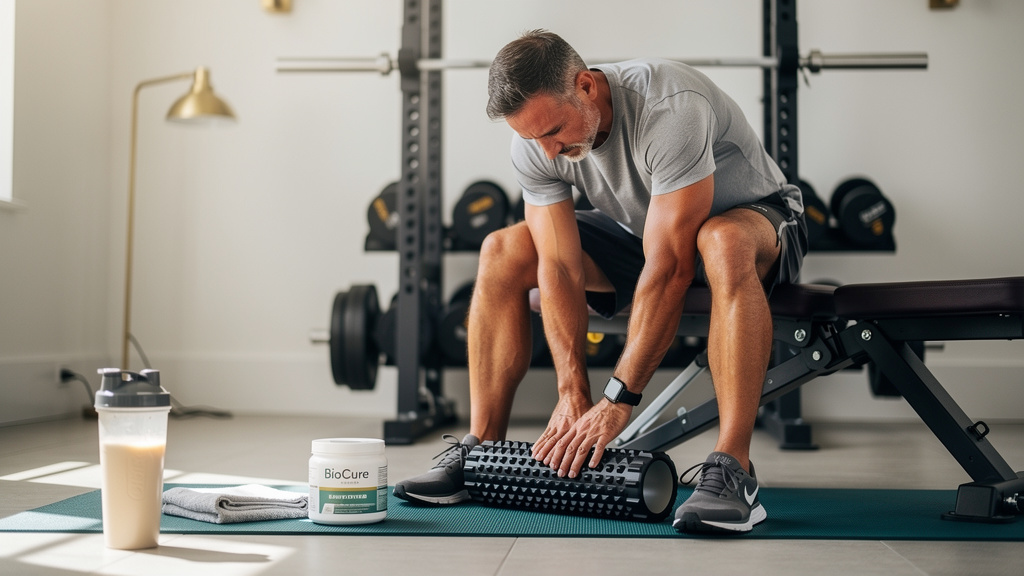
Faster muscle recovery without peptides: what the ISSN evidence supports
The recovery tools with the strongest evidence are not peptides. They are enough daily protein (about 1.4 to 2.0 g per kilogram of body weight, spread across meals), creatine monohydrate at 3 to 5 g a day, at least 7 hours of sleep a night, and sensible training load with planned lighter weeks. Human evidence that peptides such as BPC-157 or TB-500 speed muscle recovery is thin, and if you still recover slowly after nailing the basics, a blood test for low testosterone, thyroid or iron problems is a smarter next step than guessing.
Recovery is not accidental, it is intentional. Below is what the evidence actually supports, ranked, so the advice holds up whether or not you ever use a peptide.
Recovery levers ranked by strength of evidence
The criteria here are simple: how strong the human evidence is, how consistent it is, and how safe the lever is for a healthy adult.
| Lever | Practical target | What the evidence says | Evidence strength |
|---|---|---|---|
| Daily protein | 1.4 to 2.0 g/kg/day, in 20 to 40 g doses | ISSN position stand on protein and exercise (2017) supports this range for most exercising people | Strong |
| Creatine monohydrate | 3 to 5 g/day | ISSN position stand on creatine (2017) calls it the most effective nutritional supplement for high intensity capacity and lean mass | Strong |
| Sleep | 7 or more hours per night | AASM/SRS adult consensus; short sleep is linked to impaired performance | Strong |
| Load management and deloads | Gradual progression, lighter weeks | Core training principle; prevents the overload that recovery tools cannot fix | Strong, practice based |
| Cold plunge right after lifting | Optional, timing matters | May ease soreness but can interfere with strength and size gains | Mixed |
| Most recovery supplements | Usually unnecessary | Small or inconsistent effects once protein is adequate | Weak |
| Peptides (BPC-157, TB-500, CJC-1295, ipamorelin) | Physician evaluation only | Mostly animal and lab data; few human trials on muscle recovery | Weak in humans |
Protein: 1.4 to 2.0 g/kg a day, spread across meals
The ISSN position stand on protein and exercise (2017) concludes that a daily intake of 1.4 to 2.0 g of protein per kilogram of body weight is sufficient for most exercising people to build and maintain muscle. For an 80 kg (about 176 lb) person, that works out to roughly 112 to 160 g a day.
How you spread it matters too. The ISSN recommends doses of about 20 to 40 g of high quality protein (roughly 0.25 g/kg) every 3 to 4 hours, rather than one huge dinner. Each dose ideally contains a meaningful amount of leucine, the amino acid that switches on muscle protein synthesis. Whole foods like eggs, dairy, fish, poultry and lean meat do this easily, and whey is a convenient top up.
A few practical notes from the same position stand:
- Total daily intake matters more than hitting a narrow window after your workout.
- A protein dose of around 30 to 40 g of casein before bed can support muscle protein synthesis overnight.
- Higher intakes within the range are useful when you are in a calorie deficit, because protein helps preserve lean mass while you lose fat.
If your recovery feels slow and you are eating 60 g of protein a day, this is the first thing to fix.
Creatine monohydrate: 3 to 5 g a day
The ISSN position stand on creatine supplementation (2017) describes creatine monohydrate as the most effective nutritional supplement available for increasing high intensity exercise capacity and lean body mass. The same paper notes evidence that creatine may support recovery from intense training and help with injury prevention and rehabilitation.
The dosing is straightforward. You can load with about 0.3 g/kg a day (roughly 20 g split into four doses) for 5 to 7 days, then drop to 3 to 5 g a day. Or skip the loading phase and take 3 to 5 g daily; your muscles saturate more slowly, over about three to four weeks, but end up in the same place.
On safety, the ISSN concludes that creatine monohydrate is safe for healthy people in both short and long term use at recommended doses. Expect a small scale increase in the first weeks from water stored in muscle, not fat. If you have kidney disease or take medications that affect kidney function, talk with your clinician before starting.
Sleep: at least 7 hours, every night
The American Academy of Sleep Medicine and Sleep Research Society consensus recommends that adults sleep 7 or more hours per night on a regular basis. Regularly sleeping less is associated with impaired performance, weaker immune function, weight gain and a higher risk of accidents. The consensus also notes that more than 9 hours may be appropriate for young adults, people recovering from sleep debt and people who are ill.
For recovery, sleep is where much of the repair work happens. A large share of daily growth hormone release occurs during deep sleep, and short sleep disrupts the hormones that govern appetite, mood and training drive. Short sleep is also widely linked with poorer reaction time and a greater chance of getting hurt. No supplement makes up for consistently sleeping five or six hours.
If you train hard but sleep poorly, read our guide on why rest is the reset button for your hormones.
Load management, deloads, and DOMS versus injury
Most slow recovery is a programming problem. If you add volume, intensity and frequency all at once, no amount of protein or sleep will keep up. Progress one variable at a time, and schedule a lighter week every few weeks where you cut volume while keeping the movements. Many lifters find they come back stronger.
You also need to tell normal soreness from injury. Delayed onset muscle soreness (DOMS) typically peaks one to three days after a new or harder session and fades on its own.
| Sign | Likely DOMS | Possible injury |
|---|---|---|
| Timing | Starts hours later, peaks in 1 to 3 days | Often sudden, during the lift or movement |
| Type of pain | Dull, diffuse ache across the muscle | Sharp, localized, or pain at a joint or tendon |
| Swelling or bruising | Rare | Common |
| Strength and range | Stiff but usable | Clear loss of strength or motion |
| Course | Improves with light movement | Persists or worsens after several days |
Pain that is sharp, involves a joint, comes with swelling or bruising, or is not improving after several days should be evaluated by a clinician rather than trained through.
What has weak evidence: cold plunges, most supplements, and peptides
Cold plunges right after strength training. Cold water immersion can make you feel less sore. The catch is timing: some research suggests that regularly plunging right after lifting may blunt the gains in muscle size and strength you are training for. If you enjoy cold exposure, keep it away from your lifting sessions or save it for endurance work and competition weeks.
Most recovery supplements. Once your protein intake is adequate, extra branched chain amino acids add little. Many other popular recovery products show small or inconsistent effects in studies. Spend your money on food, creatine and sleep first.
Peptides. This is the question many people are really asking. BPC-157 and TB-500 have interesting results in animal and laboratory studies, mostly on tendon and soft tissue healing, but well designed human trials showing faster muscle recovery are largely missing. CJC-1295 and ipamorelin raise growth hormone release, yet there is little controlled evidence that this speeds recovery in healthy adults. None of these peptides is FDA approved for muscle recovery, and the FDA has raised safety concerns about compounding BPC-157. Products sold online as "research use only" are not made for human use, and their purity and dose are unknown.
If you compete, there is another issue. The World Anti Doping Agency prohibits BPC-157 as a non approved substance, and thymosin beta 4 fragments such as TB-500, along with growth hormone secretagogues like CJC-1295 and ipamorelin, fall under its prohibited peptide hormones and growth factors. Check the current WADA list before taking anything.
BioCure offers physician guided peptide protocols, but every one starts with an evaluation and labs, and our physicians are candid about where the human evidence stands. Peptides are never a substitute for the fundamentals above.
When slow recovery is a lab problem: testosterone, thyroid, iron
If you are eating enough protein, taking creatine, sleeping 7 or more hours and programming sensibly, and you still feel wrecked for days, the cause may be inside your bloodwork. Test, don't guess.
| Possible cause | Clues in your recovery | Markers worth checking |
|---|---|---|
| Low testosterone | Slow strength gains, lingering fatigue, low drive, poor sleep | Total and free testosterone, ideally in the morning and repeated |
| Thyroid dysfunction | Fatigue, muscle aches, feeling cold, weight changes | TSH, free T4 |
| Low iron | Breathlessness, poor endurance, heavy legs, fatigue | Ferritin and an iron panel |
BioCure's Comprehensive Male and Female panels cover hormones, thyroid, lipids, metabolic and organ markers, and the site describes a 90+ biomarker panel. You can test with an at home kit and an in home phlebotomist visit, or at a lab. Results come back in 7 to 14 days, and every result is reviewed with a specialist in a 1:1 session. If iron is a concern, ask your physician which iron markers your panel includes. Learn more on our diagnostics page.
If testing confirms low testosterone along with symptoms, BioCure's testosterone therapy has three tiers: bioOptimize (foundational), bioRestore (medications that raise your own testosterone without direct hormone replacement) and bioTest (full testosterone replacement with ongoing hormone monitoring). The physician video consultation is $199, which can be credited back with a membership. BioCure does not bill insurance directly, but many patients use HSA or FSA funds, and BioCure provides documentation for reimbursement. Care is available in 47 states, confirmed at intake.
Frequently asked questions
Can peptide therapy actually help muscles recover faster?
The human evidence is thin. BPC-157 and TB-500 show promise in animal and lab studies, mostly for tendon and soft tissue healing, but controlled human trials on muscle recovery are largely missing. Protein, creatine, sleep and load management have much stronger support, so start there and discuss peptides only with a physician.
How much protein do I need per day to recover from workouts?
The ISSN position stand on protein and exercise (2017) supports 1.4 to 2.0 g per kilogram of body weight per day for most exercising people. Spread it into doses of about 20 to 40 g every 3 to 4 hours. Total daily intake matters more than a strict post workout window.
Does creatine help with muscle soreness and recovery?
The ISSN position stand on creatine (2017) calls creatine monohydrate the most effective nutritional supplement for high intensity exercise capacity and lean mass, and notes evidence that it may support recovery. A daily dose of 3 to 5 g works for most people. It is considered safe for healthy adults at recommended doses.
Are cold plunges bad after lifting?
Not dangerous, but the timing matters. Cold water immersion can reduce how sore you feel, yet some research suggests regular use right after strength training may blunt muscle growth and strength gains. Keep plunges separate from lifting sessions if building muscle is your goal.
Can low testosterone make recovery slower?
It can contribute. Low testosterone is linked with fatigue, slower strength gains and poor sleep, and thyroid problems and low iron can cause similar symptoms. A blood panel that checks hormones and thyroid markers, reviewed with a physician, is the way to find out rather than guessing.
Are BPC-157 and TB-500 banned in sports?
Yes, for tested athletes. WADA prohibits BPC-157 as a non approved substance, and TB-500 and growth hormone secretagogues fall under its prohibited peptide hormones category. Always check the current WADA list before using any peptide.
Faster recovery is built, not bought. Eat enough protein, take creatine, protect your sleep, train with a plan, and when the basics are not enough, let your labs tell you why. A body that is monitored, supported and optimized recovers on your schedule, not by chance.
Let BioCure Health lead you in the right direction. Call or text us to schedule an introductory call at 754-206-0838. Your future self will thank you.