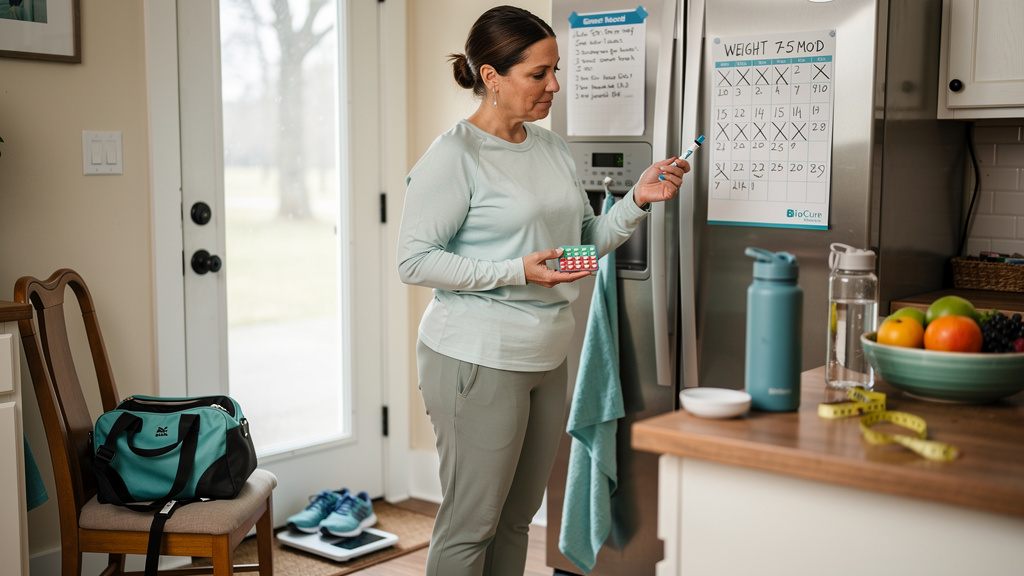
Weight loss peptide results: a realistic month-by-month timeline
Most people on a GLP-1 peptide such as semaglutide or tirzepatide notice a quieter appetite within the first few weeks, but steady movement on the scale usually shows up in months 2 and 3, once the dose has been stepped up. In large clinical trials, weight loss kept building through most of the first year before leveling off. The realistic goal is steady loss that protects your muscle, not the fastest drop possible.
That is the short version. The rest of this post walks through what each phase actually looks like, why plateaus are expected, and how to measure progress in a way that tells you more than a bathroom scale ever will.
What before-and-after photos leave out
A before-and-after photo compresses months of work into two frames. It does not show the dose steps, the weeks when the scale barely moved, the side effects that had to be managed, or how much of the lost weight was fat versus muscle. It also rarely tells you how long the person had been on treatment, what else they changed, or whether the result held after they stopped.
It also helps to be clear about which "weight loss peptides" have real evidence behind them. Semaglutide and tirzepatide are peptide medications that have been studied in large, long randomized trials in people with obesity. Other peptides sometimes marketed for fat loss, such as AOD-9604, have far less human data, so no one can honestly give you a trial-based timeline for them. The timeline below is built on the GLP-1 class, because that is where the evidence is.
One more thing photos hide: results vary widely from person to person. Starting weight, age, sex, sleep, activity, other medications and how well you tolerate dose increases all shape your curve. Treat any timeline, including this one, as a typical pattern rather than a promise.
| Phase | What is happening | What you may notice | What to focus on |
|---|---|---|---|
| Month 1 | Low starting dose, body adjusting | Smaller appetite, fewer cravings, possible nausea | Hydration, protein, managing side effects |
| Months 2 to 3 | Dose stepping up toward a working level | Steadier weekly loss, clothes fitting differently | Strength training, consistent meals |
| Months 4 to 6 | Often at or near a maintenance dose | Continued loss, sometimes slower | Body composition, labs |
| Months 6 to 12 | Loss curve gradually flattens | Plateaus, weight holding steady | Maintenance plan, muscle preservation |
Month 1: dose titration and early changes
GLP-1 medications are started at a low dose on purpose. The dose is then raised in steps, usually several weeks apart, so your digestive system has time to adapt. This is called titration, and it is the main reason month 1 rarely looks dramatic on the scale.
What many people do notice early is a change in how they eat. Portions shrink without much effort, food noise quiets down, and second helpings lose their appeal. Some early weight change is also water and reduced food volume rather than fat.
The tradeoff is side effects. Nausea, fullness, constipation or loose stools are common during dose increases, and they tend to ease as your body adjusts. Eating smaller meals, slowing down, stopping when you feel satisfied and drinking enough water all help. Severe or persistent abdominal pain, vomiting that will not stop, or signs of dehydration are reasons to contact your clinician promptly. We cover the first four weeks in detail, including when to call, in your first month on a GLP-1.
At BioCure Health, the semaglutide and tirzepatide programs follow exactly this structure: weekly injections with escalating doses, then a maintenance phase. Before the first dose, you complete a physician consultation and a blood panel so the protocol fits your health picture rather than a generic schedule.
Months 2 to 3: when the scale starts to move
As the dose climbs toward a level that works for you, appetite suppression gets stronger and more consistent. For many people, this is when the weekly weigh-in starts trending down in a way that feels real.
Expect the line to be bumpy. Weight shifts day to day with salt, hydration, hormones, bowel habits and sleep. A single high reading means very little. The trend across several weeks is what matters, which is why weighing at the same time of day and looking at weekly averages gives you a much truer picture.
This is also the window when habits either form or slip. Because you are eating less, every meal carries more weight nutritionally. Building each meal around protein and starting resistance training now, rather than after you have already lost a lot of weight, sets you up for a better result later.
Not everyone responds at the same pace. Some people tolerate dose increases easily and progress quickly; others need to stay at a dose longer because of side effects. A slower titration is not a failure. It is the medication being adjusted to your body, and that adjustment is a core part of physician supervision.
Months 6 to 12: what trials show, and why plateaus happen
In the large clinical trials of semaglutide and tirzepatide for weight management, average weight loss built steadily over the first several months and then gradually flattened toward the end of the first year. Participants in those trials also received lifestyle counseling, so the medication was working alongside diet and activity changes rather than replacing them.
A plateau is not a sign the medication stopped working. As you lose weight, your body needs less energy to run, and it pushes back by increasing hunger signals and lowering energy use. Eventually, intake and expenditure meet at a new, lower set point. Reaching that point is the expected shape of the curve, not a malfunction.
When you hit a plateau, a clinician can look at several things: whether you are at the right dose, whether protein intake and training are adequate, whether sleep or stress has shifted, and whether your current weight is actually a healthy place to maintain. Sometimes the right answer is a dose change. Sometimes it is accepting that you have arrived.
The trials also taught a sobering lesson about stopping. When participants came off the medication, much of the lost weight tended to return over the following year. That is why the end of the loss phase should be the start of a deliberate maintenance plan, not the end of care. BioCure Health builds maintenance support into the weight loss program for exactly this reason.
Why fast weight loss can cost you muscle
When you lose weight, not all of it is fat. Some comes from lean mass, which includes muscle. Body composition studies of GLP-1 medications have found that a meaningful share of the weight lost can be lean tissue, especially when protein intake is low and there is no strength training.
This matters more than most people realize. Muscle drives your metabolism, protects your joints, stabilizes your blood sugar and keeps you strong and independent as you age. Losing it in pursuit of a faster number on the scale can leave you lighter but weaker, with a body that is primed to regain fat.
That is why speed is the wrong goal. Longevity is not accidental, it is intentional. A steady pace gives you time to:
- Eat enough protein at every meal, even with a smaller appetite
- Lift weights or do resistance work several times a week
- Recover well, with adequate sleep and hydration
- Adjust your dose based on how your body is responding, not just how fast you are losing
For a full plan on protecting muscle while you lose weight, read how to keep your muscle while using GLP-1s.
Tracking progress beyond the scale
The scale measures everything at once: fat, muscle, water, food and waste. It cannot tell you whether you are getting healthier. A better tracking system uses several signals together.
| Measure | Why it matters | How often |
|---|---|---|
| Weekly average weight | Smooths out daily water swings | Daily or several times a week, averaged weekly |
| Waist circumference | Reflects abdominal fat, which carries more metabolic risk | Every 2 to 4 weeks |
| Body composition | Shows whether you are losing fat or muscle | Every few months |
| Strength in the gym | A practical sign you are keeping muscle | Each workout |
| Blood work | Tracks metabolic, lipid, hormone and organ markers | At baseline and follow-up, as your clinician advises |
| Energy, sleep and appetite | Shows how you feel living in your body | Weekly check-in with yourself |
| Progress photos | Captures changes the scale misses | Monthly, same lighting and pose |
Labs deserve special attention. A body that is monitored, supported and optimized all year long tells you far more than a number on a scale. BioCure Health's comprehensive Male and Female panels cover hormones, thyroid, lipids, metabolic and organ markers, and every result is interpreted with a specialist. Results come back in 7 to 14 days, and you can test with an at-home kit and an in-home phlebotomist visit or at a lab.
Here is how getting started works at BioCure. You complete a five-minute online intake, then a video consultation with a physician. That consult is $199, which can be credited back with a membership; membership pricing depends on your protocol and is set at your consultation. After testing, you review your custom protocol one on one, and medications are shipped to your door, typically 5 to 10 business days after the consultation and testing, from licensed compounding pharmacy partners. Ongoing follow-up and regular check-ins are included. BioCure does not bill insurance directly, but many patients use HSA or FSA funds, and the team provides invoices and documentation for reimbursement. You can do any appointment by video or in person at the clinic in the Fort Lauderdale area, and BioCure is licensed in 47 states, with your state confirmed at intake.
Frequently asked questions
How fast will I lose weight on semaglutide or tirzepatide?
Most people notice appetite changes in the first few weeks, but steady weight loss usually becomes clear in months 2 and 3 as the dose increases. In clinical trials, loss continued through most of the first year before leveling off. Your own pace depends on your dose, tolerance, habits and starting point.
Why am I not losing weight in my first month on a GLP-1?
The first month uses a low starting dose so your body can adjust, which means the scale often moves slowly. Early changes are usually in appetite and cravings rather than big numbers. If you are several months in and still not seeing progress, talk with your clinician about your dose and habits.
Is it normal to hit a weight loss plateau on peptides?
Yes. As you lose weight, your body uses less energy and increases hunger signals, so loss naturally slows and eventually levels off. A plateau is the expected shape of the curve, and a clinician can help decide whether to adjust the dose or shift to maintenance.
Do weight loss peptides make you lose muscle?
Some of the weight lost on GLP-1 medications can come from lean mass, including muscle, especially with low protein intake and no strength training. Eating protein at every meal and doing resistance training regularly are the most practical ways to protect it. This is one reason slower, steadier loss is a better goal than the fastest possible drop.
What happens if I stop taking a GLP-1 after I lose weight?
In clinical trials, people who stopped the medication tended to regain much of the weight they had lost. That is why ending the weight loss phase should lead into a planned maintenance phase with your clinician. BioCure Health includes maintenance support after you reach your goal.
Do other peptides like AOD-9604 work as well as semaglutide?
Semaglutide and tirzepatide have been studied in large, long randomized trials for weight management. Peptides such as AOD-9604 have much less human evidence, so there is no reliable trial-based timeline for them. A physician can explain what each option can and cannot be expected to do for you.
The honest timeline is slower than the photos suggest, and that is a good thing. Weeks of titration, months of steady loss and a planned path into maintenance give you a result built on muscle, labs and habits you can keep. Are you living by default or by design?
Let BioCure Health lead you in the right direction. Call or text us to schedule an introductory call at 754-206-0838, your future self will thank you.