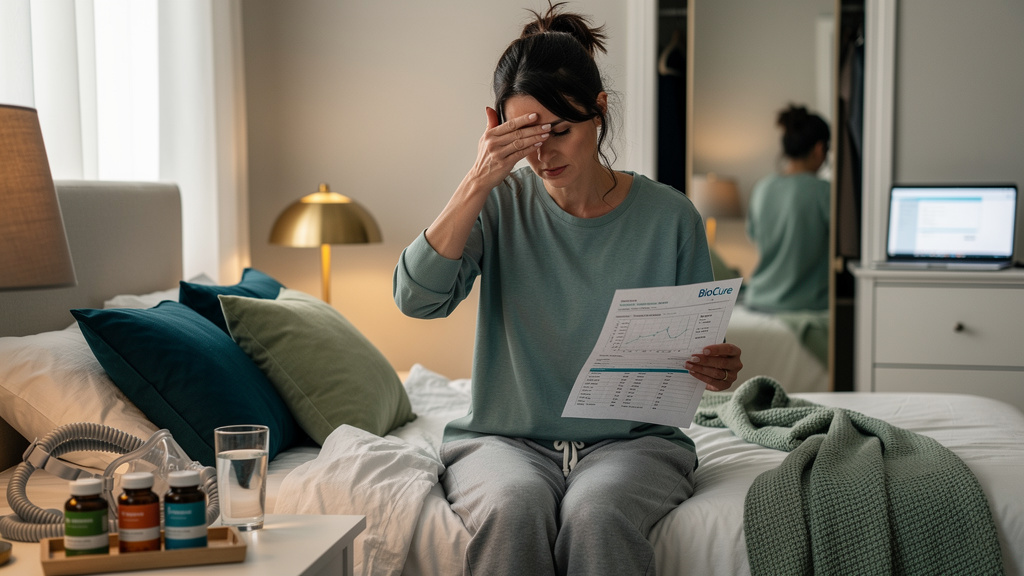
Tired after 40 with 'normal' blood work? What to check next
Normal blood work usually means your first screening tests, often a complete blood count (CBC) and a thyroid test (TSH), did not find anemia or an obvious thyroid problem. It does not mean every cause of fatigue has been ruled out. The next step is a targeted second look: iron stores (ferritin), vitamin B12, vitamin D, blood sugar, a morning testosterone for men, an honest review of perimenopause symptoms for women, a sleep apnea screen, and an audit of medications, alcohol and mood.
That is the short answer. The rest of this post walks through each step so you can walk into your next appointment with specific questions instead of a vague complaint.
The scenario: normal CBC, normal TSH, still exhausted
Meet Dana, a composite of patients we hear from often. She is 46, works full time, and spends about seven and a half hours in bed most nights. She wakes up feeling like she never slept. By 2 p.m. she is on her third coffee. Her primary care doctor ordered a CBC and a TSH. Both were normal. The verdict: "You're probably just busy."
Dana is not imagining it, and she is not alone. Fatigue is one of the most common reasons adults see a doctor, and MedlinePlus lists a long range of causes, including anemia, depression, sleep problems such as sleep apnea, thyroid problems, diabetes, certain medicines, and alcohol or drug use. A CBC and a TSH screen for two of those. That leaves a lot of ground uncovered.
The same story plays out for men. Swap Dana for a 48 year old man with a normal CBC who naps in his car at lunch, and the open questions are similar, with testosterone and sleep apnea moving higher on the list.
A decade ago, "your labs are normal" was often where the conversation ended. Today, it should be where the second round of questions begins.
Re-check the basics: what may never have been ordered
A "normal" result only covers the tests that were actually run. Before anything else, pull up your lab report and look at what is on it. These are the markers most often missing from a first fatigue workup.
| Test | Why it matters for fatigue | Why it can be missed |
|---|---|---|
| Ferritin (iron stores) | Iron stores can run low before hemoglobin drops, so a normal CBC does not rule out iron deficiency | Not part of a standard CBC |
| Vitamin B12 | Low B12 can cause tiredness and nerve symptoms; long term use of metformin or acid reducing medicines can lower it | Often ordered only when anemia is present |
| Vitamin D | Low levels are common, especially with limited sun exposure | Not routine in many basic panels |
| Fasting glucose or HbA1c | Diabetes and prediabetes are recognized causes of fatigue | Sometimes skipped if a recent panel was "fine" |
| Morning testosterone (men) | Low testosterone can cause fatigue, low drive and low mood | Rarely ordered unless a man asks |
| Kidney and liver markers | Organ function problems can show up as tiredness | Usually included, but worth confirming |
Timing matters too. Testosterone should be drawn in the morning, and a single result outside the range is a reason to repeat the test, not to diagnose. If your doctor only checked TSH, it is reasonable to ask whether further thyroid testing makes sense given your symptoms.
When you review results, the reference range printed on the report is the lab's range, not a personal target. Interpretation in context is where real answers come from, which is why we wrote about why doctor interpretation turns lab results into real answers.
Ask about a sleep study
If you sleep seven or more hours and still wake up unrefreshed, the question is not just how long you sleep. It is how well. Obstructive sleep apnea, where the airway repeatedly narrows or closes during sleep, fragments rest without fully waking you. MedlinePlus names sleep apnea among the common causes of fatigue.
Apnea becomes more common in midlife, and it is often underrecognized in women. The classic picture is a man who snores loudly and stops breathing in the night. Women more often report insomnia, morning headaches, waking frequently, or simply feeling exhausted, which can be mistaken for stress or hormonal change. Risk tends to rise after menopause.
Signs worth mentioning to your doctor:
- Loud snoring, gasping or choking at night, or a partner who notices pauses in breathing
- Morning headaches or a dry mouth on waking
- Dozing off while reading, watching TV or, more seriously, driving
- High blood pressure that is hard to control
- Waking to urinate several times a night
A sleep study, done at home or in a sleep lab, is the way to confirm or rule out apnea. Blood tests cannot do it. If these signs sound familiar, ask for a referral to a sleep specialist.
Midlife hormones: what the guidelines actually say
Hormone changes in your 40s are real, and they can drive fatigue. They are also heavily marketed. The useful middle ground is to follow what professional guidelines say rather than "optimal range" claims.
Women: perimenopause
Perimenopause often begins in the 40s. Night sweats, hot flashes, broken sleep, mood changes and irregular periods can all show up years before periods stop. Night sweats alone can wake you several times a night, and the next day feels exactly like Dana's.
Because hormone levels swing from week to week during perimenopause, a single blood test often cannot confirm or exclude it. Diagnosis is usually based on age, symptoms and cycle history. That is one reason a "normal" panel can miss it entirely.
The Menopause Society 2022 hormone therapy position statement describes hormone therapy as the most effective treatment for hot flashes and night sweats, and states that for women under 60, or within 10 years of menopause onset, without contraindications, the benefits generally outweigh the risks. Whether estradiol, progesterone or a non hormonal option is right for you depends on your personal and family history. For a broader look at this stage of life, see our guide to longevity for women in their 40s and beyond.
Men: age related testosterone decline
Testosterone tends to decline gradually with age, and low levels can cause fatigue. But fatigue alone is not a diagnosis. The Endocrine Society 2018 testosterone guideline recommends diagnosing low testosterone only in men who have symptoms and signs consistent with deficiency and testosterone levels that are consistently low, measured in the morning while fasting and confirmed with a repeat test. It also advises that treatment in older men be decided case by case rather than routinely.
That is a higher bar than many online clinics use, and it protects you. If your levels are borderline, causes such as poor sleep, apnea, excess weight and certain medications can lower testosterone and are worth addressing first. You can read how we approach evaluation on our testosterone therapy page.
The honest audit: medications, alcohol and mood
Some of the most common causes of fatigue never show up on a lab report. This part takes honesty, not bloodwork.
Medications. Sedating antihistamines, some blood pressure medicines, certain antidepressants, sleep aids and pain medicines can all cause tiredness. Make a full list, including supplements and over the counter products, and review it with your prescriber. Do not stop a prescribed medicine on your own.
Alcohol. A glass or two of wine may help you fall asleep, but alcohol tends to disrupt sleep later in the night. If you drink most evenings, try two alcohol free weeks and notice how you feel.
Caffeine. Afternoon coffee can quietly cut into deep sleep that night, which feeds the next afternoon's slump.
Mood. Depression and anxiety are among the leading causes of persistent fatigue. Low energy can be the main symptom, even without obvious sadness. If you have lost interest in things you used to enjoy, or feel hopeless, tell your doctor. If you ever have thoughts of harming yourself, call or text 988 in the US right away.
Some symptoms mean you should be seen promptly rather than wait for a second round of labs: unexplained weight loss, fever, drenching night sweats in men, shortness of breath, chest pain, very heavy periods, or fatigue that is getting steadily worse.
When a longevity clinic adds value, and when to go elsewhere
A longevity clinic is not the right first stop for every tired person. Here is a fair way to decide.
| Your situation | Best next step |
|---|---|
| Red flag symptoms such as weight loss, fever, chest pain or shortness of breath | Primary care or urgent care, promptly |
| Snoring, witnessed pauses in breathing, or dozing while driving | Sleep specialist for a sleep study |
| You want the workup billed to insurance | Primary care, who can order and refer within your plan |
| Low mood, loss of interest, or anxiety driving the fatigue | Primary care or a mental health professional |
| Basic labs were normal and you want a broader, sex specific panel with time to discuss it | A physician-led longevity or diagnostics clinic |
| You suspect perimenopause or low testosterone and want guideline based evaluation and monitoring | A clinic that tests, retests and follows you over time |
BioCure Health fits the last two rows. Our sex specific Comprehensive Male and Female Panels cover hormones, thyroid, lipids, metabolic and organ markers, and every result is reviewed with you 1:1 by a specialist. You can learn more on our diagnostics page or meet the physicians on our team page.
The process starts with a 5 minute online intake, then a $199 video consultation with a BioCure physician, which can be credited back if you start a membership. Testing is done with an in home phlebotomist visit or at a lab, and results typically arrive in 7 to 14 days. We treat patients by telehealth in 47 states, with availability confirmed at intake, and you can also be seen in person at our South Florida clinic. We do not bill insurance, but many patients use HSA or FSA funds, and we provide documentation for reimbursement.
What we will not do is skip the sleep study you need or treat a hormone number without symptoms to match. If your results point to apnea, a mood disorder or something that needs a specialist, we will tell you.
Frequently asked questions
Why am I tired all the time even though I sleep 8 hours?
Sleep quantity and sleep quality are different things. Sleep apnea, night sweats, alcohol, late caffeine and some medications can all fragment sleep without fully waking you. Low iron stores, thyroid problems, diabetes and depression can also cause fatigue regardless of how long you sleep.
Can you have low iron with a normal CBC?
Yes. Iron stores, measured by ferritin, can fall before hemoglobin drops enough to show anemia on a CBC. If ferritin was not on your report, it is reasonable to ask whether it should be checked.
Should I ask my doctor to test my testosterone if I'm tired?
If you are a man with fatigue plus other symptoms such as low drive or low mood, it is a fair question. The Endocrine Society recommends a morning, fasting test confirmed with a repeat measurement before any diagnosis. One low reading on its own is not enough.
Can perimenopause make you exhausted even if your blood tests are normal?
Yes. Hormone levels fluctuate during perimenopause, so a single blood test often looks normal. Night sweats and broken sleep can still leave you exhausted, and diagnosis is usually based on age, symptoms and cycle history.
When should I see a doctor about fatigue?
See a doctor if fatigue lasts for weeks despite rest, or if it comes with symptoms like unexplained weight loss, fever, shortness of breath, chest pain or low mood. Seek care promptly if it is getting steadily worse or affecting your safety, such as dozing while driving.
Persistent fatigue after 40 deserves a real answer, not a shrug. A normal first panel is useful information, but it is the start of the workup, not the end. Longevity is not accidental, it is intentional, and that begins with asking the next right question.
Let BioCure Health lead you in the right direction. Call or text us to schedule an introductory call at 754-206-0838, your future self will thank you.