GLP-1 myths: 'no diet needed,' 'all muscle loss,' 'it's forever'
No. GLP-1 medications such as semaglutide (Wegovy) and tirzepatide (Zepbound) make eating less much easier by quieting appetite, but they are not meant to replace changes to what you eat. The FDA prescribing information for both drugs approves them for use together with a reduced-calorie diet and increased physical activity, and the National Institute of Diabetes and Digestive and Kidney Diseases (NIDDK) notes that people who stop weight management medicines may regain weight. You do not need an extreme diet, but you do need a deliberate one, and the medication is what makes it sustainable.
That is the honest version. Social media tends to offer a louder one. Below are the five claims that keep showing up in Instagram reels and YouTube videos, checked against NIDDK, the FDA labels for Wegovy and Zepbound, and the FDA's own warnings about unapproved products.
The five myths at a glance
| Myth | What the evidence says | Source |
|---|---|---|
| "No diet needed" | Both drugs are approved for use with a reduced-calorie diet and more physical activity | FDA Wegovy and Zepbound prescribing information |
| "You'll lose mostly muscle" | Some lean mass is lost with any significant weight loss; protein and strength training help protect it | Basic weight loss physiology, explained below |
| "It's forever" | Weight may return after stopping and long-term use is often needed, but the plan is individual | NIDDK |
| "Side effects mean it's working" | Nausea and stomach upset are common side effects, not a measure of effectiveness | FDA Wegovy and Zepbound prescribing information |
| "Compounded is the same as brand" | Compounded versions are not FDA approved or reviewed for safety, effectiveness or quality | FDA |
Myth 1: "You don't need to change your diet"
This is the myth that gets the most clicks, and it is the one that most misreads how the drugs work.
GLP-1 medications mimic a gut hormone that signals fullness. Semaglutide acts on the GLP-1 receptor; tirzepatide acts on both the GLP-1 and GIP receptors. The practical effects are a smaller appetite, earlier fullness and slower stomach emptying. In other words, the drug works by helping you eat less. You are changing your diet whether you plan to or not. The real question is whether you change it well.
The FDA labels are clear on this. Wegovy and Zepbound are approved for chronic weight management in combination with a reduced-calorie diet and increased physical activity, in adults with obesity or in adults with overweight plus at least one weight-related health condition. The clinical trials behind those approvals also paired the medication with diet and activity counseling. The NIDDK page on prescription medications to treat overweight and obesity frames these medicines the same way: tools used alongside healthy eating and physical activity, not instead of them.
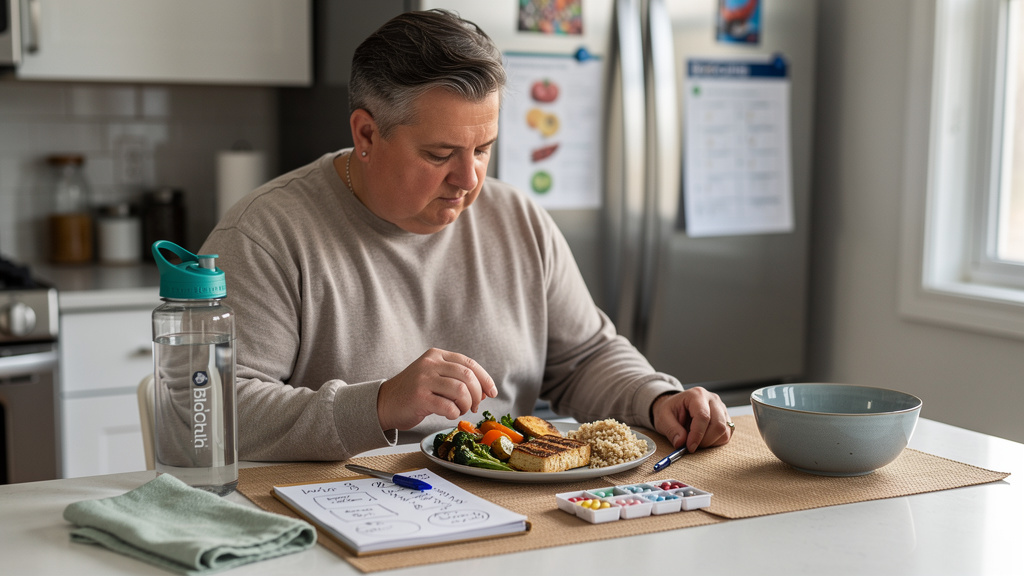
Here is what that means on your plate. When portions shrink, food quality matters more, not less. Eating half as much of a low-protein, low-fiber diet can leave you short on protein, fiber and micronutrients, and it can make constipation worse. A simple framework works better than any extreme plan:
- Protein first at each meal.
- Vegetables, fruit and other fiber sources every day.
- Steady fluids, especially if you are eating less.
- Smaller, lighter meals, since large, greasy meals tend to worsen nausea.
- Less alcohol.
That is not extreme dieting. It is structured eating, and the medication is what makes it feel doable.
Myth 2: "You'll lose mostly muscle"
There is a kernel of truth here, wrapped in an exaggeration. Whenever you lose a meaningful amount of weight, by any method, part of what you lose is lean mass, which includes muscle along with water and other lean tissue. That is true of dieting alone, of bariatric surgery and of GLP-1 therapy. Rapid loss combined with low protein intake and no strength training makes it worse.
The claim that most of the weight is muscle overstates it. In a calorie deficit, the larger share of what you lose is typically fat. More importantly, how much muscle you keep is something you can actively influence:
- Eat enough protein. This becomes harder when your appetite drops, which is why protein first matters.
- Lift something. Resistance training a few days a week gives your body a reason to hold on to muscle.
- Do not chase the fastest possible drop. Steady, supervised dose increases are easier to tolerate and easier to eat well on.
- Track more than the scale. Strength, how your clothes fit and lab work tell you more than body weight alone.
If you are concerned about how weight loss shows in your face, our post on Ozempic face covers why it happens and what helps.
Myth 3: "Once you start, you have to take it for life"
The truth sits between "forever" and "just a few months."
Obesity is treated as a chronic condition, and both FDA labels approve these drugs for chronic weight management. NIDDK notes that some people need to take weight management medicine long term, and that people who stop may regain weight. That makes sense biologically: when the medication leaves your system, the appetite signals it was quieting come back.
But "for life" is not a rule written anywhere. The FDA labels describe a gradual dose increase when you start; they do not lay out a step-down schedule for stopping, and good evidence on the best way to taper or come off is still limited. In practice, some people stay on a maintenance dose, some reduce their dose, and some stop and rely on the habits they built. Which path fits you depends on your health conditions, how much weight you need to keep off and how well your new habits are holding.
Two things are worth knowing. First, avoid stopping abruptly without a plan for what replaces the medication's appetite effect. Second, the eating and training habits you build while on the medication are the part you keep no matter what happens to the dose. At BioCure, physicians adjust protocols at regular check-ins and provide maintenance support after you reach your goal, so the decision to continue, reduce or stop is made with data rather than guesswork.
Myth 4: "Side effects mean it's working"
This one sounds reassuring, and it can keep people pushing through symptoms they should be reporting.
The Wegovy and Zepbound labels list nausea, diarrhea, vomiting, constipation and abdominal pain among the most common side effects. They are most likely when you start or move up a dose, which is exactly why both drugs begin at a low dose and increase gradually. Nothing in the prescribing information says you need side effects for the medication to work. The drug acts on its receptors whether or not you feel queasy, and many people lose weight with mild symptoms or none.
Severe or ongoing symptoms are not a badge of progress. Persistent vomiting or diarrhea can cause dehydration, and the labels warn about kidney problems linked to it. The labels also carry a boxed warning about thyroid C-cell tumors seen in rodents, and the drugs should not be used by people with a personal or family history of medullary thyroid carcinoma or Multiple Endocrine Neoplasia syndrome type 2 (MEN 2).
| Usually manageable | Contact your clinician promptly |
|---|---|
| Mild nausea after dose increases | Severe stomach pain that does not go away, with or without vomiting (the labels warn about pancreatitis) |
| Feeling full quickly | Pain in the upper right abdomen, fever or yellowing skin or eyes (possible gallbladder problems) |
| Occasional constipation or loose stools | Unable to keep fluids down, or signs of dehydration |
| Mild injection site redness | A lump or swelling in the neck, trouble swallowing or a hoarse voice |
| Lower interest in food | Swelling of the face or throat, rash or trouble breathing |
Most stomach side effects improve with time, slower dose increases, smaller meals and fluids. If they do not, your dose plan should change; that is what follow-up is for.
Myth 5: "Compounded is the same as brand"
They are not the same, and the FDA has said so directly. According to the FDA's statement on unapproved GLP-1 drugs used for weight loss, compounded drugs are not FDA approved, and the agency does not review them for safety, effectiveness or quality before they are sold. The FDA has received reports of adverse events, including dosing errors, and has raised concerns about some compounders using salt forms of semaglutide, such as semaglutide sodium and semaglutide acetate, and about illegal online sellers.
That does not mean every compounded prescription is unsafe, but it does mean you should know exactly what you are getting. Ask any clinic, including us:
- Is this an FDA-approved brand product or a compounded medication?
- Which pharmacy prepares it, and is it state licensed?
- Is the active ingredient the same form as the approved drug, or a salt form?
- How is my dose written and measured, and who checks that I am drawing it correctly?
- Who do I contact if I have side effects?
A clear answer to each question is a reasonable minimum.
What is true: appetite changes make healthy habits easier to keep
So, can GLP-1 therapy help you lose weight without extreme dieting? Yes, if you understand what the medication actually does. It turns down the constant pull toward food that many people describe as food noise. That makes a modest, sustainable calorie deficit feel normal instead of punishing. It does not do the eating for you.
Think of the medication as a window. While appetite is quieter, you have a real opportunity to build the habits that hold your results: protein at every meal, regular strength training, better sleep and a way of eating you could keep for years. People who use that window well are building something that lasts beyond the prescription. Longevity is not accidental, it is intentional.
At BioCure Health, the medical weight loss program offers semaglutide and tirzepatide as weekly injections, starting with escalating doses and moving to maintenance. Every protocol starts with a physician video consultation ($199, which can be credited back with a membership) and a blood panel, with at-home or in-lab testing. Your physician reviews your results with you, adjusts your protocol at regular check-ins and stays with you through maintenance after you reach your goal. BioCure is licensed in 47 states, with availability confirmed at intake, and many patients pay with HSA or FSA funds using the documentation BioCure provides. If you are still deciding whether these drugs are right for you, start with our overview of the weight loss drug everyone is talking about.
Frequently asked questions
Can I lose weight on semaglutide without dieting?
Semaglutide reduces appetite, so most people eat less without forcing it, but that reduced intake is how the weight comes off. The FDA label approves Wegovy for use with a reduced-calorie diet and increased physical activity. You do not need an extreme diet, but choosing what you eat, especially enough protein and fiber, matters more when portions shrink.
Do you gain the weight back after stopping GLP-1s?
You may. NIDDK notes that people who stop weight management medicines may regain weight, because appetite signals return once the drug is gone. How much returns varies, and the habits you build while on the medication, along with a planned approach to stopping or maintenance, make a real difference.
How do I avoid losing muscle on tirzepatide?
Some lean mass is lost with any significant weight loss, but you can limit it. Eat protein at every meal, do resistance training a few days a week and avoid pushing for the fastest possible drop. Tracking strength and lab work alongside the scale helps your clinician adjust your plan.
Is compounded semaglutide the same as Wegovy?
No. The FDA says compounded drugs are not FDA approved and are not reviewed for safety, effectiveness or quality, and it has flagged dosing errors and the use of salt forms of semaglutide. If you are offered a compounded version, ask which pharmacy makes it, what form of the ingredient it contains and how your dose is measured.
Is nausea on Wegovy a sign it's working?
No. Nausea is one of the most common side effects listed in the Wegovy and Zepbound labels, but it is not a measure of how well the medication works. Many people lose weight with little or no nausea, and severe or persistent symptoms should be reported so your dose plan can be adjusted.
Who qualifies for GLP-1 weight loss medication?
The FDA labels for Wegovy and Zepbound cover adults with obesity, or adults with overweight plus at least one weight-related health condition. People with a personal or family history of medullary thyroid carcinoma or MEN 2 should not use them. A physician consultation and lab work confirm whether these drugs are a safe fit for you.
GLP-1 medications are powerful tools, not shortcuts. Used with a deliberate way of eating, strength training and real medical follow-up, they can help you reach a healthier weight and keep it. Are you living by default or by design?
Let BioCure Health lead you in the right direction. Call or text us to schedule an introductory call at 754-206-0838. Your future self will thank you.