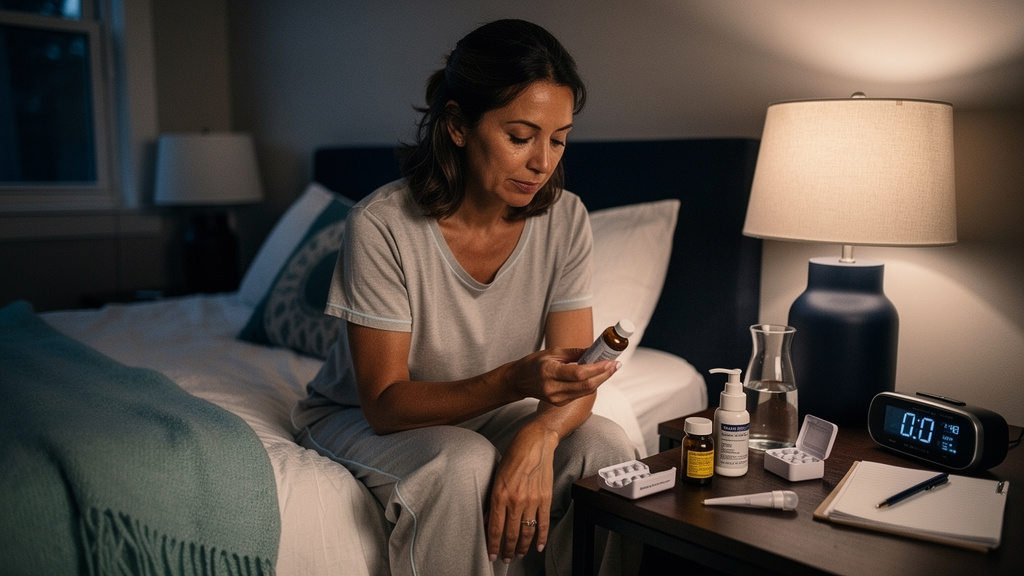
Best hormone therapy options for menopause relief in 2026
The best menopause hormone therapy is the one matched to your main symptom. Systemic estradiol (a patch, gel, spray or pill) remains the most effective treatment for hot flashes and night sweats, and if you still have a uterus you need a progestogen with it to protect the uterine lining. Low-dose vaginal estrogen is the first choice for dryness, painful sex and urinary symptoms; testosterone is an option for low sexual desire; and non-hormonal prescriptions cover women who cannot or prefer not to take hormones.
Menopause is not one symptom, so it rarely has one treatment. This guide walks through each option, what it treats best, and what to ask at your consult so you leave with a plan built around how you actually feel.
Estradiol patch, gel or pill: the core treatment for hot flashes
Estradiol is the same estrogen your ovaries made before menopause. Taken systemically, meaning it circulates through your whole body, it is the most effective treatment available for hot flashes and night sweats. It also tends to help the sleep disruption, mood swings and joint aches that often travel with them, and it helps preserve bone density.
The delivery method matters as much as the hormone itself.
| Form | How it is used | Worth knowing |
|---|---|---|
| Patch | Applied to the skin and changed once or twice a week | Steady hormone levels; skips first pass through the liver |
| Gel or spray | Applied to the skin daily | Flexible dosing; needs time to dry and should not be transferred to partners or children |
| Pill | Taken by mouth daily | Familiar and simple; processed by the liver first |
| Vaginal ring (systemic dose) | Inserted and replaced every few months | A higher dose ring designed to treat whole body symptoms, not just local ones |
Transdermal options (patch, gel, spray) bypass the liver on the first pass. Observational research suggests this carries a lower risk of blood clots than oral estrogen, which is why many clinicians lean toward a patch for women with migraines, higher triglycerides or clotting concerns. Pills are a reasonable choice for others.
Timing also matters. The balance of benefit and risk is generally most favorable for women who start hormone therapy near the onset of menopause rather than many years later. Systemic estrogen is usually not appropriate if you have a history of breast cancer, blood clots, stroke, active liver disease or unexplained vaginal bleeding. This is exactly the kind of history a physician should review with you before writing a prescription.
Ask at your consult: "Is a patch or a pill better for my health history, and what dose are we starting with?"
Progesterone options: protecting your uterus, and sometimes your sleep
If you still have a uterus, estrogen on its own can thicken the uterine lining and raise the risk of endometrial cancer. A progestogen taken alongside estrogen prevents that. If you have had a hysterectomy, you typically do not need one.
The common choices:
- Oral micronized progesterone. Chemically identical to the progesterone your body makes. Many women take it at bedtime because it can be mildly sedating, which some find helps sleep.
- Levonorgestrel IUD. Releases a progestin directly into the uterus and protects the lining with little whole body exposure.
- Combined estrogen and progestin products. Patches or pills that contain both hormones in one.
- Progesterone cream. Easy to use, but here is the candid part: topical progesterone creams have not been shown to reliably protect the uterine lining. If endometrial protection is the goal, ask your clinician which progestogen is proven to provide it.
Progesterone alone does not treat hot flashes as effectively as estrogen. Its main job in a menopause protocol is protection, with possible sleep benefits as a bonus.
Ask at your consult: "Do I need a progestogen, and which one will protect my uterine lining?"
Vaginal estrogen for local symptoms
Vaginal dryness, burning, painful sex, urinary urgency and recurrent urinary tract infections are grouped under a name you may hear: genitourinary syndrome of menopause. Unlike hot flashes, which often ease with time, these symptoms tend to get worse without treatment.
Low-dose vaginal estrogen treats the tissue directly. It comes as a cream, a small tablet or insert, or a soft ring that stays in place for months. Very little reaches the bloodstream, which is why low-dose vaginal estrogen generally does not require a progestogen and is considered an option for many women who are not candidates for systemic therapy. Women with a history of breast cancer should make that decision with their oncologist.
If you would rather avoid estrogen entirely, there are alternatives: vaginal DHEA (prasterone) inserts, an oral medication called ospemifene for painful sex, and over-the-counter vaginal moisturizers and lubricants for milder dryness.
One point that surprises many women: systemic estradiol does not always fully resolve vaginal symptoms. Some women use both.
Ask at your consult: "My hot flashes are better but intimacy is still painful. Should I add vaginal estrogen?"
Testosterone for low libido
Women make testosterone too, and levels decline with age. For postmenopausal women with distressing low sexual desire that is not explained by relationship problems, medications or depression, testosterone has the most consistent evidence of any hormone for improving desire and satisfaction. International consensus statements support it for this one use, not for energy, mood or muscle in general.
The limits are real. There is no FDA-approved testosterone product for women in the United States, so prescribing is off-label, usually with a carefully dosed cream or gel and blood levels kept in the normal female range. Long-term safety data is limited. Too much can cause acne, unwanted hair growth or a deeper voice.
Low libido after menopause is often driven by more than one factor. Painful sex from vaginal dryness, poor sleep from night sweats and low estrogen can all play a role, so fixing those first sometimes solves the problem. For a deeper look, read our guide to hormone therapy and libido in women.
Ask at your consult: "Could painful sex or poor sleep be behind my low desire, and if not, am I a candidate for testosterone?"
Non-hormonal prescriptions when HRT is not right
Some women cannot take hormones because of breast cancer, a clotting history or another condition. Others simply prefer not to. Effective options still exist.
- Fezolinetant (Veozah). A non-hormonal pill approved by the FDA specifically for moderate to severe hot flashes from menopause. It works on the brain's temperature control center. Its label calls for liver blood tests before and during treatment.
- Low-dose antidepressants. Paroxetine has an FDA-approved low-dose version for hot flashes, and venlafaxine and escitalopram are used off-label. They can also help mood. Paroxetine should be avoided in women taking tamoxifen because it can reduce tamoxifen's effect.
- Gabapentin. Often used for night sweats, especially when sleep is the biggest complaint, since it can cause drowsiness.
- Oxybutynin and clonidine. Less commonly used options with more side effects, sometimes considered when others do not work.
None of these match systemic estrogen for hot flash relief, and none protect bone the way estrogen does. They are real, evidence-based tools, not consolation prizes.
Choosing by symptom: a quick-match table
Use this as a starting point for your conversation, not a prescription. Most women have more than one symptom, so most protocols combine more than one option.
| Main symptom | Usually first to discuss | Alternatives to ask about |
|---|---|---|
| Hot flashes and night sweats | Systemic estradiol (patch, gel, spray or pill), plus a progestogen if you have a uterus | Fezolinetant, low-dose SSRI or SNRI, gabapentin |
| Vaginal dryness or painful sex | Low-dose vaginal estrogen | Vaginal DHEA, ospemifene, moisturizers and lubricants |
| Urinary urgency or recurrent UTIs | Low-dose vaginal estrogen | Evaluation for other urinary causes |
| Poor sleep from night sweats | Systemic estradiol; oral micronized progesterone at bedtime | Gabapentin |
| Low sexual desire | Treat dryness and sleep first, then consider testosterone | Address medications, mood and relationship factors |
| Mood swings with hot flashes | Systemic estradiol | Low-dose SSRI or SNRI |
| Bone loss risk | Systemic estradiol when started near menopause | Bone-specific medications |
Good treatment starts with good data. A decade ago, most women only got blood work when something felt wrong. Today, a baseline panel helps rule out thyroid problems that mimic menopause, checks lipids and liver markers before you start, and gives you something to measure against later.
At BioCure Health, a physician-led telehealth clinic licensed in 47 states, women start with a 5 minute online intake and a $199 video consultation that can be credited back with a membership. Our Comprehensive Female panel covers hormones, thyroid, lipids, metabolic and organ markers, with an in-home phlebotomist or in-lab draw and results in 7 to 14 days. A clinician reviews every result with you one on one and builds a protocol, which can include options such as estradiol patches and progesterone, with medication shipped to your door. Learn more about how BioCure treats women's hormones, or see what to budget in our online menopause hormone therapy cost guide. We do not bill insurance directly, but we provide documentation so you can use HSA or FSA funds.
Frequently asked questions
What is the safest form of hormone replacement therapy for menopause?
No single form is safest for everyone, but transdermal estradiol (a patch, gel or spray) is often preferred because observational research links it to a lower blood clot risk than pills. Low-dose vaginal estrogen has very little whole body absorption, making it the gentlest option for local symptoms. Your health history determines which is safest for you.
Do I need progesterone if I take estrogen for menopause?
If you still have a uterus and use systemic estrogen, yes. A progestogen protects the uterine lining from overgrowth and lowers endometrial cancer risk. If you have had a hysterectomy or use only low-dose vaginal estrogen, you usually do not need one.
Is an estrogen patch better than a pill for hot flashes?
Both relieve hot flashes well. Patches deliver steadier levels and bypass the liver on the first pass, which is why they are often favored for women with migraines, higher triglycerides or clotting concerns. Pills are simpler for some women and remain a valid choice.
Can women take testosterone for low libido after menopause?
Testosterone has good evidence for improving desire in postmenopausal women with distressing low libido, but there is no FDA-approved product for women in the US, so it is prescribed off-label. Dosing should keep blood levels in the normal female range, and long-term safety data is limited.
What can I take for hot flashes if I can't take hormones?
Fezolinetant is an FDA-approved non-hormonal pill for menopause hot flashes, and it requires liver blood tests. Low-dose antidepressants such as paroxetine or venlafaxine and gabapentin are other options. They are generally less effective than estrogen but can meaningfully reduce symptoms.
Does vaginal estrogen help with urinary symptoms?
Yes. Low-dose vaginal estrogen can ease urinary urgency and help reduce recurrent urinary tract infections linked to menopause. It also treats dryness and painful sex, symptoms that tend to worsen over time without treatment.
Menopause relief is not one size fits all, and it should not be guesswork. Know your symptoms, know your options, and walk into your consult ready to ask for the plan that fits you.
Let BioCure Health lead you in the right direction. Call or text us to schedule an introductory call at 754-206-0838, your future self will thank you.