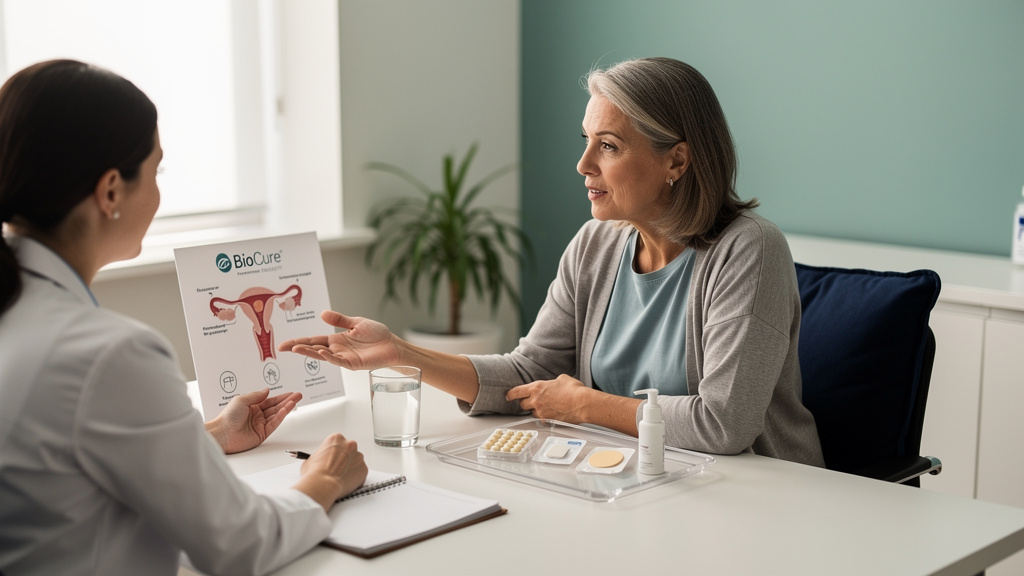
How does hormone replacement therapy work for menopause?
Menopause hormone replacement therapy (HRT) works by replacing the estrogen your ovaries stop making. That replacement is what calms hot flashes and night sweats, eases vaginal dryness and slows bone loss. If you still have a uterus, a progestogen such as progesterone is added to protect the uterine lining, and some women also use a low dose of testosterone for low sexual desire.
The second half of the answer is just as important: how the hormone gets into your body changes how it behaves. A patch, a gel, a pill and a vaginal cream can contain the same hormone and still carry different benefits and risks. Below is how each piece works, in plain English.
What happens to your hormones in perimenopause and menopause
Your ovaries make three hormones that matter here: estradiol (the main form of estrogen), progesterone and a meaningful share of your testosterone. In your 40s, ovulation becomes less regular. That is perimenopause, and it is often the most chaotic stretch, because hormone levels swing up and down rather than falling smoothly. You can have a month with very high estrogen followed by a month with very little.
Menopause itself is defined as 12 months in a row without a period. After that point, the ovaries produce very little estradiol or progesterone. Testosterone declines more gradually with age rather than dropping off a cliff.
Those shifts explain the symptoms:
- Hot flashes and night sweats: falling estrogen disrupts the brain's temperature control center.
- Sleep disruption, mood changes and brain fog: often driven partly by night sweats and partly by the hormone swings themselves.
- Vaginal dryness, painful sex and urinary symptoms: tissues of the vagina and bladder depend on estrogen. Clinicians call this the genitourinary syndrome of menopause.
- Bone loss: estrogen helps keep bone remodeling in balance, so bone density drops faster after menopause.
HRT does not reverse aging. It gives back the hormone signal your tissues lost, which is why it targets these specific symptoms so directly.
Estrogen: what it treats
Estrogen is the core of menopause HRT. According to The Menopause Society's 2022 Hormone Therapy Position Statement, systemic estrogen is the most effective treatment available for hot flashes and night sweats, and it also helps prevent bone loss and fractures.
Here is what estrogen therapy is used for, and what it is not:
| Goal | Does estrogen help? | Notes |
|---|---|---|
| Hot flashes and night sweats | Yes, it is the most effective option | The main reason most women start HRT |
| Vaginal dryness and painful sex | Yes | Low dose vaginal estrogen works well on its own |
| Bone loss prevention | Yes | Benefit applies while you are taking it |
| Sleep and mood | Often indirectly | Better sleep frequently follows fewer night sweats |
| Preventing heart disease or dementia | Not a reason to start HRT | Guidelines do not recommend HRT for this purpose |
You may have heard that HRT is dangerous. That reputation comes largely from the Women's Health Initiative trials in the early 2000s. Later analyses of that research showed that age and timing matter a great deal: healthy women who start hormone therapy closer to menopause tend to have a more favorable balance of benefits and risks than women who start many years later. Risks such as blood clots, stroke and, with combined therapy, breast cancer have not disappeared, but they depend on your age, your health history, the type of hormone and the route. This is why a personal evaluation matters more than a general rule.
Progesterone: why it's added if you have a uterus
Estrogen tells the lining of the uterus (the endometrium) to grow. On its own, over time, that growth can lead to endometrial hyperplasia and raise the risk of endometrial cancer. A progestogen counteracts this by keeping the lining in check.
So the rule is simple:
- You have a uterus and take systemic estrogen: you need a progestogen as well.
- You have had a hysterectomy: estrogen alone is usually the standard approach.
- You use only low dose vaginal estrogen: a progestogen is generally not needed, because very little reaches the bloodstream.
The Menopause Society's position statement notes that progestogens can be given in different ways, including oral micronized progesterone (which is chemically identical to the progesterone your body makes), synthetic progestins, or a levonorgestrel IUD used off label. The form and dose need to be strong enough to actually protect the lining. Ask your clinician how the progesterone in your plan was chosen and how it will be monitored, especially if you notice any unexpected bleeding, which should always be reported.
Many women also find that oral progesterone taken at night helps with sleep, which is a welcome side effect for some and a reason to adjust timing for others.
If you are weighing compounded bioidentical products against FDA approved options, our guide to compounded bioidentical hormones vs FDA approved HRT walks through the differences.
Testosterone for women: where it fits
Testosterone is not part of standard menopause HRT, but it has a specific, evidence based role. The Global Consensus Position Statement on the Use of Testosterone Therapy for Women, published in 2019 and endorsed by major menopause and endocrine societies, concluded that the only use supported by good evidence is for postmenopausal women with hypoactive sexual desire disorder: low sexual desire that causes personal distress.
A few things to know before you consider it:
- There is no FDA approved testosterone product for women in the US. Clinicians who prescribe it use doses aimed at keeping blood levels within the normal female range.
- It is not a fix for fatigue, mood or weight, according to that consensus statement. The evidence is not there for those uses.
- Monitoring matters. Blood levels are checked to avoid side effects such as acne or unwanted hair growth.
Women's testosterone dosing is a completely different conversation from men's. If you have seen our testosterone therapy page, that describes our men's programs, not the small doses used in women.
Patches, gels, pills and vaginal options
This is where HRT gets more personal than most people expect. The route of delivery changes how the hormone is processed.
When you swallow estrogen, it passes through the liver first. That first pass increases the liver's production of clotting factors and certain other proteins. When estradiol is absorbed through the skin, it largely bypasses that step. The Menopause Society notes that observational studies link transdermal estradiol with a lower risk of blood clots than oral estrogen, which is one reason many clinicians favor patches or gels for women with certain risk factors.
| Delivery method | How it works | Main use | Worth knowing |
|---|---|---|---|
| Skin patch | Steady release through the skin, changed on a set schedule | Hot flashes, night sweats, bone protection | Bypasses the liver; can irritate skin or loosen |
| Gel or spray | Applied to skin daily | Same as patch | Bypasses the liver; avoid skin contact with others until dry |
| Oral pill | Swallowed daily, processed by the liver first | Same as patch | Simple to take; liver effects raise clot risk compared with skin routes |
| Vaginal cream, tablet or ring (low dose) | Acts locally on vaginal and bladder tissue | Dryness, painful sex, urinary symptoms | Minimal absorption into the blood; does not treat hot flashes |
| Oral micronized progesterone | Swallowed, usually at night | Protects the uterus | Can cause drowsiness, which may help sleep |
The right route depends on your symptoms, your clotting and cardiovascular history, your migraine history, your preferences and how consistently you will use it. There is no single best option for every woman, and switching routes is common once you see how your body responds.
How a BioCure women's hormone plan is built
BioCure Health is a physician led telehealth longevity clinic based in the Fort Lauderdale area, licensed to treat patients in 47 states. Your availability is confirmed at intake. Here is how the process works:
- Online intake. About five minutes, covering your symptoms, cycle history and medical background.
- Physician consultation. A video visit (or in person in South Florida) for $199, which can be credited back if you start a membership.
- Diagnostics. Our Comprehensive Female panel covers hormones, thyroid, lipids, metabolic and organ markers. You can use an at home kit with an in home phlebotomist visit or go to a lab. Results arrive in 7 to 14 days.
- A 1:1 results review. Every result is interpreted with a specialist, and your custom protocol is explained before you start.
- Delivery and follow up. Medications ship to your door, typically 5 to 10 business days after consultation and testing, and ongoing follow up is included so your plan can be adjusted.
One honest point about labs: menopause is diagnosed mainly from your age, symptoms and cycle history, not a single hormone number, especially in perimenopause when levels swing month to month. Lab work earns its place by checking thyroid function, lipids and metabolic health, which shape whether HRT is safe for you and which route makes sense. For a closer look at what the panel includes and the options available, see does BioCure treat women's hormones.
BioCure does not bill insurance directly, but many patients use HSA or FSA funds, and we provide invoices and documentation for reimbursement.
Frequently asked questions
How long does it take for HRT to work for menopause symptoms?
Many women notice fewer hot flashes and better sleep within a few weeks, though full effect can take a few months. Vaginal symptoms often take longer to improve with local estrogen. Your clinician may adjust the dose or route during that period.
Do I need progesterone if I only take estrogen?
If you have a uterus and use systemic estrogen, yes. Progesterone or another progestogen protects the uterine lining from overgrowth that estrogen alone can cause. If you have had a hysterectomy, or you use only low dose vaginal estrogen, it is usually not needed.
Is an estrogen patch safer than an estrogen pill?
Patches and gels bypass the liver, and observational studies link them with a lower risk of blood clots than oral estrogen. That makes skin routes a common choice for women with certain risk factors. Which is safer for you depends on your personal history.
Can women take testosterone during menopause?
Yes, for a specific reason: low sexual desire that causes distress after menopause. The 2019 Global Consensus Position Statement found that is the only use backed by good evidence. There is no FDA approved testosterone product for women in the US, so it is dosed carefully to stay within the female range.
Can I start HRT during perimenopause?
Yes, many women start during perimenopause when symptoms are often at their worst. The plan may look different because your own hormones are still fluctuating. A clinician will consider your cycle, symptoms and contraception needs.
Do I need blood work before starting menopause HRT?
Menopause is diagnosed mainly from age, symptoms and cycle history rather than one hormone level. Blood work is still valuable for checking thyroid, lipids and metabolic health, which affect whether HRT suits you. At BioCure, every plan starts with a Comprehensive Female panel.
Menopause HRT is not one treatment but a set of choices: which hormones, at what dose, through which route, monitored how. When those choices are made around your body and your history, you are no longer just getting through menopause by default. You are moving through it by design.
Let BioCure Health lead you in the right direction. Call or text us to schedule an introductory call at 754-206-0838, your future self will thank you.