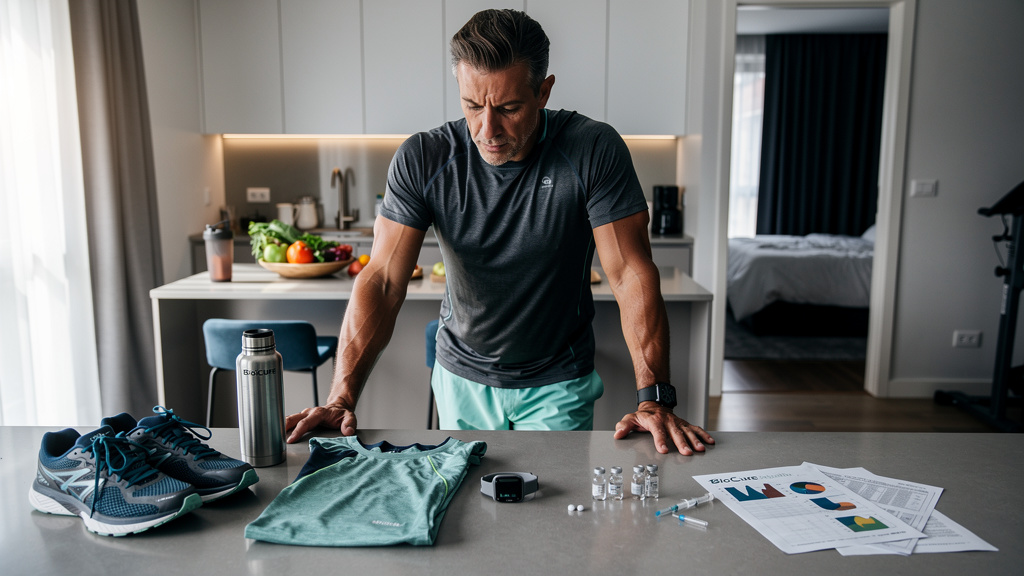
Athletic performance optimization: best methods ranked for 2026
The best methods for athletic performance optimization, ranked by strength of evidence, are a structured training plan built on progressive overload, consistent high quality sleep, enough total energy and protein, and a short list of proven supplements such as creatine and caffeine. Lab testing comes next, to find deficiencies or hormone problems that are quietly holding you back. Hormones and peptides belong last, only when labs and a physician justify them, and most of them are prohibited for drug tested athletes.
That order matters. Most people trying to perform better start at the bottom of the list because injections feel like a shortcut. The athletes who keep improving year after year usually do the opposite.
What athletic performance optimization means
Athletic performance optimization is the deliberate process of improving how strong, fast, powerful and durable you are, and how well you recover, by stacking the interventions with the best evidence first. It applies to a competitive sprinter, a weekend triathlete and a 50 year old who wants to keep lifting heavy without getting hurt.
The word that matters is deliberate. Performance is not accidental, it is intentional. You pick a goal, measure where you are, change one thing at a time and track whether it worked.
Here is how the main methods rank. The criteria are strength of human evidence, size of the likely benefit for most people, safety, and whether the method is permitted for tested athletes.
| Rank | Method | Strength of human evidence | Who it is for | Status for tested athletes |
|---|---|---|---|---|
| 1 | Structured training with progressive overload | Strong | Everyone | Permitted |
| 2 | Sleep and planned recovery | Strong | Everyone | Permitted |
| 3 | Adequate total energy and protein | Strong | Everyone | Permitted |
| 4 | Creatine monohydrate | Strong | Strength, power and repeated sprint athletes | Permitted |
| 5 | Caffeine | Strong for many sports | Most athletes, timed carefully | Permitted |
| 6 | Lab testing to find deficiencies | Strong for diagnosis | Anyone plateaued, fatigued or training hard | Permitted |
| 7 | Hormone therapy for a diagnosed deficiency | Strong for treating disease, not for enhancement | Men or women with a confirmed medical diagnosis | Prohibited unless granted a therapeutic use exemption |
| 8 | Recovery peptides such as BPC-157 and TB-500 | Mostly animal data | Non tested adults under physician care | Prohibited |
Training structure and progressive overload
Training is the stimulus. Everything else on this list only helps you adapt to it. If your program is random, no supplement or protocol will fix that.
Progressive overload means gradually asking more of your body over time: more weight, more reps, more sets, more distance, or harder intervals. Your body adapts to the demand you give it, so the demand has to keep rising, slowly and in a planned way.
What a well structured plan includes:
- A clear goal for each training block. Strength, hypertrophy, endurance base, speed or sport specific skill. Trying to peak everything at once usually means peaking nothing.
- Planned variation (periodization). Harder weeks followed by easier deload weeks so fatigue can clear and adaptation can show up.
- Tracking. A simple log of loads, reps, times or heart rate lets you see whether you are actually progressing.
- Technique before load. Adding weight to a broken movement pattern is the fastest route to injury.
- Enough frequency. Training a lift or skill more than once a week generally beats one heroic session.
If you have been training for years without progress, the answer is rarely a new product. It is usually a program that never forced adaptation, or recovery that never allowed it.
Sleep and recovery
Sleep is where training turns into results. Muscle repair, hormone release and learning of new motor skills all depend heavily on it. Short or broken sleep is linked in research to slower reaction time, lower motivation, worse mood and higher injury risk.
The practical rules are simple, even if they are hard to follow:
- Keep the same sleep and wake times, including weekends.
- Protect a dark, cool, quiet bedroom.
- Cut caffeine well before bed, since it can disrupt sleep for hours.
- Limit alcohol, which fragments sleep even when it makes you drowsy.
- Use a short nap on heavy training days if your schedule allows it.
Recovery also means managing total stress. Work, travel, family and poor sleep all draw from the same account as your training. When that account runs dry, you see the classic signs of overreaching: stalled lifts, a heavier feeling at easy paces, poor sleep, irritability and frequent minor illness.
For a deeper look at what actually speeds recovery, including compression, cold water immersion and nutrition timing, read our guide to faster muscle recovery without peptides.
Nutrition, protein and supplements with real evidence
Eat enough first. The most common nutrition problem in hard training athletes is not a missing supplement. It is simply not eating enough. The International Olympic Committee has described this as low energy availability, and its consensus work on relative energy deficiency in sport (RED-S) links it to hormone disruption, bone stress injuries, poor recovery and declining performance in both men and women.
Prioritize protein. Athletes need more protein than sedentary adults, spread across several meals, to support muscle repair and growth. The International Society of Sports Nutrition (ISSN) position stand on protein supports higher intakes for people who train and recommends spreading protein evenly across the day. Your clinician or dietitian can set a target based on your body weight and goals.
Fuel the work. Carbohydrate is the main fuel for high intensity and long duration exercise. Cutting it hard while training hard usually costs performance.
The short list of supplements worth considering:
| Supplement | What it does | Quality of evidence | Practical notes |
|---|---|---|---|
| Creatine monohydrate | Improves high intensity work capacity and supports lean mass gains | Strong; the ISSN calls it the most effective nutritional supplement for these goals | Daily use matters more than timing |
| Caffeine | Improves endurance, power and focus in many sports | Strong | Individual response varies; can harm sleep |
| Beta alanine | May help efforts lasting roughly one to several minutes | Moderate | Can cause harmless tingling |
| Dietary nitrate (beetroot) | May improve endurance efficiency in some athletes | Moderate | Effects tend to be smaller in highly trained athletes |
| Vitamin D and iron | Correct a deficiency if you have one | Strong when deficient; little benefit when levels are normal | Test before supplementing, especially iron |
Most other products on the shelf have weak or no performance evidence. If you compete in a tested sport, choose supplements certified by a third party program such as NSF Certified for Sport or Informed Sport, because contamination with prohibited substances is a known cause of positive tests.
When labs, hormones or peptides come in
A decade ago, most people only did blood work when something felt wrong. In 2026, serious athletes test to find the hidden ceiling on their progress.
Labs come first. If you are training well, sleeping well and eating enough but still stalled, exhausted or getting hurt often, blood work can reveal why. Markers commonly worth checking include iron and ferritin, vitamin D, thyroid function, a complete blood count, metabolic and kidney markers, and sex hormones. Endurance athletes and women with heavy periods are especially prone to low iron, which can sap performance before it ever shows up as anemia.
BioCure Health's comprehensive Male and Female panels cover hormones, thyroid, lipids, metabolic and organ markers, with a panel described as 90 plus biomarkers. You can use an at home kit with an in home phlebotomist visit or test in a lab, and results come back in 7 to 14 days. Every result is interpreted with a specialist, which matters because a number in the normal range is not always optimal for someone training hard, and a low number is not always a reason for medication.
Hormones come only with a diagnosis. Testosterone therapy is a medical treatment for hypogonadism, not a performance tool. The Endocrine Society guideline on testosterone therapy calls for symptoms plus consistently low levels confirmed on repeated morning blood tests before treatment. Hard training with too little food or sleep can itself lower testosterone, so fixing energy intake and recovery sometimes corrects the problem without medication.
When treatment is justified, BioCure offers three tiers: bioOptimize (foundational), bioRestore (medications that raise your own testosterone without direct hormone replacement) and bioTest (full testosterone replacement with ongoing hormone monitoring). A physician decides which, if any, fits your labs and goals. No level or result is promised.
Peptides come last. BPC-157 and TB-500 are popular for tendon, ligament and muscle recovery, but be clear about the evidence: most of it comes from animal and lab studies, and good quality human trials are limited. They are an option for some non tested adults under physician supervision, not a substitute for the methods above. BioCure's peptide therapy starts with an evaluation and labs before any protocol is considered, and it includes options such as the BPC-157 and TB-500 recovery stack. Medications are prepared by licensed compounding pharmacy partners and shipped to your door.
For joint, tendon, ligament or cartilage injuries that are not healing, BioCure's in person regenerative medicine program, which includes orthopedic specialist Dr. Naveed Shafi on the medical team, evaluates patients with imaging and blood work before discussing options such as PRP or stem cell therapy.
What is banned for tested athletes
If you compete in any sport that follows World Anti-Doping Agency (WADA) rules, including college, Olympic and many amateur events, most of the medical layer is off the table. The WADA Prohibited List is updated every year, and the athlete, not the clinic, is responsible for what is in their body.
| Substance or class | WADA status | Notes |
|---|---|---|
| Testosterone and other anabolic agents | Prohibited at all times | A therapeutic use exemption (TUE) may be possible for a confirmed medical diagnosis, with strict documentation |
| Medications that raise your own testosterone | Many are prohibited | Check each drug against the current list before starting |
| BPC-157 | Prohibited | Not approved for human therapeutic use |
| TB-500 | Prohibited | Listed with peptide hormones and growth factors |
| Sermorelin, ipamorelin and other growth hormone releasing peptides | Prohibited | Same peptide hormone category |
| Creatine, caffeine, protein | Permitted | Choose third party certified products to reduce contamination risk |
We break down the exact rules, categories and how testing works in our guide to whether BPC-157 and TB-500 are banned in sport. If you are a tested athlete, tell your physician at the start so every recommendation stays within the rules.
Frequently asked questions
What is the single most effective way to improve athletic performance?
A structured training plan built on progressive overload is the most effective method, because it is the stimulus your body adapts to. Sleep and adequate food intake come right behind it, since they determine how well you adapt. No supplement or medication makes up for training that never progresses.
Does creatine actually work for athletes?
Yes. The International Society of Sports Nutrition describes creatine monohydrate as the most effective nutritional supplement for improving high intensity exercise capacity and lean mass during training. It is also permitted for tested athletes. Taking it consistently every day matters more than when you take it.
Should athletes get blood work done?
Blood work is worth it if you are training hard and feel stalled, unusually tired or keep getting injured. Testing can reveal problems such as low iron, low vitamin D, thyroid issues or hormone changes that training alone will not fix. Results should be interpreted by a clinician who understands athletes, because normal and optimal are not always the same thing.
Can I use testosterone or peptides if I compete in drug tested sports?
In most cases, no. Testosterone, BPC-157, TB-500 and growth hormone releasing peptides are on the WADA Prohibited List. Athletes with a confirmed medical condition may apply for a therapeutic use exemption, but approval is not guaranteed and must come before use.
Do BPC-157 and TB-500 really speed up recovery?
The evidence is mostly from animal and lab studies, and solid human trials are limited. Some non tested adults use them under physician supervision, but they should not replace sleep, nutrition and smart training. They are prohibited for athletes who are drug tested.
The bottom line
Are you training by default or by design? Build the foundation first: a progressive plan, protected sleep, enough food and protein, and creatine if it fits your sport. Then test, so any medical step is based on your own numbers instead of a guess. BioCure Health is physician led, licensed in 47 states, and offers video or in person consultations ($199, which can be credited toward a membership), with HSA and FSA documentation available.
Let BioCure Health lead you in the right direction. Call or text us to schedule an introductory call at 754-206-0838, your future self will thank you.