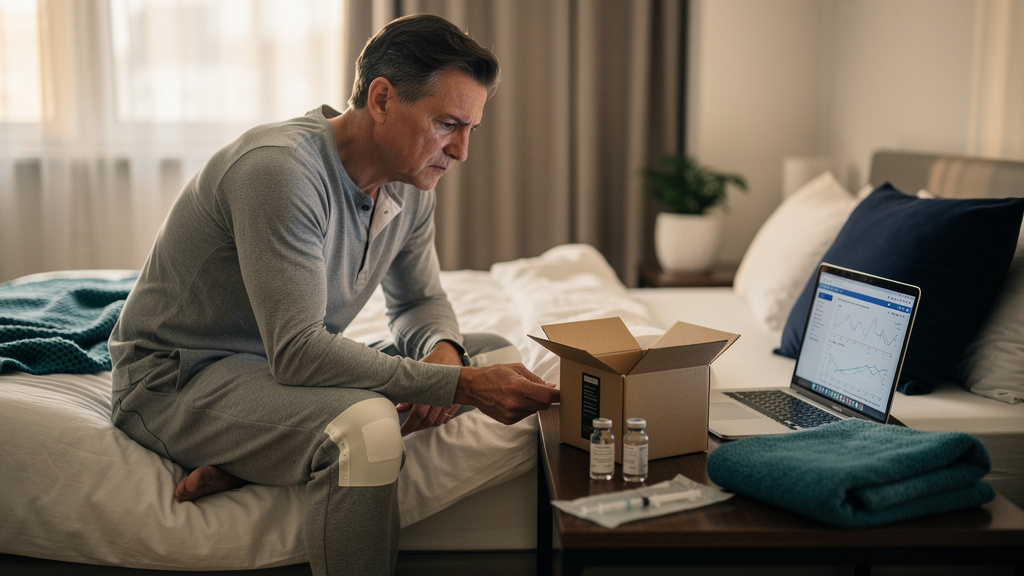
6 myths about buying 'research use only' peptides for recovery
No. Buying "research use only" peptides online is not a safe substitute for going through a doctor. Those products are not approved for human use, nobody independently checks what is in each vial before it reaches you, the human evidence behind popular recovery peptides like BPC-157 is thin, and several are banned in tested sport. If you want peptide therapy for recovery or performance, the safer route is a licensed clinician who evaluates you, orders labs when clinically appropriate, and prescribes through a licensed pharmacy.
The shortcut is tempting. The vials are cheap, the websites look professional, and forums are full of confident dosing advice. But every reason people give for skipping the doctor rests on a myth. Here is what each one gets wrong, and what a physician-guided peptide therapy program does differently.
Myth 1: "Research use only" means lab grade and pure
The label is a legal position, not a quality grade. Medicines meant for people are made under drug manufacturing standards and, when compounded, prepared by licensed pharmacies that answer to state boards and federal rules. A peptide sold as a research chemical sits outside that system. The seller is telling you, in writing, that the product is not intended for you.
That matters because the problems that make an injection dangerous are invisible:
- Wrong amount. A vial can hold more or less peptide than the label says, which turns any dose into a guess.
- Wrong compound. A different peptide, or a mix, looks identical as a white powder.
- Contamination. Bacteria or bacterial endotoxins can cause fever, abscesses or worse when injected.
- Degradation. Peptides break down with heat and time, and shipping conditions are rarely controlled.
Even in a regulated setting, FDA has raised quality concerns. On its page of bulk drug substances that may present significant safety risks, the agency lists BPC-157 and notes concerns including possible immune reactions, peptide-related impurities and limited safety information in humans. If those concerns apply to pharmacy compounding, they apply with more force to a vial with no oversight at all.
Myth 2: If it is sold openly, it is legal to inject
Being able to add something to a cart does not make it approved for your body. BPC-157 is not an FDA approved drug for any use, and the same is true of most peptides sold for recovery, including TB-500, CJC-1295 and ipamorelin. "Not for human consumption" disclaimers exist so the seller can operate outside drug rules. They shift the risk to you.
The regulated route has its own limits, and you should know that too. FDA restricts which bulk substances pharmacies can use for compounding, and the status of individual peptides has changed as the agency reviews them. That is one reason to work with a clinician: part of the job is knowing which options can be lawfully prescribed and compounded for you right now, and which cannot.
Myth 3: Online dosing charts are based on human trials
Most of the research behind BPC-157 and TB-500 comes from animal and cell studies. Human studies are few and small, and none establishes a standard dose for tendon, muscle or joint recovery. The microgram schedules you see on forums are typically scaled up from rodent work or passed along from personal experience.
Be honest with yourself about what that means. A clinic does not make thin evidence thicker. What a physician adds is judgment about whether a peptide is reasonable for your situation at all, a starting plan based on your history and labs, and someone watching for problems. Sometimes the right answer for an injury is imaging, physical therapy or an orthopedic opinion, not a peptide.
Myth 4: A certificate of analysis guarantees what is in the vial
A certificate of analysis (COA) is a document, usually supplied by the seller. It can be useful, but it is not a guarantee. Before trusting one, ask:
| Question to ask | Why it matters |
|---|---|
| Who ran the test? | A seller's in-house report is not independent. |
| Does the batch number match your vial? | A COA from a different lot tells you nothing about yours. |
| What does it measure? | A purity figure describes the main peptide in the sample; it does not prove the vial is sterile. |
| Does it cover sterility and endotoxins? | These drive infections and fever reactions after injection, so check whether they are included at all. |
| How old is it? | Peptides degrade, so an old result may not reflect what you receive. |
COAs can also be copied, reused across batches or fabricated, and you have no practical way to check. A licensed pharmacy filling a prescription is accountable to regulators for what it dispenses. A research chemical website is not.
Myth 5: No prescription means no risk to your sport eligibility
If you compete in a sport that tests, how you got a substance does not matter. Under the rules explained in USADA's Athlete Guide to Anti-Doping, athletes are strictly liable for any prohibited substance found in their system, whether it came from a prescription, a supplement or a research vial.
The peptides people buy for recovery are some of the most clearly banned. The WADA Prohibited List places BPC-157 under non-approved substances. Growth hormone releasing peptides and factors such as ipamorelin and CJC-1295, along with thymosin beta-4 derivatives like TB-500, fall under peptide hormones and growth factors. Both categories are prohibited at all times, in and out of competition. A gray-market vial adds another layer of risk: if it is mislabeled or contaminated, you could test positive for something you never meant to take.
A prescription does not make a prohibited substance permitted, either. Athletes who genuinely need a prohibited medication have to go through the therapeutic use exemption process USADA describes. If you are subject to testing, tell your clinician before starting anything.
Myth 6: You will know if something goes wrong
Some problems announce themselves, such as a hot, swollen injection site or an allergic reaction. Many do not. Peptides that stimulate growth hormone release can influence blood sugar and IGF-1, and you cannot feel those numbers change. Without a baseline, you also cannot tell whether a new symptom comes from the peptide, an underlying condition or coincidence.
That is the case for labs before and during treatment, which we cover in more depth in the risks of peptide therapy without bloodwork. Baseline testing can also reveal issues that change the plan entirely, such as a hormone imbalance or a metabolic problem that explains slow recovery better than any peptide would.
At BioCure Health, a physician evaluation, plus lab work when clinically appropriate, comes before any peptide prescription. Results typically arrive within 7 to 14 days and are reviewed with you one on one, and follow-up is built into the program.
How to access peptide therapy for recovery and performance safely
Here is how the two routes compare on the criteria that matter for your safety.
| Criteria | Research use only seller | Physician-guided program |
|---|---|---|
| Who decides if it fits you | You | A licensed clinician, after reviewing your history |
| Source | Unregulated website | Prescription filled by a licensed compounding pharmacy |
| Quality accountability | Seller's own COA, if any | Pharmacy regulated by state and federal rules |
| Baseline and follow-up labs | None | Ordered when clinically appropriate |
| Sport and legal guidance | None | Discussed during evaluation |
| How pricing works | Cash per vial, no medical oversight included | Consultation fee plus protocol or membership; what labs and follow-up include varies by clinic |
At BioCure, the steps are straightforward:
- A five-minute online intake.
- A video or in-person consultation with a physician. The consult is $199 and can be credited back with a membership.
- Diagnostics, either through an at-home kit with an in-home phlebotomist visit or at a lab.
- A custom protocol, drawn from more than 15 peptide protocols and explained in a one-on-one results review.
- Medication shipped to your door, with ongoing follow-up and support included.
BioCure is licensed to treat patients in 47 states, and availability in your state is confirmed at intake. The clinic does not bill insurance directly, but many patients use HSA or FSA funds, and BioCure provides invoices and documentation for reimbursement. This route fits you if you want a clinician to weigh whether peptides make sense, monitor you, and adjust over time. If you are a tested athlete, it may lead to the conclusion that peptides are not right for you at all, which is a useful answer too.
Frequently asked questions
Is it legal to buy BPC-157 online?
Sellers market BPC-157 as a research chemical, which is not the same as approval for human use. It is not an FDA approved drug, and FDA lists it among bulk substances that may present significant safety risks in compounding. Buying a vial labeled "not for human consumption" and injecting it puts all of the risk on you.
Are research peptides the same as peptides prescribed by a doctor?
Not necessarily, even when the name on the label matches. A prescription is filled by a licensed pharmacy that is accountable for what it dispenses, while a research chemical seller is not held to human-use standards. With a prescription you also get a clinician deciding whether the peptide suits you and monitoring how you respond.
Can I start peptide therapy without blood work?
Some people do, but you lose the baseline that shows whether a peptide is affecting markers like blood sugar or IGF-1. Labs can also uncover a different cause for slow recovery. BioCure requires a physician evaluation and orders labs when clinically appropriate before prescribing any peptide.
Is BPC-157 banned for athletes?
Yes. The WADA Prohibited List places BPC-157 under non-approved substances, banned at all times, and USADA holds athletes strictly liable for anything found in their system. TB-500 and growth hormone releasing peptides such as ipamorelin and CJC-1295 are prohibited too.
How do I get peptide therapy for recovery through a doctor?
Start with a licensed clinician who evaluates you and orders labs before prescribing. At BioCure Health, you complete a short online intake, have a $199 physician consultation that can be credited toward a membership, complete testing, and receive a custom protocol shipped to your door. BioCure treats patients in 47 states.
Recovery is not something to gamble on. The vial that costs less today can cost you far more in an infection, a failed drug test or a problem nobody caught in time. Longevity is not accidental, it is intentional, and so is the way you source what goes into your body.
Let BioCure Health lead you in the right direction. Call or text us to schedule an introductory call at 754-206-0838. Your future self will thank you.