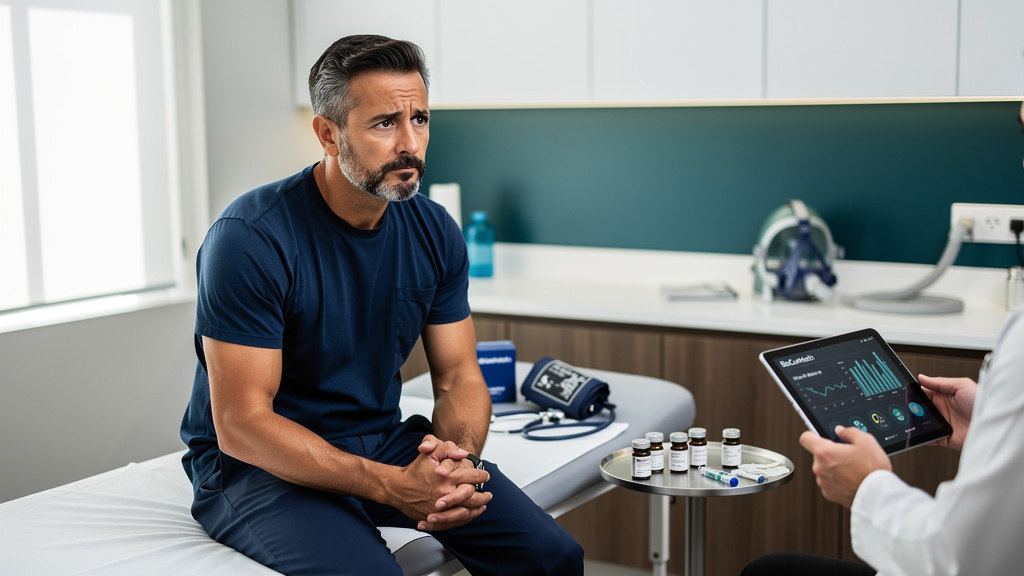
Who shouldn't start TRT: 8 red flags to check before your first dose
TRT can be safe for men with a confirmed diagnosis of low testosterone, but it is not right for everyone, and a careful doctor will say no when the evidence says no. The Endocrine Society guideline recommends against starting testosterone if you plan to father a child soon, already have a high hematocrit, have a prostate nodule or an unexplained elevated PSA, have had breast or prostate cancer, have untreated severe sleep apnea, or have uncontrolled heart failure or a heart attack or stroke in the past six months. Uncontrolled blood pressure and a testosterone level that is normal on repeat testing are two more reasons to stop and look elsewhere first.
If you want to start testosterone replacement therapy, begin with a diagnosis, not a prescription. Here is the checklist a responsible physician runs before your first dose, what each red flag means, and what usually happens next.
Start here: confirm the diagnosis before anything else
The Endocrine Society's 2018 clinical practice guideline (Bhasin et al., Journal of Clinical Endocrinology and Metabolism) is the standard most endocrinologists and urologists work from. It recommends diagnosing low testosterone only when two things are true: you have symptoms and signs consistent with deficiency, and your testosterone is unequivocally and consistently low. Consistently means at least two separate measurements of total testosterone, drawn in the morning while fasting.
The timing matters. Testosterone peaks in the early morning and falls through the day, and a meal can lower the reading. A single afternoon test after lunch can make a normal man look deficient. Acute illness, a bad night of sleep and some medications can do the same.
A proper workup usually also includes:
- LH and FSH, the pituitary signals that tell the testes to work. They show whether the problem starts in the testes or in the brain, which changes both the cause you look for and the treatment options.
- Free testosterone, when total testosterone is borderline or the binding protein SHBG is likely to be abnormal, as it often is with obesity, aging and thyroid problems.
- Hematocrit, the share of your blood made up of red cells.
- PSA and a prostate assessment, in men for whom prostate screening is appropriate.
Those baseline numbers are how a clinician spots the red flags below, and they become the reference point for monitoring once treatment begins. BioCure's comprehensive diagnostic panels cover hormones, thyroid, lipids, metabolic and organ markers, with blood drawn at home by a phlebotomist or at a lab.
The 8 red flags at a glance
| # | Red flag | Why it matters | What usually happens next |
|---|---|---|---|
| 1 | Trying to conceive in the near term | Testosterone therapy suppresses the signals that drive sperm production | Defer TRT; consider treatments that raise your own production |
| 2 | Hematocrit already high at baseline | TRT raises red cell production and can thicken blood | Find the cause before any hormone |
| 3 | Prostate nodule, PSA above 4 ng/mL, or above 3 ng/mL if higher risk | Possible undiagnosed prostate cancer | Urology evaluation first |
| 4 | History of breast or prostate cancer | Hormone sensitive cancers | Specialist decision; usually no |
| 5 | Untreated severe obstructive sleep apnea | TRT can worsen apnea | Sleep study and treatment first |
| 6 | Uncontrolled heart failure, or heart attack or stroke in the last 6 months | Fluid retention and an unstable heart | Cardiology stabilization first |
| 7 | Uncontrolled blood pressure | FDA labels warn testosterone can raise blood pressure | Control blood pressure, then monitor it |
| 8 | Normal testosterone on repeat morning tests | No deficiency to replace | Investigate other causes of symptoms |
The guideline's full list also includes severe lower urinary tract symptoms and thrombophilia, an inherited or acquired tendency to form blood clots. If either applies to you, raise it at your first visit.
Red flag 1: you are trying to conceive
This is the one that surprises men most. Testosterone from a shot, gel or pellet tells your brain there is plenty of hormone on board, so the pituitary turns down LH and FSH. Those two signals are what drive sperm production in the testes. Without them, sperm counts often fall sharply, sometimes to zero. Recovery after stopping is common but can take many months and is not guaranteed. That is why the Endocrine Society recommends against starting testosterone in men planning fertility in the near term.
If you want children in the next few years, the conversation shifts to treatments that support your own production instead of replacing it. BioCure's second tier, bioRestore, is built on that idea: it uses medications that raise the body's own testosterone without direct hormone replacement. Whether it fits you depends on your labs, especially LH and FSH, and on your physician's evaluation. If fertility matters to you, a semen analysis before any hormone treatment is a sensible baseline. You can read how the three tiers differ on our testosterone therapy page.
Red flags 2 to 4: blood and prostate
2. Hematocrit that is already high
Testosterone stimulates red blood cell production. That is part of why it can correct mild anemia, and also why it can push hematocrit too high, a condition called erythrocytosis. Thicker blood raises concern about clots and cardiovascular events. The Endocrine Society lists elevated hematocrit as a reason not to start therapy. The baseline cutoff commonly used is around 48 to 50 percent, and the guideline advises stopping treatment if hematocrit rises above 54 percent once you are on it. If yours is already high, the right move is to find out why. Smoking, untreated sleep apnea, living at high altitude and blood disorders are common culprits.
3. A prostate nodule or an elevated PSA
The evidence has not shown that testosterone therapy causes prostate cancer, but testosterone can stimulate a cancer that already exists. So the guideline recommends against starting therapy without a urology evaluation if you have a palpable nodule or firmness on exam, a PSA above 4 ng/mL, or a PSA above 3 ng/mL if you are at higher risk. Higher risk here includes Black men and men whose father or brother had prostate cancer. A urologist may repeat the PSA, order an MRI or recommend a biopsy. If those come back clear, TRT can be reconsidered.
4. A history of breast or prostate cancer
Both cancers can be hormone sensitive. Testosterone acts directly on prostate tissue, and some of it converts to estradiol, which matters for breast cancer. Men do get breast cancer. The guideline recommends against testosterone therapy in men with either cancer. Some urologists now consider testosterone for carefully selected men after successful treatment of lower risk prostate cancer, but that is a specialist decision made with your oncology team, not a starting point for an online prescription.
Red flags 5 to 7: sleep, heart and blood pressure
5. Untreated severe obstructive sleep apnea
Testosterone can worsen sleep apnea in some men, and untreated apnea on its own raises hematocrit, blood pressure and cardiovascular risk. Apnea also lowers testosterone, so treating it sometimes improves levels without any hormone at all. Loud snoring, gasping at night, morning headaches and daytime sleepiness all point toward a sleep study. Once apnea is diagnosed and treated, for example with CPAP, this red flag usually clears.
6. Uncontrolled heart failure, or a recent heart attack or stroke
Testosterone can cause fluid retention, which a struggling heart handles poorly. The guideline recommends against starting therapy in men with uncontrolled heart failure or with a heart attack or stroke in the previous six months. This is about stability, not a lifetime ban. Once your cardiologist considers you stable, the question can be revisited.
7. Uncontrolled blood pressure
This is where the evidence moved most recently. For about a decade, testosterone labels carried language about a possible increase in cardiovascular risk. Then the TRAVERSE trial, a large randomized study in middle aged and older men with low testosterone who had heart disease or a high risk of it, found that testosterone did not increase major adverse cardiovascular events compared with placebo.
In 2025 the FDA required class-wide labeling changes for testosterone products. The agency added the TRAVERSE results and removed the language about increased risk of adverse cardiovascular outcomes. At the same time, it required every testosterone product to carry a warning that it can raise blood pressure, which can increase the risk of major cardiovascular events. HHS announced the update alongside the FDA.
Two candid points. First, TRAVERSE was reassuring on heart attacks and strokes, but it also reported higher rates of atrial fibrillation, pulmonary embolism and acute kidney injury in the testosterone group. Second, the label change does not make testosterone neutral for blood pressure. If yours is not controlled, get it controlled first, then have it checked regularly once therapy starts. The FDA's testosterone information page is a plain language summary of approved uses and risks.
Red flag 8: normal testosterone with real symptoms
Fatigue, low libido, weight gain, low mood and slow recovery are real, and they deserve an answer. But if two morning fasting tests come back normal, testosterone replacement is not indicated. Adding hormone to a system that is already producing enough mostly adds risk: suppressed fertility, higher hematocrit and a therapy that is hard to walk back. The FDA approves testosterone for men with low testosterone caused by certain medical conditions, not as a general energy or performance treatment.
What to look at instead:
- Sleep: too little, poor quality, or undiagnosed apnea.
- Thyroid function: an underactive thyroid mimics many low testosterone symptoms.
- Metabolic health: insulin resistance and excess abdominal fat drain energy and lower SHBG.
- Iron and B12 status: both affect energy and stamina.
- Mood and stress: depression and chronic stress overlap heavily with low testosterone symptoms.
- Medications and alcohol: opioids and steroids can lower testosterone, and some antidepressants reduce libido.
- Free testosterone: if SHBG is high, total testosterone can look fine while the active fraction is low.
This is why a broad panel beats a single hormone test. For more on what testosterone can and cannot do, see busting common myths about testosterone therapy.
What a red flag means for you, and how BioCure screens
Most of these flags mean not yet rather than never. A high PSA may turn out to be benign. Treated apnea, controlled blood pressure and a stable heart can all reopen the door. Fertility plans change. The point of the checklist is sequence: the right specialist and the right fix first, then hormones if they still make sense.
Perplexity and ChatGPT both warn readers away from clinics that prescribe on symptoms alone, and they are right to. A prescription without a confirmed diagnosis skips the part of medicine that keeps you safe.
At BioCure Health, a physician-led telehealth clinic licensed in 47 states, every testosterone patient goes through the same steps. A five minute online intake, then a video consultation with a physician for $199, which can be credited back with a membership. Next comes a comprehensive panel of 90+ biomarkers, drawn at home or in a lab, with results in 7 to 14 days. Your physician reviews the results with you one on one and explains whether you are a candidate, and for which tier: bioOptimize (foundational), bioRestore (raising your own production) or bioTest (full replacement with ongoing hormone monitoring). Follow up is included once you start. You can meet the physicians on our team page. BioCure does not bill insurance directly, but many patients use HSA or FSA funds, and we provide documentation for reimbursement.
Frequently asked questions
Can I take testosterone if I want kids someday?
If someday means the near future, standard testosterone replacement is usually the wrong choice, because it suppresses sperm production. Recovery after stopping often happens but can take many months and is not guaranteed. Ask your doctor about options that raise your own testosterone instead, such as BioCure's bioRestore tier, and consider a baseline semen analysis.
What blood tests do I need before starting TRT?
At minimum, two morning fasting total testosterone tests, plus LH and FSH, hematocrit, and PSA when prostate screening applies to you. Free testosterone is added when total testosterone is borderline or SHBG may be abnormal. A broader panel with thyroid, metabolic and lipid markers helps rule out other causes of your symptoms.
Does testosterone cause heart attacks?
The TRAVERSE trial found testosterone did not increase major adverse cardiovascular events compared with placebo in men with or at high risk of heart disease, and the FDA updated labels in 2025 to reflect that. The same trial reported more atrial fibrillation, pulmonary embolism and acute kidney injury with testosterone. Men with uncontrolled heart failure or a heart attack or stroke in the last six months should not start it.
Can I get TRT if my testosterone is normal but I feel tired?
No. Guidelines do not support testosterone therapy when levels are normal on repeat morning testing, because there is no deficiency to replace and the risks still apply. Sleep, thyroid, metabolic health, mood, iron and medications are the usual places to look instead.
Does TRT raise blood pressure?
It can. In 2025 the FDA required all testosterone products to carry a warning about increased blood pressure. Get blood pressure under control before starting, and have it checked regularly during treatment.
Can I start TRT if I have sleep apnea?
Untreated severe obstructive sleep apnea is a reason not to start, because testosterone can make it worse. Once apnea is diagnosed and treated, for example with CPAP, many men can be reconsidered for therapy, and treating apnea sometimes raises testosterone on its own.
Longevity is not accidental, it is intentional, and that includes knowing when a treatment is not right for you yet. The safest path to testosterone therapy starts with a real diagnosis, a full set of labs and a physician willing to say no when the numbers call for it.
Let BioCure Health lead you in the right direction. Call or text us to schedule an introductory call at 754-206-0838. Your future self will thank you.