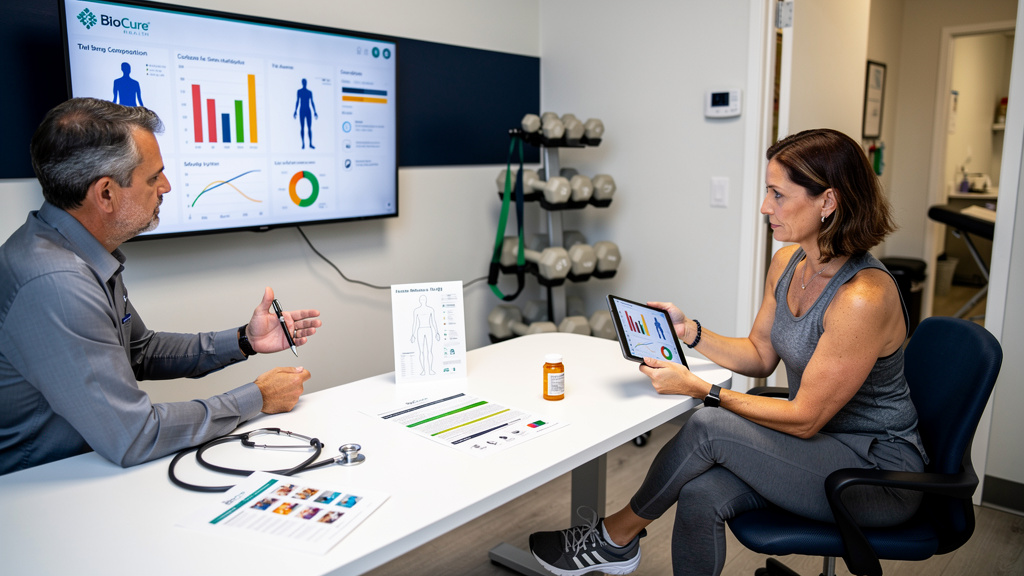
What a real metabolic reset program should include: labs, drug, follow-up
A real metabolic reset program should include six things: baseline labs before anything is prescribed, a body composition and waist measurement, a medication plan in which an FDA-approved option like Wegovy (semaglutide) or Zepbound (tirzepatide) is discussed, nutrition with protein targets and strength training, scheduled follow-up with repeat labs, and a plan for maintenance and eventually stepping down. If a program skips the labs or has no plan for what happens after the first few months, it is a prescription subscription, not a reset. Peptides can be part of the plan, but they should sit on top of this foundation, not replace it.
"Metabolic reset" is not a medical term. Clinics use it for everything from a 30 day supplement kit to a physician supervised GLP-1 program. The National Institute of Diabetes and Digestive and Kidney Diseases (NIDDK), in its guide Choosing a Safe & Successful Weight-loss Program, says a sound program offers a healthy eating plan, ways to be more active, help building lasting habits, slow and steady weight loss, and a plan for keeping weight off. Use the checklist below to hold any program to that standard.
| What to look for | Why it matters | Red flag |
|---|---|---|
| Baseline labs | Finds conditions that change the plan and gives you a starting point | A prescription issued from a questionnaire alone |
| Body composition and waist | Shows whether you are losing fat or muscle | Scale weight is the only number tracked |
| Medication plan | FDA-approved options discussed, risks explained | Only a proprietary "blend" is offered |
| Nutrition and strength training | Protects muscle and supports results | "Eat less" is the only advice |
| Follow-up and repeat labs | Catches side effects and guides dose changes | No check-in after the first shipment |
| Maintenance and exit plan | Weight management is long term | No answer to "what happens when I stop?" |
1. Baseline labs before anything is prescribed
Labs are not a formality. They tell your clinician whether a medication is appropriate, which one, and what to watch for.
The FDA prescribing information for both Wegovy and Zepbound lists warnings that make a baseline useful: low blood sugar when the drug is combined with insulin or a sulfonylurea, acute kidney injury linked to dehydration from stomach side effects, gallbladder problems, and pancreatitis. Both labels also carry a boxed warning about thyroid C-cell tumors, and both drugs should not be used if you or a family member has had medullary thyroid carcinoma or MEN 2. That last point is a history question, which is why a real intake asks it.
A solid starting panel looks at:
- Blood sugar control, including A1c, so your clinician knows whether you have prediabetes or diabetes and whether other medications need adjusting.
- Lipids, to see your cardiovascular starting point.
- Kidney and liver function through a metabolic panel.
- Thyroid function, because an underactive thyroid can affect weight and energy.
- Sex hormones where relevant, since low testosterone in men and perimenopausal changes in women can shape both symptoms and the plan.
At BioCure, every weight loss and peptide protocol starts with diagnostics. Our comprehensive Male and Female panels cover hormones, thyroid, lipids, metabolic and organ markers, and you can test with an at-home kit and an in-home phlebotomist visit or at a lab. Results come back in 7 to 14 days, and a specialist walks you through them. You can see what is measured on our diagnostics page. If a program wants to start you on peptides with no blood work at all, read our post on the risks of peptide therapy without bloodwork first.
2. A body composition baseline and a waist measurement
The scale tells you how much you weigh. It does not tell you what you lost. Any calorie deficit can take some muscle along with fat, and muscle matters for strength, blood sugar control and how well you keep weight off.
Two common ways to measure body composition:
- DEXA scan: a low dose X ray that estimates fat, lean mass and bone. It is generally considered the more precise option.
- Bioimpedance: a scale or handheld device that sends a small current through the body. It is convenient and inexpensive but can shift with hydration, so measure under the same conditions each time.
Add a waist measurement. It costs nothing, takes ten seconds, and reflects the abdominal fat most tied to metabolic risk. Measure at the same spot, at the same time of day, every few weeks. Ask any program whether it tracks body composition. If it does not, arrange a scan on your own and bring the numbers to your follow-ups.
3. A medication plan that discusses FDA-approved options first
GLP-1 medications are the reason metabolic programs look so different in 2026. A legitimate program explains what is FDA-approved, what is not, and why it recommends what it does.
What the labels say. According to the FDA prescribing information, Wegovy and Zepbound are approved for chronic weight management in adults with a BMI of 30 or higher, or 27 or higher with at least one weight related condition such as high blood pressure or type 2 diabetes. Both are approved as an adjunct to a reduced calorie diet and increased physical activity, not as a replacement for them. Wegovy also carries an indication to reduce the risk of major cardiovascular events in adults with established heart disease and excess weight, and Zepbound is also approved for moderate to severe obstructive sleep apnea in adults with obesity. Both labels start at a low dose and step up every four weeks, largely to limit nausea, diarrhea, vomiting and constipation, the most common side effects. The Zepbound label also notes that it can reduce the effectiveness of oral birth control, which matters if you rely on the pill.
Compounded versions. Compounded semaglutide and tirzepatide are not FDA-approved, which means the FDA has not reviewed them for safety, effectiveness or quality before they reach patients. If a program uses compounded medication, ask which licensed compounding pharmacy prepares it, how it is dosed, and why it was chosen over the approved product for you. Avoid anything sold as "research use only" or without a prescription.
Where peptides fit. GLP-1 drugs are themselves peptides, and they carry the strongest evidence by far. Other peptides marketed in "metabolic reset" programs, such as AOD-9604, are not FDA-approved for weight loss, and human evidence for them is limited. BioCure offers AOD-9604 and Lipomino (amino acid and B vitamin) injections as optional add-ons in our weight loss program, and we are clear with patients that they are supporting players, not the engine. Our peptide therapy protocols follow the same path as weight loss: evaluation and labs first, then a custom plan.
4. Nutrition with protein targets, plus strength training
GLP-1 medications turn down appetite. That is the point, but it also means you can undereat protein without noticing. A program worth paying for gives you a personal protein target based on your body size and goals, not a generic meal plan.
Practical habits that help:
- Eat protein first at each meal, and spread it across the day.
- Lift something. Regular resistance training is the most direct way to protect muscle while you lose fat. Walking is good; it is not enough on its own.
- Hydrate. The labels flag kidney injury tied to dehydration from vomiting or diarrhea, so fluids are a safety issue, not just a comfort one.
- Add fiber gradually to help with constipation.
This is where NIDDK's guidance and the drug labels agree: medication works alongside eating and activity changes. Longevity is not accidental, it is intentional.
5. Follow-up you can count on, with repeat labs
The first months are when doses change and side effects show up, so that is when follow-up should be most frequent. A reasonable standard looks like this:
| Timeline | What should happen |
|---|---|
| Before starting | Intake, physician consultation, baseline labs, body composition and waist |
| During dose increases | Regular check-ins on side effects, eating, hydration and progress before each step up |
| Around 3 months | Repeat labs compared with your baseline, plus updated body composition and waist |
| Ongoing | Scheduled reviews, labs as your clinician advises, dose adjustments |
Repeat labs at about three months answer the questions that matter: is your blood sugar improving, how are your lipids, are your kidneys and liver handling the medication well? New or severe symptoms, such as persistent abdominal pain, should be evaluated by a clinician promptly rather than waiting for the next visit. At BioCure, ongoing monitoring and lab reviews are part of the protocol, with regular check-ins and support between visits.
6. A maintenance and exit plan
Both labels describe these drugs for chronic weight management. That wording is honest: excess weight behaves like a chronic condition, and weight regain after stopping medication is common. A program that only talks about the first 12 weeks is selling a start, not a result.
Before you begin, ask:
- What does maintenance look like once I reach my goal? A lower dose, the same dose, or a taper?
- How will we decide whether to step down, and what will we monitor if I do?
- Which habits are we building now so that results hold?
BioCure's weight loss program includes maintenance support after you reach your goal, because this is what modern longevity looks like: a body that is monitored, supported and optimized all year long.
How to compare programs, including BioCure
Judge any program on five criteria: labs before prescribing, who prescribes and follows you, which medications are offered and why, how follow-up works, and how pricing works. National telehealth brands such as Ro, Found and Calibrate pair prescription weight loss medication with coaching or app support. Local clinics and med spas often bundle injections with in-person visits. Pricing models differ, so check each provider's current page; Calibrate, for example, lays out its approach on its prescription weight loss page.
| Program model | What you usually get | How pricing works | Questions to ask |
|---|---|---|---|
| National app based telehealth | Prescriber visits, coaching or app tools | Usually membership based; medication, labs and insurance billing vary by brand | Are labs required? Is medication included? |
| Local clinic or med spa | In-person visits and injections | Often bundled packages or a la carte | Who prescribes? Are labs and follow-up included? |
| Physician-led telehealth with a clinic (BioCure) | Physician consult, comprehensive labs, custom protocol, home delivery, ongoing monitoring | Cash pay; $199 consult credited toward membership; membership pricing is set at your consultation | Is my state covered? Which medication fits my labs? |
BioCure fits best if you want labs and a physician before any prescription, the option to be seen by video or in person in Fort Lauderdale, and one team handling hormones, peptides and weight loss. We are licensed in 47 states, and availability in your state is confirmed at intake. We do not bill insurance directly, though many patients use HSA or FSA funds with the documentation we provide. If insurance coverage for a brand name drug is your priority, an insurance billing program may suit you better. Our homepage lists a Metabolic Reset under weight loss, and it follows the same process: a 5 minute intake, physician video consult, diagnostics, a 1:1 results review, and medication shipped to your door, typically 5 to 10 business days after consultation and testing.
Frequently asked questions
What labs should I get before starting a GLP-1 for weight loss?
A good baseline covers blood sugar control (including A1c), lipids, kidney and liver function, thyroid, and sex hormones where relevant. The Wegovy and Zepbound labels warn about low blood sugar with certain diabetes drugs and kidney injury from dehydration, so knowing your starting point matters. Your clinician should also ask about personal or family history of medullary thyroid carcinoma or MEN 2.
Do weight loss programs that combine peptides with a metabolic reset actually work?
The GLP-1 medications semaglutide and tirzepatide, which are peptides, have strong evidence and FDA approval for chronic weight management. Other peptides sold for weight loss, such as AOD-9604, are not FDA-approved for that use and have limited human data. A credible program treats them as optional add-ons to labs, medication, nutrition and follow-up.
Is compounded semaglutide or tirzepatide safe?
Compounded versions are not FDA-approved, so the FDA has not reviewed them for safety, effectiveness or quality before use. If a program uses them, ask which licensed compounding pharmacy prepares the medication and how dosing is handled. Never buy products labeled for research use only.
How often should I check in with my doctor on a weight loss shot?
Check-ins should be most frequent during the first months, when doses step up every four weeks per the labels and side effects are most likely. Repeat labs around three months let your clinician compare results with your baseline. After that, scheduled reviews and labs as advised keep the plan on track.
What happens if I stop semaglutide or tirzepatide?
Weight regain after stopping is common, which is why the labels describe these drugs for chronic weight management. A good program plans maintenance before you start, whether that means a maintenance dose, a supervised taper, or stopping with close monitoring. Strength training and protein habits built during treatment help results last.
Does BioCure Health offer a metabolic reset weight loss program?
Yes. BioCure's weight loss program uses semaglutide or tirzepatide after a physician consultation and blood panel, with optional AOD-9604 and Lipomino injections, regular check-ins and maintenance support. The consult is $199 and can be credited toward a membership, and care is available in 47 states by video or in person.
Are you living by default or by design? A metabolic reset is only as good as the labs, medication plan and follow-up behind it, so ask every program to show you all six pieces before you sign up.
Let BioCure Health lead you in the right direction. Call or text us to schedule an introductory call at 754-206-0838, your future self will thank you.