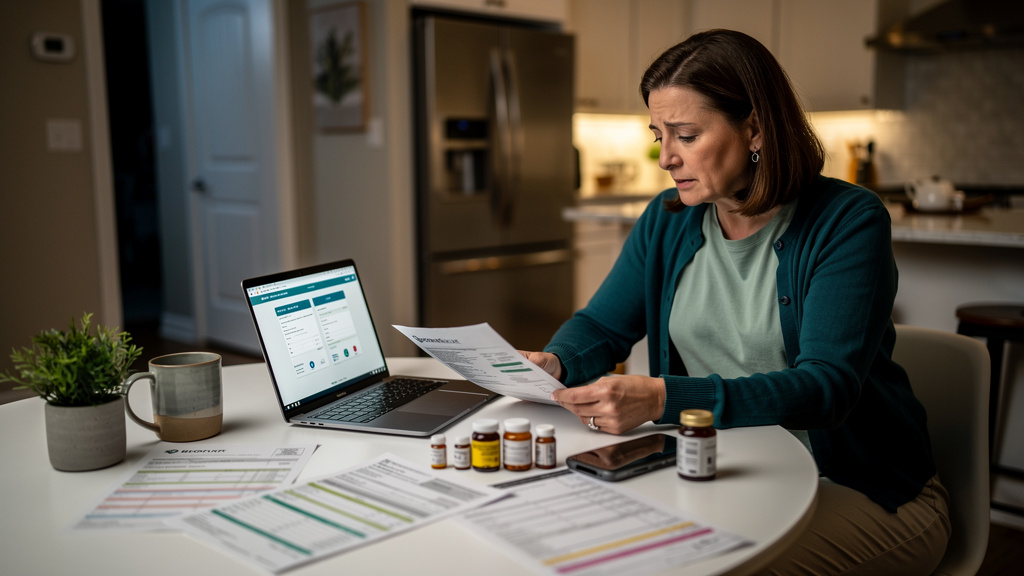
9 costs that aren't in a hormone clinic's advertised monthly price
The hidden costs of telehealth hormone therapy usually sit outside the advertised monthly price: the initial consult, baseline and follow-up lab work (including in-home draw fees), medication billed separately from the membership, ancillary prescriptions and injection supplies, shipping, extra visits for dose changes, and the cancellation terms of an annual plan. Before you sign up, ask every provider for a first-year total that includes all nine items below, then compare those totals instead of the headline monthly number.
A low monthly price is not a lie, but it is rarely the whole bill. Men's hormone providers such as Hims, Hone Health, PeterMD, Defy Medical and Marek Health, and menopause providers such as Midi Health, Evernow, Winona and Alloy, all package these costs in their own way. That is exactly why price ranges you see online look so inconsistent. The fix is simple: stop comparing monthly prices and start comparing what you will actually pay in year one.
The 9 costs at a glance
Use this checklist on every provider you are considering. If a pricing page does not answer a row, ask before you pay anything.
| # | Cost | Where it usually hides | What to ask |
|---|---|---|---|
| 1 | Initial consult | Charged before any membership starts | Is the fee credited toward membership? |
| 2 | Baseline labs and draw fees | A separate lab bill or in-home phlebotomy fee | Which biomarkers are included, and who pays for the draw? |
| 3 | Follow-up labs | Not part of the monthly price | How often will I retest, and what does each round cost? |
| 4 | Medication | Billed per prescription on top of membership | Is medication included, and does the price change with my dose? |
| 5 | Ancillaries and supplies | Added after you start | Are syringes, needles, sharps containers and any second prescription included? |
| 6 | Shipping and cold packs | Added at checkout on each order | Is shipping included, and how often do orders ship? |
| 7 | Dose changes and extra visits | Billed per visit | How many check-ins are included each year? |
| 8 | Commitment and cancellation | In the terms of service | Is it monthly or annual, and what happens if I cancel early? |
| 9 | HSA/FSA eligibility | Left to you to sort out | Will I get itemized invoices for reimbursement? |
Getting started: the consult and baseline labs
1. Initial consult fee, and whether it is credited
Most physician-led programs charge for the first consultation, because a licensed clinician has to review your history before prescribing anything. The question is not only how much it costs but whether it is credited back once you enroll. A credited consult effectively becomes part of your membership. A non-credited one is a sunk cost, which matters if you meet with two or three providers before choosing.
2. Baseline lab panel and in-home draw fees
No responsible provider should start hormone therapy without labs, so baseline testing is a real cost even when it is not on the pricing page. Two things vary widely. First, what is measured: a single testosterone or estradiol number is not the same as a panel that also covers thyroid, lipids, metabolic and organ markers. Second, how the blood is drawn: an at-home kit that needs a phlebotomist visit, or a lab appointment near you, may each carry their own fee. Ask for the full biomarker list and the draw cost in writing.
Ongoing costs: follow-up labs, medication and ancillaries
3. Follow-up labs every 3 to 12 months
Hormone therapy is not a set-and-forget prescription. Retesting is commonly scheduled somewhere between every 3 and 12 months, often more frequently early on and less often once you are stable, depending on your protocol and your clinician. The FDA's testosterone information page outlines the safety considerations for testosterone products, and those considerations are exactly why monitoring is part of the treatment, not an upsell. Multiply the cost of one follow-up panel by the number of times you will retest in a year. That figure is often the biggest gap between advertised and actual cost.
4. Medication not included in membership
Many memberships cover access to a clinician, messaging and monitoring, while the medication itself is billed separately. Others bundle medication into one price, which can change if your dose goes up. On the menopause side, some providers send prescriptions such as estradiol patches or progesterone to a local pharmacy, so what you pay depends on your insurance or that pharmacy's cash price. Whatever the model, ask what your medication will cost at your likely dose, not just the starting dose.
5. Ancillaries and injection supplies
Injectable therapy needs supplies: syringes, needles, alcohol swabs and a sharps container for safe disposal. Some programs include them; others charge per order. Your clinician may also recommend an additional prescription based on your labs and goals. Whether that is appropriate is a medical decision made for you individually. Whether it is included in your price is a billing question you can ask on day one.
Logistics: shipping and extra visits
6. Shipping and cold-pack fees
Shipping looks small until you multiply it. Some products ship in insulated packaging with cold packs, and a monthly order schedule means twelve shipping charges a year versus four on a quarterly schedule. Ask whether shipping is included, whether expedited shipping costs extra, and how often orders go out.
7. Dose-change or extra visit fees
Your first dose is rarely your final dose. If adjusting your protocol requires a new visit, and that visit is billed separately, the early months can cost more than you planned. Ask how many clinician check-ins are included per year, whether messaging counts, and what an extra visit costs.
Contracts and payment: commitment and HSA/FSA
8. Annual vs monthly commitment and cancellation terms
A low monthly price sometimes depends on an annual commitment. That can be good value if you are sure, and a problem if you need to stop for medical reasons, move to a state the provider does not serve, or simply change your mind. Read the cancellation terms before you enter a card number. Look for early termination fees, auto-renewal dates, and whether prepaid months are refundable.
9. What HSA/FSA can reimburse
Health savings and flexible spending accounts can often be used for qualified medical expenses, and prescribed medication and lab testing are common examples. Membership or program fees can be less clear cut. Eligibility is set by IRS rules and your plan administrator, so confirm before you assume. Either way, you will need itemized invoices that show what each charge was for, so ask whether the provider supplies that documentation.
How to compare hormone providers on total cost
Provider prices change often, so the most reliable approach is to understand how each one prices, then check its current pricing page for the actual numbers. Most telehealth hormone programs fall into one of these models.
| Pricing model | What the monthly price usually covers | What tends to be extra | Watch for |
|---|---|---|---|
| Membership plus medication | Clinician access, messaging, monitoring | Medication, often labs | Medication cost rising with dose |
| Bundled all-in | Clinician, medication, sometimes labs | Follow-up labs, ancillaries | Annual commitment tied to the low price |
| A la carte | Each visit, lab and prescription priced separately | Everything is itemized | Totals adding up faster than expected |
| Insurance-billed visits | Visit covered or copay based | Labs and medication depend on your plan | Deductibles and coverage limits |
Then run the same math for each option:
First-year total = consult (minus any credit) + baseline labs and draw fee + membership × 12 + medication × 12 + follow-up labs + supplies + shipping + extra visits.
The provider with the lowest monthly price does not always have the lowest first-year total. A clear answer to every row in the checklist above is a good sign about how the rest of your care will be handled.
How BioCure prices hormone therapy
BioCure Health is a physician-led telehealth longevity clinic based in the Fort Lauderdale area, licensed to treat patients in 47 states, with availability confirmed at intake. Here is what we disclose up front:
- Consult: a $199 video consultation with a physician, credited back when you start a membership.
- Baseline labs: an at-home kit with an in-home phlebotomist visit, or in-lab testing if you prefer. Results arrive in 7 to 14 days, and every result is interpreted with a specialist in a 1:1 review. Our comprehensive Male and Female panels cover hormones, thyroid, lipids, metabolic and organ markers, described as 90+ biomarkers. See our diagnostics page.
- Protocols: three men's tiers. bioOptimize is foundational, bioRestore uses medications that raise your body's own testosterone without direct replacement, and bioTest is full testosterone replacement with ongoing hormone monitoring. Details are on our testosterone therapy page. Membership pricing depends on your protocol and is set at your consultation.
- Delivery and support: medications come from licensed compounding pharmacy partners and ship to your door, typically 5 to 10 business days after your consultation and testing. Ongoing follow-up and support are included.
- Payment: we do not bill insurance directly. Many patients use HSA or FSA funds, and we provide invoices and documentation for reimbursement.
If you want a deeper look beyond hormones, our specialty tests have published prices:
| Specialty test | Price |
|---|---|
| Micronutrient | $585 |
| Food sensitivity | $600 |
| Gut health | $600 |
| TrueAge epigenetic | $625 |
| Genetic testing | $530 |
| Adrenal/stress | $329 |
BioCure is a strong fit if you want physician-led care, the option to be seen in person or by video, and labs reviewed with you one on one. If insurance billing is your top priority, an insurance-billed provider may suit you better, and that is a fair choice to make.
Frequently asked questions
What should a hormone clinic's monthly price include?
At minimum, ask whether it covers clinician access, medication, follow-up labs, supplies and shipping. Few programs include all five, so the answer tells you what you will pay on top. Get it in writing before you enroll.
How often do I need blood work on testosterone therapy?
Follow-up labs are commonly scheduled somewhere between every 3 and 12 months, often more frequently in the first months and less often once you are stable. Your clinician sets the schedule based on your protocol and results. Budget for each round, because follow-up labs are often billed outside the membership.
Does insurance cover online hormone therapy?
It depends on the provider and your plan. Some telehealth providers bill insurance for visits, while many, including BioCure Health, are cash pay and provide documentation you can submit for reimbursement. Check whether labs and medication are covered separately from the visit.
Can I use my HSA or FSA for testosterone therapy?
Often yes for qualified medical expenses such as prescribed medication and lab tests, though membership fees can be less straightforward. Your plan administrator makes the final call under IRS rules. Ask your provider for itemized invoices so each charge is clearly described.
Is telehealth TRT cheaper than an in-person clinic?
Not automatically. Telehealth can save time and travel, but lab draws, shipping and medication billed separately can close the gap. Compare first-year totals, not monthly prices, to see which is actually cheaper for you.
Hormone therapy done well is an investment in how you feel for years, not a monthly subscription you forget about. Know your total cost before you start, and choose the provider that answers every question on this list without hesitation.
Let BioCure Health lead you in the right direction. Call or text us to schedule an introductory call at 754-206-0838, your future self will thank you.