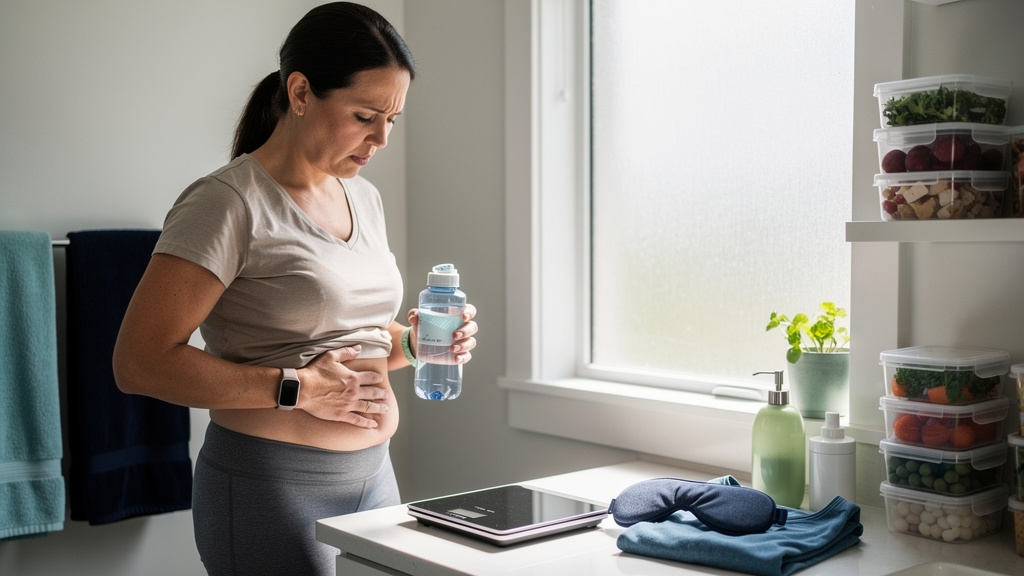
Gaining weight while eating healthy and exercising? 8 real reasons
If you are gaining weight while eating healthy and exercising, the most common cause is not fat at all: it is water and stored glycogen, especially in the first weeks of a new workout. When the gain is real and lasts, the usual reasons are healthy but calorie dense foods, eating more to match your training, poor sleep and stress. Less often, a medication or a medical condition such as hypothyroidism, PCOS, insulin resistance or perimenopause is responsible, and those are worth checking with a clinician and a blood panel.
Here are the 8 reasons, roughly ordered from most to least common. How often each one applies varies from person to person, so treat the order as a starting point, not a diagnosis.
| # | Reason | How to tell | First step |
|---|---|---|---|
| 1 | Water and glycogen shifts | Gain appears within days of a new workout, salty meal or before your period | Track a weekly average, not daily numbers |
| 2 | Healthy but calorie dense foods | Lots of nuts, oils, smoothies, granola, "healthy" snacks | Weigh and log food for one week |
| 3 | Exercise compensation | Hungrier after workouts, more sitting the rest of the day | Track steps and post workout snacks |
| 4 | Sleep loss | Short or broken sleep, cravings the next day | Protect a consistent sleep window |
| 5 | Chronic stress | Stress eating, late night snacking | Address stress directly, not just diet |
| 6 | Medications | Gain started after a new prescription or dose change | Talk to your prescriber; do not stop on your own |
| 7 | Medical conditions | Fatigue, cold intolerance, irregular periods, high blood sugar | Get a blood panel and clinical exam |
| 8 | Hormonal life stages | Perimenopause, or low testosterone in men | Hormone testing with a clinician |
1. First, check whether it is fat or just scale noise
The scale measures everything: fat, muscle, water, food in your gut and stored carbohydrate. Fat gain is slow. Water can swing quickly. Before you change anything, figure out which one you are looking at.
A new workout. When you start training or increase intensity, your muscles store more glycogen (the stored form of carbohydrate), and glycogen is held with water. Hard sessions also cause temporary inflammation as muscle repairs, which holds extra fluid. That is why many people see the scale climb in the first few weeks of a new routine, even while their clothes fit the same or better.
Sodium. A salty restaurant meal or a day of processed food can make your body hold extra water for a day or two.
Your menstrual cycle. Cleveland Clinic notes that hormonal shifts around the menstrual cycle can cause fluid retention and bloating. A higher number the week before your period is common and usually resolves on its own.
Constipation. Food that has not moved through your system still registers on the scale.
| Likely water or scale noise | Likely true fat gain |
|---|---|
| Jumps over a few days | Creeps up steadily over weeks |
| Waist measurement unchanged | Waist and clothing fit getting tighter |
| Follows a new workout, salty meal or your cycle | No obvious trigger |
| Drops back within a week or two | Weekly average keeps rising |
Weigh yourself at the same time each morning, after the bathroom and before eating, and compare weekly averages. Add a waist measurement every week or two. If the trend is flat or your waist is shrinking, you are likely doing fine.
2. Healthy food still has calories
Eating well and eating the right amount are two different things. Many nutritious foods are also calorie dense, and portions drift upward without you noticing.
Common examples:
- Nuts and nut butters. A handful is rarely a measured handful.
- Olive oil and avocado oil. Generous pours on salads and pans add up fast.
- Smoothies. Fruit, nut butter, oats and protein powder in one glass can equal a full meal, but drinking it does not fill you up the way eating does.
- Granola and trail mix. Marketed as healthy, often high in added sugar and fat.
- Dried fruit, cheese, dark chocolate and "protein" bars.
The fix is simple: weigh and log everything you eat for one week. You do not need to count calories forever. One honest week shows you where the gap is, and most people are surprised by at least one item. If you are on a medical weight loss program, our guide to eating strategies for weight loss therapies covers how to structure meals around treatment.
3. Your body compensates for exercise
Exercise is one of the best things you can do for your health. It is a less reliable tool for weight loss than most people expect, because the body pushes back in two ways.
Appetite rises. Many people get noticeably hungrier after training, and the post workout snack or larger dinner can cancel out much of the energy burned. Fitness trackers and gym machines also tend to overestimate calories burned, which encourages eating more.
Everyday movement drops. After a tough morning session, you may sit more, take the elevator, or skip the evening walk without realizing it. This everyday movement outside your workouts accounts for a meaningful share of daily energy use, so losing it matters.
To check, track your daily steps for a week alongside your food log. If steps fall on workout days, aim to keep your baseline movement steady. Keep training too; exercise protects muscle, heart health and metabolic health regardless of what the scale says.
4. Sleep loss and stress change your appetite
Harvard Health lists both lack of sleep and stress among the hidden causes of weight gain, and the NIDDK includes sleep and stress among the factors that affect weight.
Sleep. Short sleep is linked to shifts in the hormones that regulate hunger and fullness: ghrelin, which drives appetite, and leptin, which signals that you have had enough. In practice, that shows up as stronger cravings, especially for high calorie foods, and less willpower to resist them. You are also awake longer, which means more opportunities to eat.
Stress. Chronic stress keeps cortisol elevated and pushes many people toward comfort eating and late night snacking. It also tends to wreck sleep, so the two problems feed each other.
If your diet and training look solid on paper, look hard at your sleep schedule and stress load. They are often the missing piece.
5. Medications that can cause weight gain
If the gain started after a new prescription or a dose change, the medication may be part of it. According to the NIDDK, medicines that can contribute to weight gain include some:
- Antidepressants
- Antipsychotics
- Insulin and certain other diabetes medicines
- Steroids (corticosteroids)
- Beta blockers
MedlinePlus also lists birth control pills and medicines for bipolar disorder among possible causes of unintentional weight gain. These drugs can increase appetite, cause fluid retention or change how your body stores energy.
Do not stop or change a medication on your own. These drugs often treat serious conditions, and there are usually alternatives or adjustments your prescriber can discuss with you.
6. Medical and hormonal causes
When the basics check out and the weight keeps climbing, a medical cause deserves a look. MedlinePlus and Cleveland Clinic both list hormonal conditions among the causes of unexplained weight gain.
Hypothyroidism. An underactive thyroid slows metabolism. It often comes with fatigue, feeling cold, dry skin, constipation and hair thinning. A simple blood test can screen for it.
PCOS. Polycystic ovary syndrome is common and linked to insulin resistance. Signs include irregular periods, acne and excess facial or body hair.
Insulin resistance. When your cells respond poorly to insulin, the body tends to store more fat, particularly around the waist. It often shows up on blood work before prediabetes or type 2 diabetes is diagnosed.
Perimenopause and menopause. Shifting estrogen and progesterone levels can change where your body stores fat and how you sleep. Many women notice more weight around the midsection in their 40s and 50s even without changing their habits. Harvard Health also lists menopause among hidden causes of weight gain.
Low testosterone. In men, low testosterone is associated with more body fat and less muscle, and extra body fat can in turn lower testosterone.
Cushing's syndrome. This condition, caused by too much cortisol, is rare. Signs include a rounder face, fat at the upper back, purple stretch marks, easy bruising and muscle weakness.
This is where diagnostics earn their place. A decade ago, most people only did blood work when something felt wrong. Now you can measure what is happening instead of guessing. BioCure's comprehensive Male and Female panels cover hormones, thyroid, lipids, metabolic and organ markers, and every result is reviewed with a specialist. You can test at home with an in home phlebotomist visit or at a lab, with results in 7 to 14 days.
7. When to see a doctor
Most weight gain on a healthy routine is not an emergency. Some patterns do need medical attention. MedlinePlus explains that fluid retention from heart, kidney or liver problems can cause weight gain, so take these signs seriously:
- Rapid weight gain over days, especially with no change in eating
- Swelling in your legs, ankles, feet or abdomen
- Shortness of breath, particularly when lying down or with mild activity
That combination can signal fluid buildup and needs prompt care. Also book an evaluation if your gain comes with fatigue and feeling cold, irregular periods, signs of Cushing's, changes in mood, or if it started after a new medication.
If you are simply doing the work and not seeing results, that is a valid reason to get checked too. BioCure's peptide therapy and weight programs were built for exactly that patient. Our medical weight loss program requires a physician consultation and a blood panel before any GLP-1 treatment such as semaglutide or tirzepatide, so the plan starts from your data, not a guess. Intake takes about five minutes online, the video consultation with a BioCure physician is $199 and can be credited back with a membership, and care is available by telehealth in 47 states or in person at our South Florida clinic. We do not bill insurance, but many patients use HSA or FSA funds, and we provide documentation for reimbursement.
Frequently asked questions
Why am I gaining weight after starting to work out?
In the first few weeks of a new routine, your muscles store more glycogen and water, and muscle repair causes temporary fluid retention. This often shows up as a higher number on the scale even while your body composition improves. Watch your weekly average and waist measurement rather than daily weigh ins.
Why am I gaining weight on a calorie deficit?
The most common explanation is that the deficit is smaller than you think, because portions drift and trackers overestimate calories burned. Water retention from sodium, your menstrual cycle, constipation or a new workout can also mask fat loss for a week or two. If a carefully tracked deficit still produces steady gain over several weeks, ask a clinician to check your thyroid, hormones and medications.
Can hypothyroidism cause weight gain even if I eat well?
Yes. An underactive thyroid slows metabolism and can cause weight gain along with fatigue, feeling cold, dry skin and constipation. MedlinePlus lists it among the causes of unintentional weight gain, and a blood test can screen for it.
What blood tests should I get for unexplained weight gain?
A useful panel typically includes thyroid markers, blood sugar and insulin markers, lipids, sex hormones and organ function tests, with cortisol testing if a clinician suspects Cushing's. BioCure's comprehensive Male and Female panels cover hormones, thyroid, lipids, metabolic and organ markers, and each result is reviewed with a specialist.
Does stress make you gain weight?
It can. Harvard Health lists stress among the hidden causes of weight gain, since chronic stress keeps cortisol elevated, increases cravings and disrupts sleep. Managing stress and protecting your sleep often helps more than cutting calories further.
When should I worry about sudden weight gain?
Seek prompt medical care if you gain weight rapidly over a few days, especially with swelling in your legs, ankles or abdomen or shortness of breath. MedlinePlus notes that fluid retention from heart, kidney or liver problems can cause this pattern.
Gaining weight while you eat well and train hard is frustrating, but it is rarely a mystery once you separate water from fat and look honestly at food, movement, sleep and stress. When those check out, the next step is data: your hormones, your thyroid and your metabolic markers. Longevity is not accidental, it is intentional, and so is getting answers.
Let BioCure Health lead you in the right direction. Call or text us to schedule an introductory call at 754-206-0838, your future self will thank you.