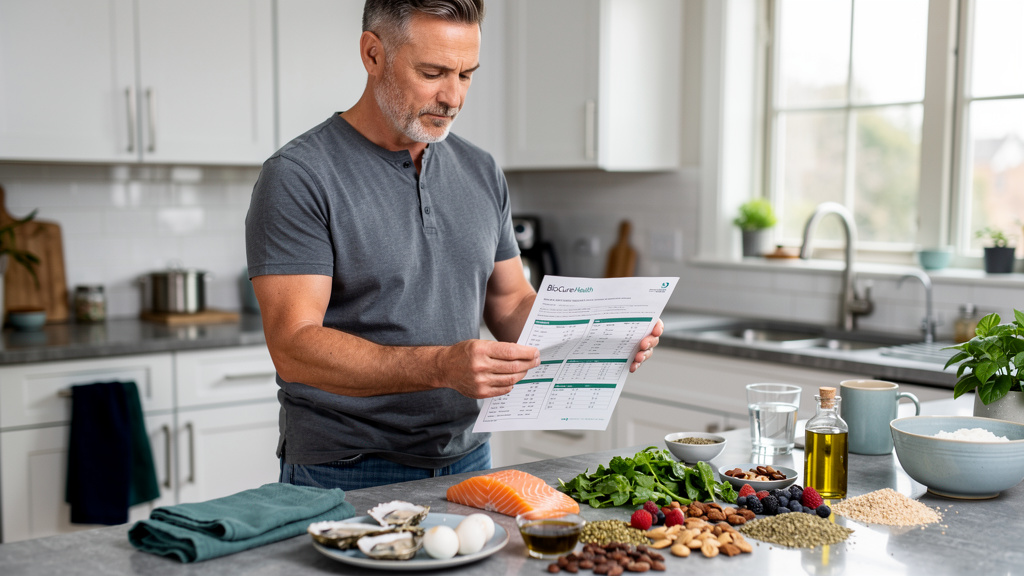
Foods that boost testosterone: what's real and what's hype
No single food reliably raises testosterone in a healthy man who already eats enough and is not deficient in anything. What diet can do is support normal levels indirectly: by helping you reach and keep a healthy body weight, by correcting a true zinc or vitamin D deficiency, and by keeping alcohol and heavily processed food in check. If your levels are genuinely low, food alone is unlikely to fix it, and a proper blood test is the next step.
That is less exciting than a list of ten miracle foods. It is also what the evidence supports. Here is how to separate the parts of the food conversation that hold up from the parts that are mostly marketing.
Myth: specific "testosterone-boosting foods" raise your levels
Search for testosterone foods and you will see the same names on repeat: oysters, eggs, tuna, pomegranate, garlic, ginger, honey, leafy greens. Most of these lists work backward. They take a nutrient involved in hormone production, find a food that contains a lot of it, and imply that eating more of that food means more testosterone.
Biology does not work that way in a man whose levels and nutrient status are already normal. Your body regulates testosterone through signals between the brain and the testes. Adding more raw material does not push that system above its set point.
| Popular claim | What's behind it | What the evidence supports |
|---|---|---|
| Oysters boost testosterone | Very high in zinc | Helpful if you are zinc deficient; no reason to expect a rise if you are not |
| Eggs raise testosterone | Cholesterol is a building block for steroid hormones | Your body makes its own cholesterol; no good evidence that more eggs means more testosterone |
| Pomegranate, garlic, ginger | Mostly animal studies or small trials | Not enough human evidence to call them testosterone foods |
| Fatty fish | Contains vitamin D | Useful if you are low in vitamin D; not a booster on its own |
| "Testosterone killing" foods list | Soy, flaxseed, mint, licorice and others | Mostly overstated; see the soy section below |
The NIH Office of Dietary Supplements notes that oysters contain more zinc per serving than any other food. That makes them a great zinc source. It does not make them a hormone treatment.
Real: overall diet quality and body weight do the heavy lifting
If there is one dietary lever with real weight behind it, it is body weight itself. A review of lifestyle factors and testosterone describes excess body fat, especially around the abdomen, as one of the most consistent factors associated with lower testosterone in men, and weight loss as one of the most practical ways men with excess weight can improve their levels.
Part of the reason is that fat tissue contains aromatase, an enzyme that converts testosterone into estradiol. More fat tissue means more of that conversion. Carrying extra weight is also tied to poor sleep and insulin resistance, which compound the problem.
So the most useful testosterone diet is simply a diet you can sustain that brings you toward a healthy weight. That usually means:
- Enough protein at each meal to protect muscle while you lose fat
- Plenty of vegetables, fruit, legumes and whole grains for fiber and micronutrients
- Mostly unprocessed fats from fish, olive oil, nuts and seeds
- A calorie intake that supports gradual loss, not a crash diet
That last point matters. Severe, prolonged calorie restriction can suppress hormone production too. The goal is steady progress, not starvation.
Diet also works alongside the other evidence based lifestyle changes the same review highlights: regular exercise including resistance training, and enough good quality sleep. None of these will fix every cause of low testosterone, but they are the foundation everything else sits on.
Real: zinc and vitamin D matter, but mainly when you're deficient
Zinc and vitamin D show up on every testosterone list for a legitimate reason. Both play roles in male reproductive health. The NIH Office of Dietary Supplements lists hypogonadism in males among the effects of zinc deficiency. Vitamin D receptors are also present in reproductive tissue.
The catch is that the benefit shows up when you correct a shortfall. If your levels are already adequate, eating more zinc rich food or taking extra vitamin D has not been shown to push testosterone higher in any reliable way.
Who is more likely to be low? According to the NIH Office of Dietary Supplements fact sheets:
- Zinc: vegetarians and vegans, people with digestive conditions that affect absorption, and people who drink heavily
- Vitamin D: people with limited sun exposure, older adults, people with darker skin, and people with obesity
More is not better. The Office of Dietary Supplements sets upper intake limits for both nutrients, and it notes that too much zinc over time can cause copper deficiency. That is why guessing is a poor strategy. Testing tells you whether you have a deficiency worth fixing.
At BioCure, the Micronutrient Test ($585) is one way to look at your vitamin and mineral status, and every result is interpreted with a specialist. Your physician can tell you whether that test makes sense for you or whether a more targeted check is enough.
Soy and very low-fat diets: what the evidence actually says
Myth: soy lowers testosterone in men. Soy contains isoflavones, plant compounds that can interact weakly with estrogen receptors. That fact, plus animal research and a handful of reports involving extreme intake, built the reputation. Human studies of men eating soy foods in normal dietary amounts have generally not shown meaningful drops in testosterone. Tofu, edamame and soy milk can fit in a hormone friendly diet. If you are eating very large amounts of soy every day, that is worth mentioning to your clinician, but ordinary intake is not a reason to worry.
Very low-fat diets deserve more nuance. Dietary fat supplies energy and fat soluble vitamins, and steroid hormones are built from cholesterol. Some research has looked at whether very low-fat eating patterns are linked to lower testosterone, and the effects reported have been small and the studies limited. The practical takeaway is balance. There is no hormonal reason to cut fat to extremes, and no reason to load up on saturated fat in the name of testosterone either. Fish, olive oil, avocado, nuts and eggs give you healthy fats without the trade offs.
Alcohol and ultra-processed food patterns
Alcohol is one area where the food conversation is underplayed rather than overhyped. The lifestyle review identifies heavy drinking as a factor associated with lower testosterone. Alcohol can affect the testes directly, disrupt sleep, and add empty calories that make weight loss harder. Occasional moderate drinking is a different picture from regular heavy intake, but if you drink most days, cutting back is one of the more meaningful changes you can make.
Ultra-processed food works mostly through the indirect route. Diets built on packaged snacks, sugary drinks, fast food and refined grains tend to be calorie dense, low in fiber and micronutrients, and easy to overeat. Over time, that pattern drives weight gain and metabolic problems, which are the things that actually pull testosterone down. There is less direct evidence for any single processed ingredient lowering testosterone, so be skeptical of posts that blame one specific additive or plastic for your symptoms.
Some men also notice that certain foods leave them bloated, sluggish or uncomfortable. BioCure offers a Food Sensitivity Exam ($600) for patients who want to explore that. To be clear, it does not measure testosterone, and the science behind food sensitivity testing is still debated, so results are best reviewed with a clinician rather than used as a reason to cut whole food groups.
A sample plate that supports healthy hormones
You do not need special foods. You need a repeatable pattern. Here is what a hormone supportive day can look like:
| Meal | Example | Why it helps |
|---|---|---|
| Breakfast | Eggs with sautéed spinach, whole grain toast, berries | Protein, fiber and micronutrients to start the day |
| Lunch | Salmon or chicken over greens with quinoa, chickpeas and olive oil | Lean protein, healthy fat, vitamin D from fish |
| Snack | Greek yogurt with pumpkin seeds, or a handful of nuts | Protein plus zinc and magnesium from seeds and nuts |
| Dinner | Lean beef or tofu stir fry with vegetables and brown rice | Zinc from beef, plant protein from tofu, plenty of fiber |
| Drinks | Water, unsweetened tea or coffee; alcohol kept occasional | Supports sleep, weight and liver health |
Roughly half your plate from vegetables and fruit, a quarter from protein, and a quarter from whole grains or starchy vegetables, with a modest amount of healthy fat, covers most men well. Oysters and shellfish are great additions for zinc. They are just not required.
When diet is not enough
If you have symptoms such as low libido, fatigue, low mood, loss of muscle or erectile changes, food is not where the investigation should stop. The Endocrine Society guideline on testosterone therapy recommends diagnosing low testosterone only when symptoms are present and morning fasting testosterone is low on repeat measurement. A single random test, or a guess based on how you feel, is not enough.
That is the approach BioCure takes. A 5 minute online intake leads to a $199 video consultation with a physician, which can be credited back with a membership. Comprehensive male lab testing is done with an at-home kit and phlebotomist visit or in a lab, with results in 7 to 14 days and a 1:1 review of what they mean. If your levels are low, the testosterone program includes options ranging from foundational support to medications that raise your body's own production to full replacement with ongoing monitoring. BioCure is physician-led, licensed in 47 states, and does not bill insurance directly, though many patients use HSA or FSA funds with documentation BioCure provides.
Frequently asked questions
What is the best food to boost testosterone naturally?
There is no single best food. Oysters are the richest source of zinc, which helps if you are deficient, but they will not raise testosterone in a man with normal zinc levels. A balanced diet that helps you reach a healthy weight does far more than any one ingredient.
Do eggs increase testosterone?
Eggs are a good source of protein and healthy fat, and cholesterol is a building block for steroid hormones. Your body makes its own cholesterol, though, and there is no good evidence that eating more eggs raises testosterone in healthy men. They are a useful part of a balanced plate, not a booster.
Does soy lower testosterone in men?
The fear mostly comes from animal research and rare cases of extreme intake. Human studies of men eating soy foods in normal amounts have generally not shown meaningful drops in testosterone. Tofu, edamame and soy milk can be part of a healthy diet.
Can taking zinc or vitamin D raise my testosterone?
Only if you are deficient. Correcting a true deficiency can support normal hormone function, but extra zinc or vitamin D on top of adequate levels has not been shown to reliably raise testosterone. Too much zinc can also cause copper deficiency, so testing first is smarter than guessing.
How can I naturally boost testosterone at home?
The changes with the best evidence are losing excess body fat, exercising regularly with some resistance training, sleeping well, and limiting alcohol. These will not fix every cause of low testosterone. If symptoms persist, get repeat morning blood work reviewed by a physician.
How do I know if my testosterone is actually low?
You need symptoms plus blood work. The Endocrine Society recommends measuring morning fasting testosterone and repeating the test before making a diagnosis. A physician can also check related markers to find the cause.
Food is a foundation, not a treatment. Eat in a way that keeps your weight, sleep and energy where they should be, fix real deficiencies when testing shows them, and let data, not internet lists, guide the next step.
Let BioCure Health lead you in the right direction. Call or text us to schedule an introductory call at 754-206-0838, your future self will thank you.