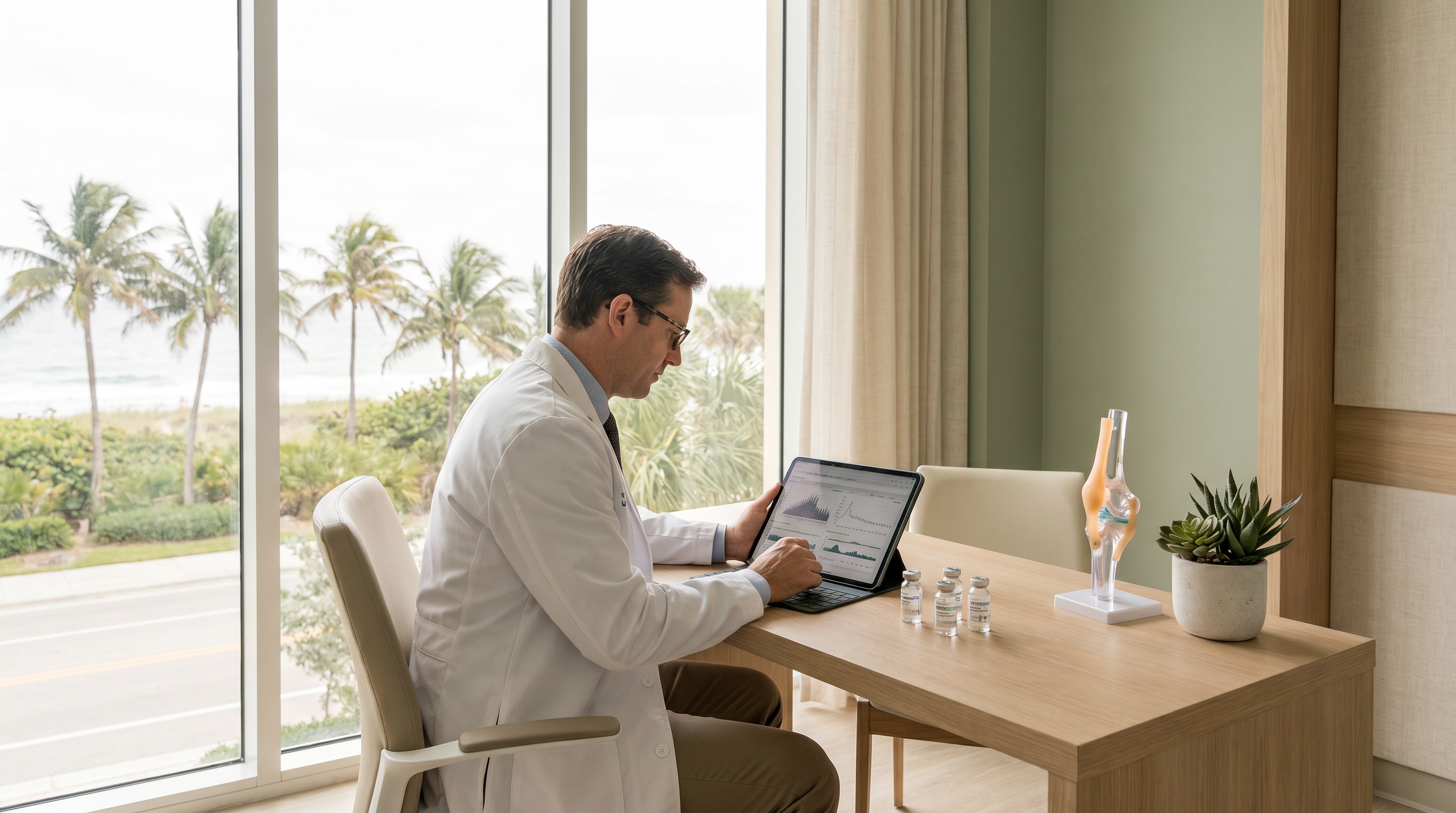
5 Reasons Florida Stem Cell Clinics Beat Overseas Options
Every year, thousands of Americans board flights to Mexico, Panama, and the Cayman Islands hoping to find cutting edge stem cell treatments at a fraction of the domestic cost. On the surface, the math looks simple: same procedure, lower price, tropical recovery. But the math is wrong. The procedure is not the same. The cells are not the same. The oversight is not the same. And when something goes wrong in an unregulated clinic 2,000 miles from your medical records, the cost you pay is one no discount can justify.
1. FDA Oversight Exists for a Reason, and It Does Not Exist Overseas
In the United States, tissue banks that source stem cells operate under the oversight of multiple governing bodies, including the FDA's Center for Biologics Evaluation and Research (CBER). These institutions enforce Current Good Tissue Practice (CGTP) regulations that dictate how cells are recovered, processed, stored, and distributed. Every step is documented. Every facility is inspectable. In our clinical experience, this chain of custody is what separates a therapeutic outcome from a gamble. Clinics in Mexico, Panama, and the Cayman Islands operate outside this framework entirely. There is no equivalent regulatory body auditing their tissue sourcing, no mandatory adverse event reporting system, and no standardized protocol ensuring the cells injected into your body meet a verifiable quality threshold.
2. The Cells Themselves Are Fundamentally Different
One of the biggest misconceptions we find ourselves correcting is the assumption that stem cells are stem cells, regardless of where you get them. That is not the case. Many overseas clinics use cloned or extensively cultured cells, expanding them through multiple passages in a lab to increase volume. This process may sound impressive, but it degrades the cells' potency and viability over time. In the United States, this type of cloning and mass expansion cannot legally occur under current FDA guidelines. The cells sourced domestically are far more vibrant, maintaining their biological integrity because they have not been artificially replicated through dozens of culture cycles. When you are paying for regenerative medicine, the regenerative capacity of the cells is the entire point.
3. IRB Approved Protocols Protect You Before, During, and After the Procedure
Institutional Review Boards exist to evaluate the ethical and scientific merit of clinical procedures before a single patient is treated. In the U.S., orthopedic stem cell procedures conducted under IRB approved protocols are held to rigorous standards of informed consent, patient selection, dosing, and follow up. This is not bureaucracy for the sake of bureaucracy. It is a system designed to ensure that outcomes are tracked, complications are reported, and protocols evolve based on real clinical data. Overseas clinics marketing "cutting edge" stem cell therapies are often operating without any independent ethics review whatsoever. No one is auditing their outcomes. No one is tracking what happens to you six months after you leave.
4. Adverse Event Reporting Does Not Exist in Unregulated Markets
This is perhaps the most underappreciated risk of seeking treatment abroad. In the United States, adverse events tied to biological products must be reported through the FDA's MedWatch system and facility specific tracking mechanisms. This creates a feedback loop: if a tissue bank produces a compromised product, or if a specific protocol leads to complications, the system catches it. That data informs future guidelines, protects future patients, and holds providers accountable. In countries without standardized adverse event reporting, complications simply vanish into silence. A patient who develops an infection, an immune reaction, or worse after an overseas procedure has no centralized system advocating on their behalf. The clinic moves on to the next patient. The complication is never recorded.
5. Proximity to Your Provider Is a Clinical Advantage, Not a Luxury
Regeneration does not end when you leave the treatment room. The weeks and months following an orthopedic stem cell procedure are when the real work happens, and having a clinical team within reach changes the trajectory of your recovery. What we see in practice is a clear pattern: patients who had procedures done overseas often arrive at our clinic weeks or months later with questions their original providers are unreachable to answer. Follow up imaging, inflammation management, rehabilitation protocols, and dosage adjustments all require a provider who knows your case and can see you in person. Flying home after a procedure in the Cayman Islands and hoping your local urgent care understands the nuances of your regenerative protocol is not a plan. It is a vulnerability. Staying in Florida means your clinical team is a phone call or a short drive away, for as long as your body needs them.
The appeal of overseas stem cell clinics is built almost entirely on price. But longevity is not a discount purchase. It is the single most consequential investment you will ever make, and it demands the same rigor you apply to every other high stakes decision in your life. FDA oversight, IRB approved protocols, uncloned and viable cells, mandatory adverse event reporting, and ongoing access to your clinical team are not optional features. They are the baseline of what responsible regenerative medicine looks like. Florida offers all of it without a passport.
Let BioCure Health lead you in the right direction. Call or text us to schedule an introductory call at 754-206-0838; your future self will thank you.