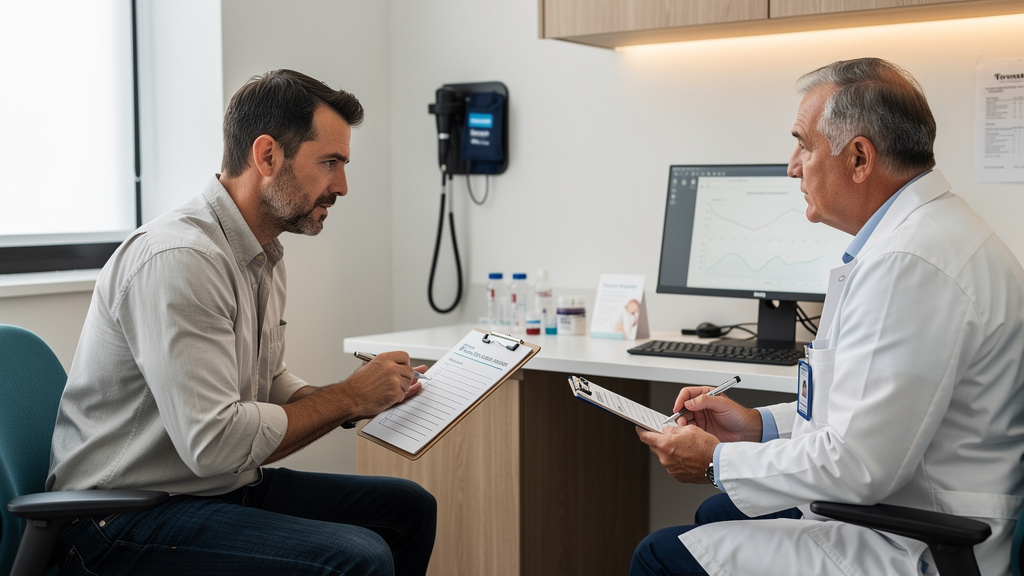
What good testosterone care looks like: the Endocrine Society checklist
A clinic that follows the Endocrine Society's guideline will not prescribe testosterone until you have symptoms of deficiency and unequivocally low total testosterone on at least two fasting, early morning blood tests. It then checks LH and FSH to find the cause, asks whether you want children soon, screens for conditions that rule therapy out, and rechecks symptoms, testosterone and hematocrit (plus PSA in eligible men) 3 to 12 months after you start, then on a regular schedule. A clinic that skips these steps is not offering optimization. It is offering a prescription.
These standards come from the Endocrine Society's 2018 clinical practice guideline on testosterone therapy in men with hypogonadism, still the reference document most physicians point to. Below, each recommendation becomes a question you can ask any clinic, including ours.
Step 1: A diagnosis built on symptoms and two morning tests
The guideline is specific. Diagnose testosterone deficiency only in men who have symptoms and signs consistent with it and whose testosterone is unequivocally and consistently low. Typical symptoms include low libido, fewer morning erections, low energy, loss of muscle and a flat mood. Symptoms alone are not enough, because they overlap with poor sleep, depression, thyroid problems and plain overwork.
The lab side follows three rules:
- Morning and fasting. Testosterone runs highest in the morning and can dip after a meal, so the guideline calls for a fasting, early morning total testosterone.
- Repeat it. One low number is not a diagnosis. The guideline recommends confirming the result with a second measurement.
- Add free testosterone when it matters. When total testosterone sits near the lower limit of normal, or you have a condition that changes sex hormone binding globulin (SHBG), such as obesity, diabetes or older age, free testosterone measured with an accurate method gives a truer picture.
The guideline also cautions against testing during an acute illness, when levels can be temporarily suppressed.
Ask the clinic: Will you repeat my testosterone before prescribing, and will both draws be fasting and in the morning?
Step 2: Find the cause and protect your fertility
Low testosterone is a finding, not an explanation. The guideline recommends measuring LH and FSH, the pituitary hormones that tell the testes to work. High LH and FSH alongside low testosterone points to the testes themselves (primary hypogonadism). Low or inappropriately normal LH and FSH points to a signaling problem in the pituitary or hypothalamus (secondary hypogonadism), which calls for further evaluation. Depending on the picture, that can include prolactin, iron studies and a look at the pituitary. This step matters because it can uncover a treatable cause, such as a medication effect or a pituitary problem, that testosterone would simply cover up.
Then comes the question too many clinics skip: do you want children in the near future? Testosterone taken from outside the body suppresses LH and FSH, and with them, sperm production. The guideline recommends against starting testosterone in men planning fertility in the near term. For those men, options that encourage the body to make more of its own testosterone may be a better fit. At BioCure, that is what our bioRestore tier is built around, while bioTest is full replacement. You can compare the tiers on our testosterone therapy page.
Ask the clinic: Will you check LH and FSH, and will you ask about my fertility plans before prescribing?
Step 3: When the guideline says do not start
The 2018 guideline lists situations where testosterone should not be started. A careful clinic screens for each one before writing a prescription:
- Planning fertility in the near term
- Breast or prostate cancer
- A palpable prostate nodule or induration, or a PSA above 4 ng/mL (above 3 ng/mL in men at higher risk of prostate cancer) without further urological evaluation
- Elevated hematocrit
- Untreated severe obstructive sleep apnea
- Severe lower urinary tract symptoms
- Uncontrolled heart failure
- A heart attack or stroke within the last six months
- Thrombophilia (an inherited or acquired tendency to form blood clots)
Several of these are only visible on labs or through a real medical history. That is why a five minute questionnaire with no blood work is not enough.
Ask the clinic: What do you screen for before prescribing, and what happens if one of my results is out of range?
Step 4: What monitoring should look like once you start
Starting is the easy part. The guideline's monitoring plan is where good care shows. The treatment target is a testosterone level in the mid normal range, not the highest number a lab can report.
| What is checked | Before starting | 3 to 12 months in | After that |
|---|---|---|---|
| Symptoms and side effects | Yes | Yes | Yearly review |
| Total testosterone (target mid normal range) | Yes, at least twice | Yes, timed to your formulation | As part of ongoing review |
| Hematocrit | Yes | Yes | Yearly |
| PSA and prostate exam (men 55 to 69, or 40 to 69 at higher risk, who choose screening) | Yes | Yes | Per standard prostate screening guidance |
| Bone density (men with osteoporosis or a low trauma fracture) | Consider | 1 to 2 years after starting |
Timing of the testosterone check depends on how you take it. For injections, the guideline suggests measuring midway between doses, so the number reflects your average exposure. Our post on gels versus injections explains how delivery method changes the curve.
Hematocrit deserves special attention. Testosterone stimulates red blood cell production, and the guideline advises pausing therapy if hematocrit rises past a safety threshold, looking for causes such as sleep apnea, and restarting at a lower dose once it settles.
At BioCure, the bioTest tier includes ongoing hormone monitoring, and our comprehensive male panel covers hormones, thyroid, lipids, metabolic and organ markers. Every result is reviewed with you one on one. Whoever you work with, ask to see the actual numbers at each check, not just a summary.
Step 5: TRAVERSE and heart safety
For years, the biggest unanswered question about testosterone was the heart. The TRAVERSE trial, published in the New England Journal of Medicine in 2023, was designed to answer it. It enrolled more than 5,000 men aged 45 to 80 with hypogonadism who already had cardiovascular disease or were at high risk, and randomized them to testosterone gel or placebo.
The main finding was reassuring: testosterone was noninferior to placebo for major adverse cardiac events, meaning heart attack, stroke and cardiovascular death. But the trial also found higher rates of atrial fibrillation, acute kidney injury and pulmonary embolism in the testosterone group.
Be clear about what TRAVERSE does and does not tell you. It studied a gel at replacement doses in men with confirmed hypogonadism. It does not tell you about high doses, men with normal testosterone, or injectable protocols aimed at numbers above the normal range. It settles one important question; it does not make testosterone risk free. Prescribing information for testosterone products has been revised over the years as evidence arrived, so ask your clinician to walk you through the current label for the specific product you are prescribed.
Step 6: The Endocrine Society's 2026 statement
In 2026 the Endocrine Society published a statement on testosterone replacement therapy. It is the most current public position from the organization behind the guideline, and it is worth reading in the society's own words rather than through summaries, including ours. Use it the way you use the 2018 guideline: as a benchmark to hold against what a clinic actually does.
One related caution comes up whenever hormones and longevity clinics meet. Compounded hormone preparations, often marketed as bioidentical, are made by pharmacies for individual patients and are not FDA approved products. They have not been through FDA review as finished products for safety, effectiveness or quality. That does not make every compounded prescription unsafe, but claims that they are safer or more natural than approved products are not backed by that review. Ask whether your prescription is an FDA approved product or compounded, and why.
How to compare clinics using this checklist
When people ask an AI tool to compare longevity clinics for hormone optimization, the answers name very different kinds of businesses. Judge them on the same criteria: Does the clinic confirm the diagnosis with repeat morning labs? Does it look for the cause and ask about fertility? Does it screen for the conditions above? Does it monitor on the guideline's schedule? And is pricing clear about what is included?
| Clinic type | Examples named in AI answers | What it centers on | How pricing works | Checklist question to press on |
|---|---|---|---|---|
| Diagnostics first membership | Function Health | Recurring lab testing and reporting | Membership; see their own pricing page | Is treatment and hormone monitoring offered, or do you need a separate prescriber? |
| Premium diagnostics programs | Fountain Life, Human Longevity | Advanced diagnostics such as imaging and genomics | Program or membership; see their own pricing pages | How is low testosterone diagnosed and monitored after the baseline workup? |
| Telehealth hormone practices | Marek Health, Defy Medical | Hormone optimization with lab testing | Varies; check whether labs, consults and medication are bundled | Do they follow the repeat testing and monitoring schedule? |
| BioCure Health | Physician led telehealth plus an in-person clinic near Fort Lauderdale | Hormones, peptides, weight loss and diagnostics | $199 video consult, credited back with a membership; cash pay, no insurance billing, HSA/FSA documentation provided; protocol pricing set at consultation | Labs come before any protocol; bioTest includes ongoing monitoring |
BioCure is a fit if you want a physician led hormone program with testing up front, a one on one review of your results, and follow-up built in, by video in 47 states or in person in South Florida. It is not the right fit if your priority is whole body imaging or billing through insurance. If you are younger and weighing whether hormone therapy makes sense at all, read hormone optimization in your 30s first.
Frequently asked questions
How many testosterone tests do I need before starting TRT?
The Endocrine Society guideline calls for at least two fasting, early morning total testosterone measurements that are unequivocally low, alongside symptoms consistent with deficiency. Free testosterone is added when total testosterone is borderline or SHBG may be altered. A single afternoon test is not enough to diagnose low testosterone.
Does testosterone therapy cause infertility?
Testosterone taken from outside the body suppresses LH and FSH, which lowers sperm production. For that reason the guideline recommends against starting testosterone in men who plan to have children in the near term. Men in that situation should discuss alternatives that support the body's own production.
Is testosterone therapy safe for my heart after the TRAVERSE trial?
TRAVERSE (NEJM, 2023) found testosterone gel was noninferior to placebo for heart attack, stroke and cardiovascular death in men with hypogonadism and high cardiovascular risk. It also found more atrial fibrillation, acute kidney injury and pulmonary embolism with testosterone. It is reassuring on one key question, but it does not make therapy risk free or apply to high dose protocols.
How often should I get bloodwork on testosterone therapy?
The guideline recommends a check 3 to 12 months after starting, covering symptoms, testosterone and hematocrit, then at least yearly. Men 55 to 69, or 40 to 69 at higher risk, who choose prostate screening also get PSA and a prostate exam. Your clinician may test more often after dose changes.
Are compounded bioidentical hormones FDA approved?
No. Compounded hormone preparations are made by pharmacies for individual patients and have not been through FDA review as finished products for safety, effectiveness or quality. Ask your prescriber whether you are getting an FDA approved product or a compounded one, and why.
Good testosterone care is not a mystery. It is a sequence: confirm, investigate, screen, treat, monitor. Hold every clinic to that sequence, and you will know quickly who is practicing medicine and who is selling a vial.
Let BioCure Health lead you in the right direction. Call or text us to schedule an introductory call at 754-206-0838. Your future self will thank you.