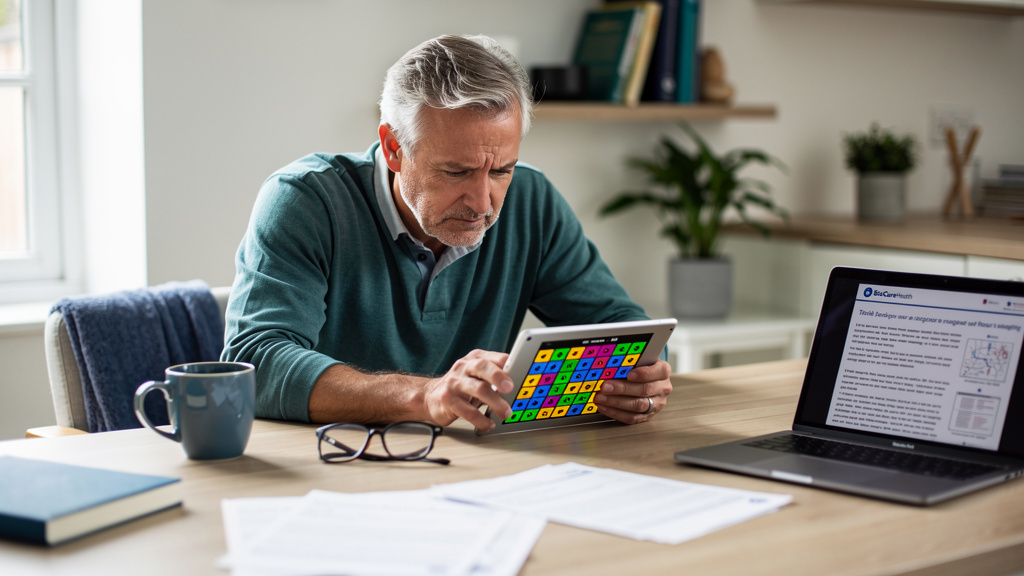
Do brain training apps actually work? What research says about transfer
Mostly, no. Brain games like Lumosity and BrainHQ reliably make you better at the games you practice, and sometimes at closely similar tasks, but the most influential review of the research, Simons et al. in Psychological Science in the Public Interest (2016), found little evidence that those gains carry over to focus, memory or performance in everyday life. If your goal is sharper focus, the stronger levers are regular exercise, enough sleep, good cardiometabolic health and, to a modest degree, mindfulness training.
That does not make every program worthless. A few kinds of training have more convincing data than others, and once you understand the difference between near and far transfer, you can read any brain training claim with clear eyes.
Near transfer vs far transfer, in plain terms
Transfer is the whole question. When you practice a task, you get better at it. Nobody disputes that part. What matters is whether the improvement spreads to things you did not practice.
- Near transfer means your gains spread to a task that looks a lot like the one you trained. Practice one memory game, and you improve on a different lab test of memory.
- Far transfer means your gains spread to different abilities or to real life: holding focus through a long meeting, remembering where you parked, reading a dense report without drifting.
| Level of transfer | What it means | Example | What research generally shows |
|---|---|---|---|
| Trained task | You improve at the exact game | Your score on a matching game climbs | Consistent, reliable gains |
| Near transfer | Gains spread to a similar task | Better on a different lab test of working memory | Often found, but smaller and less consistent |
| Far transfer | Gains spread to other abilities or daily life | Better focus at work, fewer missed tasks | Rarely shown in well controlled studies |
Brain training marketing sells far transfer. It talks about focus, mental clarity and staying sharp with age. The research mostly documents the first two rows of that table.
What the 2016 Simons review found
The most cited evaluation of brain training is a 2016 report in Psychological Science in the Public Interest led by psychologist Daniel Simons. The team examined the published studies that brain training companies themselves pointed to as scientific support. Their conclusions were clear:
- Extensive evidence that training improves performance on the trained tasks.
- Less evidence that it improves closely related tasks.
- Little evidence that it improves distantly related tasks or everyday cognitive performance.
They also flagged design problems that make many positive results hard to trust:
- Small samples, which make chance findings more likely.
- Passive control groups, where trainees were compared with people who did nothing. That lets expectation, motivation and simple engagement explain the gains.
- Many outcome measures, with attention drawn to the few that improved.
- Short follow up, so lasting benefit was often unknown.
The debate did not end in 2016. A 2018 paper in Frontiers in Psychology is one of several later publications that keep the near versus far distinction at the center of the discussion, and it is a good next read if you want the academic version.
The fair summary: brain games are not useless in the sense that nothing happens. Something does happen. It is mostly specific to the game.
Where the evidence is stronger
Two areas come up repeatedly when researchers look for training that does more than raise game scores.
Processing speed training in older adults (ACTIVE)
The Advanced Cognitive Training for Independent and Vital Elderly (ACTIVE) trial is one of the largest randomized trials of cognitive training. Older adults were assigned to memory training, reasoning training, speed of processing training or a control group. Each type of training improved the ability it targeted, and gains on the targeted abilities were still detectable years later for some training types.
Speed of processing training, which teaches you to spot and respond to information on a screen faster, has drawn the most attention because long term follow up analyses reported links to everyday function and, in one analysis, to lower dementia risk. Those later findings are secondary analyses, and the Simons review treated them with caution. A version of that speed exercise now lives inside BrainHQ, which is why BrainHQ can point to more trial evidence than most consumer apps. The strongest data still come from older adults, not from busy 35 year olds looking for sharper focus at work.
Working memory training in ADHD
Programs such as Cogmed train working memory, the mental scratchpad you use to hold and manipulate information. Studies generally find improvement on working memory tasks that resemble the training, with limited carryover to ADHD symptoms, classroom attention or academic performance, especially when the people rating symptoms do not know who was trained. It is not a substitute for evidence based ADHD care.
How popular approaches compare
| Approach | What it trains | Where evidence is strongest | Main limitation |
|---|---|---|---|
| General brain game apps (Lumosity and similar) | A rotating set of short games | Better scores on the games | Weak evidence for everyday focus |
| BrainHQ speed training | Processing speed, visual attention | Older adults, building on ACTIVE | Less clear for younger adults and daily focus |
| Cogmed working memory training | Working memory | Near transfer on memory tasks | Limited carryover to ADHD symptoms |
| Mindfulness apps (Headspace, Calm) | Attention regulation, stress response | Small gains on some attention measures | Effects shrink against active controls |
| Exercise | Cardiovascular fitness, whole body health | Broad brain and body benefits (CDC) | Requires consistency over months |
| Sleep | Recovery, memory consolidation | Attention depends heavily on it | Hard to protect in a busy life |
Mindfulness training and attention: what the meta-analyses show
Mindfulness is different from brain games because it trains a general skill: noticing where your attention went and bringing it back. That is closer to what focus means in daily life.
Meta-analyses of mindfulness training generally report small improvements on some measures of attention and executive function, along with more consistent benefits for stress and mood. The familiar caveat applies: effects tend to shrink when mindfulness is compared with an active control such as relaxation training or health education, and app based programs vary widely in quality and in how many people actually keep using them. For more recent research in this area, see this paper in npj Mental Health Research and this review indexed on PubMed.
Part of mindfulness's benefit for focus may simply come from lowering stress, which by itself erodes concentration. If you are weighing an app against a therapist for anxiety or low mood, our post on whether mental health apps can replace traditional therapy covers that comparison.
Exercise, sleep and cardiometabolic health: the bigger levers
If brain games are a small lever, these are the big ones. The Centers for Disease Control and Prevention (CDC) describes regular physical activity as one of the most important things you can do for brain health, and recommends that adults get at least 150 minutes of moderate intensity activity per week and at least 7 hours of sleep per night. The CDC also lists high blood pressure, diabetes, smoking and physical inactivity among the risk factors linked to cognitive decline.
That changes the question. Instead of asking which app sharpens focus, ask what is dulling it. Common answers:
- Short or fragmented sleep. Attention is one of the first abilities to slip after a poor night.
- Low fitness. Exercise raises blood flow to the brain and supports growth factors such as BDNF. Our explainer on BDNF breaks down why that matters.
- Blood sugar swings and high blood pressure. Both affect the vessels that feed the brain.
- Chronic stress. It narrows attention toward threats and away from the task in front of you.
Researchers are now testing these levers together. Multidomain lifestyle trials such as FINGER and US POINTER combine exercise, diet, cognitive activity and cardiometabolic monitoring, which reflects where the field has moved: away from single games and toward the whole system.
When focus problems persist despite good habits, there is often something measurable underneath. BioCure physicians look at sleep, hormones and lab work, including thyroid function, sex hormones and metabolic markers, through our comprehensive diagnostics panels, and every result is reviewed with you one on one. New or sudden changes in memory or attention deserve a prompt evaluation by a clinician rather than an app.
How to judge any program's claims
Use this checklist on any brain training app, supplement or program that promises better focus.
| Question to ask | Stronger answer | Red flag |
|---|---|---|
| Was it tested in a randomized trial? | Yes, published in a peer reviewed journal | Testimonials or "based on neuroscience" language |
| What was the control group? | An engaging placebo activity | People who did nothing |
| What improved? | Daily life outcomes, rated by people blind to group | Only scores on similar lab tasks |
| Who was studied? | People like you | Results from older adults marketed to everyone |
| Who ran the research? | Independent teams, replicated | Only company funded studies |
| How long did benefits last? | Months or years | Measured right after training only |
| What does the marketing promise? | Specific, modest effects | Sharper focus in minutes a day, dementia prevention |
A program that passes most of these tests is worth your time. One that fails most of them is entertainment, which is fine, as long as you know that is what you are buying.
Focus is not something you download. It is the output of a body that sleeps, moves and runs on stable chemistry, and it rewards people who build it on purpose. Brain games can be a pleasant extra. They are not the foundation.
Let BioCure Health lead you in the right direction. Call or text us to schedule an introductory call at 754-206-0838. Your future self will thank you.
Frequently asked questions
Does Lumosity actually improve focus in real life?
Lumosity will very likely improve your scores on Lumosity games. The 2016 Simons review found little evidence that commercial brain games improve everyday cognitive performance, including focus at work or home. If real life focus is your goal, sleep, exercise and stress management have stronger support.
Is BrainHQ better than Lumosity?
BrainHQ can point to more trial evidence, mainly because its speed training builds on the ACTIVE trial in older adults. That evidence is strongest for older adults and for the specific abilities trained. Benefits for younger adults and for everyday focus are less clear.
What is the best evidence based way to improve focus and mental clarity?
The strongest levers are regular physical activity, at least 7 hours of sleep per night as the CDC recommends, and managing blood pressure, blood sugar and stress. Mindfulness training adds modest benefits for attention. Brain games are a small extra at best.
Can brain games prevent dementia?
No brain game has been proven to prevent dementia. Some follow up analyses of the ACTIVE trial linked speed training to lower dementia risk, but those were secondary findings and remain debated. Physical activity and cardiometabolic health are better supported ways to protect your brain.
Why can't I focus even though I sleep and exercise?
Persistent focus problems can have causes that habits alone will not fix, such as thyroid issues, hormone changes, metabolic problems or mood disorders. A clinician can check these with a history and lab work. BioCure physicians review sleep, hormones and comprehensive blood panels to look for a measurable cause.